



February Monthly Gardening Guide for San Antonio
Healthy Soil = Healthy Plants. Start the Season off Right!
February really kicks of spring here in San Antonio. Inddor seeds should be growing into transplants for the garden, and early spring arrivals start showing up at the nursery. Prepping your soil for the spring season should be on the top of the list.
See our full guide below, and download our free PDF quick guide for easy reference.

February Garden Tasks By Plant Type
Annuals
Annuals
- Continue seeding warm season annuals indoors, to grow for spring transplants. Offer plenty of light from a sunny window, or use a grow light.
- Peak flowering season for your cool-season annuals occurs in March and April (they’ll decline after that), fertilize now for strong growth and beautiful blooms.
- Freezes still happen in February. Cover annual beds when a deep freeze is forecasted. (Cloth or fabric first, always, and then plastic.) Remove protection the next day when the sun comes out.
Bulbs/Rhizomes/Corms
- If needed, trim back cold-weather annuals if they are blocking your bulbs from growing through.
- Some bulbs like Narcissus may already be blooming, if a severe freeze is predicted, might as well cut the blooms to enjoy inside because the freeze will damage the flowers.
Shrubs & Trees
- Prune evergreen and summer-flowering shrubs now.
- DO NOT CHOP OFF THE TOPS OF CRAPE MYRTLES! See how to prune correctly here: Pruning Crape Myrtles
- You can, and should, still plant and transplant shrubs and trees this month. Sooner they get in, the quicker roots get established to help them survive their first summer.
- Hold off on fertilizing shrubs this month; newly planted trees dont need fertilizer either.
- If you have shrubs/trees that are prone to scale (hollies, camellias, euonymus, privets, etc.) finish your dormant and horticultural oils, as long as nighttime temps are above 40. DO NOT spray once trees and shurbs break into bloom or you risk detrimental harm to pollinators.
- Prune shade trees (NOT spring-flowering trees) so their wounds can heal fast in spring.
Veggies & Herbs
- Hold off until late this month or into next month on planting warm-season annual herbs until the soil warms up just a bit.
- Cilantro is a cool weather herb. Plant early for maximum use, cilantro will go to seed fast once the heat rolls in.
- Perennial herbs like rosemary, oregano, mint, and thyme can go in the garden mid month.
- Herb Planting and Care Guide
- Tomato transplants will be in the nursery mid month (maybe sooner). These MUST be protected from cold temperatures. Bump small transplants up to the next sized container and protect them while they grow a strong root system.
- Prep soil now to give soil and compost/soil conditioner/amendments 3-4 weeks to meld ingredients.
- Start tomato, pepper, eggplant, squash, and cucumber seeds inside early this month if you haven’t already. Hurry, you are already a little late to the game. If you did this last month, check to see if your seedlings need to be bumped up to a larger container.
- Leeave mulch off of veggie graden beds to allow the sun easier access to warm it up.
- Last chance to add more cool-season veggies to your garden.
- Plant asparagus crowns this month.
- Plant potatoes this month.
Lawns
-
Overseeded grass should be mowed as needed. Rye grass will fall over and look unattractive if left to grow too long.
-
ORGANIC lawn fertilizer can be applied mid to late month. ONLY ORGANIC. Organic fertilizer takes longer for ingredients to break down in order for turf to take it up at the right time of year.
- Weed pre-emergent gets applied mid to late February, depending on weather.
Hardy Fruit and Nut Trees
-
Preventative spraying for pests and fungus on fruit trees should be finished this month.Use Dormant Horticultural Oil but NEVER spray fruit trees when in bloom or you’ll harm the pollinators. (Also, avoid spraying within 24-48 hours of a freeze).
- Plant hardy fruit and nut trees early this month so they get as much time as possible to get their roots established before the heat of summer rolls in.
- Prune estblished fruit trees before new growth appears. Fertilize fruit trees that are at least one year old.
Perennials
- Time to plan and design your perennial garden beds. If you haven’t prepared your soil, don’t delay!
- Once the danger of a freeze has passed, you can cut your perennials back to about 4″ above the ground. Keep an eye on weather in case a late freeze unpredictably shows up.
- Hold off on fertilizing, as most perennials are dormant.
- Mid to late month, keep an eye out for perennials waking up from their roots so you don’t do damage by digging around them.
Roses
- New selections of bare root roses will be in nursery and potted up by the end of the month, BUT their roots aren’t established yet. Extra care must be taken if purchased now, and warranty does not go into effect until March 15th. Follow our planting and care guide here.
- Prune established roses (unless they are roses that only bloom in spring!). We like to use Valentine’s Day as a reminder for this task.
- Do some rose clean up: gather and discard dropped foliage that may have disease, and make plans for a preventative spray next month.
Groundcovers & Ornamental Grasses
- Hardy groundcovers can be planted now. Plant on squares, like a checkerboard pattern, for quicker fill-in.
- Keep leaves out of your existing groundcovers by raking or blowing. Dump the leaves in your compost pile.
- Trim up existing groundcovers to remove old growth.
- Two things you can choose for ornamental grasses:
- Leave them alone and allow dried plumes to provide shelter and habitats for local wildlife.
- Cut back ornamental grasses this month. Leave about 10” above ground.
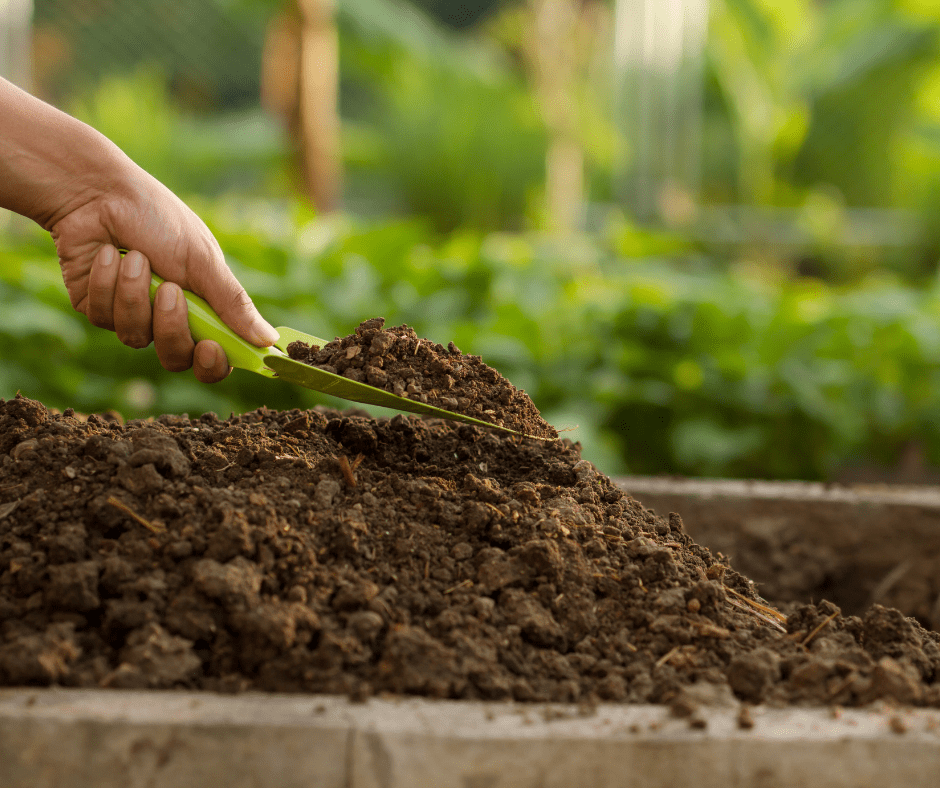
Soil Prep in February
Your plants will only be as healthy and vibrant as your soil is:
-
- Remove grass and weeds manually (avoid chemical weed killers in veggie beds as they can leave residual effects)
- Dig as deeply as your soil allows, this allows for full root development—rocky limestone may limit you.
- Mix 3 inches of organic compost (or compost + soil conditioner) into the top layer of soil. We like Nature’s Creation Organic Compost or Landscaper’s Pride Mushroom Compost, and FoxFarm Happy Frog Soil Conditioner or Gardenville Living Mulch. Adding organic matter:
- Improves drainage
- Helps break up compacted soil
- Feeds beneficial microbes
- Makes nutrients more available to plants
💡 If you can dig into your soil in San Antonio without breaking your back—bravo! If not, raised beds and container gardening is a great option!
Local Expert Tips
🌿 Rainbow Gardens Tip #1:
Spring will be here before you know it, and you’ll get blinded by the dazzling options. Make sure you have your garden beds prepped and a plan in place so you can shop smart and successfully.
🌿 Rainbow Gardens Tip #2:
Research plants you are interested in to learn their grwoing requirements. Then evaluate your planting areas to decide if you they can provide those growing requirements.
Visit Us
Find Soil and Soil Amendments to prep your garden beds at Rainbow Gardens.
Bandera Location
8516 Bandera Road
San Antonio, TX 78250
(210) 680-2394
Thousand Oaks Location
2585 Thousand Oaks
San Antonio, TX 78232
(210) 494-6131


