



Hydrangeas: Planting and Care Guide
Yes—you can grow hydrangeas here. You just have to grow them smart.
Hydrangeas are one of those plants people fall in love with instantly—big blooms, soft colors, classic charm. But let’s be honest: San Antonio isn’t their dream environment.
Hydrangeas naturally thrive in regions with cooler temperatures, higher humidity, and acidic soils—conditions we don’t exactly have. Our soils tend to be alkaline, and our summers are intense.
That said… hydrangeas can absolutely be grown here—and grown beautifully—if you give them the right conditions and choose the right varieties.
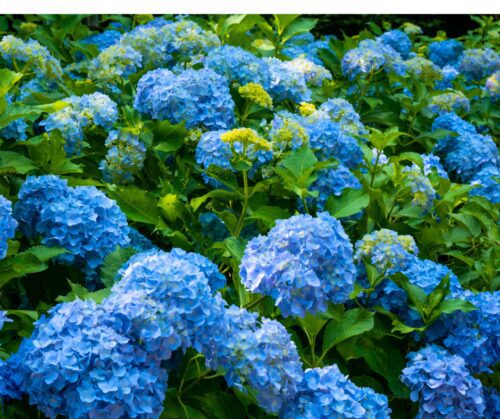
Quick Care Snapshot
Best Planting Time
Fall and Spring.
Watering
Consistently moist.
Light Needs
AM Sun/PM Shade.
Cold Protection
-15º to -30º depending on variety.
Best Hydrangea Varieties for San Antonio
Not all hydrangeas are created equal—especially in Texas.
Best Performers:
- Oakleaf Hydrangea (Hydrangea quercifolia)
- Most heat-tolerant option
- Handles Texas conditions better than most
- Panicle Hydrangea (Hydrangea paniculata)
- More sun-tolerant
- Reliable summer blooms
- Smooth Hydrangea (Hydrangea arborescens)
- Hardy and adaptable
More Challenging (But Possible):
- Bigleaf Hydrangea (Hydrangea macrophylla)
- Classic blue/pink blooms
- Needs extra care, shade, and water
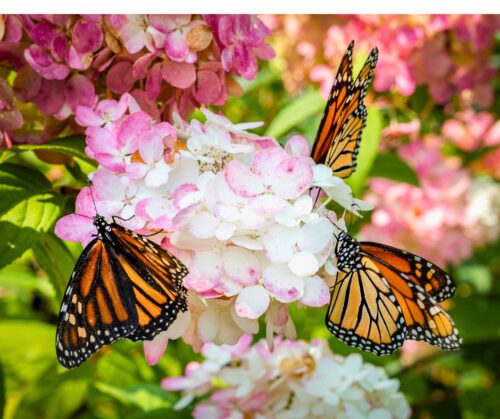
Planting and Care
Planting Site
Light Exposure
This is one of the biggest keys to success.
- Morning sun, afternoon shade is ideal
- Avoid harsh afternoon sun—it can scorch leaves and blooms
- North or east-facing exposures work best
Hydrangeas generally prefer partial sun rather than full, intense exposure, especially in hot climates. Think “bright shade,” not blazing sun.
Soil
Good spacing allows for better air circulation (important in Texas humidity, more consistent growth and shape, and less competition for water and nutrients.
- The general rule of thumb is to plant bougainvillea at least 3-6 feet apart, based on mature growth.
- Average mature growth for hydrangeas in our area is anywhere from 3-10′ T x 3-8′ W, depending on variety.
Hydrangeas are picky about soil—and this is where most local struggles happen.
- Prefer rich, well-draining soil full of organic matter
- Thrive in slightly acidic soil (pH ~5.5–6.5)
- San Antonio soils are typically alkaline, which affects growth and color
To succeed here:
- Amend soil with compost, leaf mold, or organic matter
- Use mulch (2–3 inches) to retain moisture and improve soil over time
- Consider growing in containers for better control
Watering
Hydrangeas LOVE water—and that’s not optional here.
- Keep soil consistently moist (not soggy)
- Deep water 2–3 times per week in summer
- Mulch heavily to reduce evaporation
Hydrangeas perform best in moist, well-drained soil, especially during heat.
Fertilizer
Keep it simple and steady.
- Apply a slow-release fertilizer (see note below for which type to choose) in early spring
- Optional second feeding in early summer
- Avoid heavy fertilizing as it can burn plants or reduce blooms
Healthy soil with organic matter, like compost, often reduces the need for frequent feeding.
*Only certain types—mainly bigleaf hydrangeas—can change color based on soil chemistry.
- Acidic soil (pH ≤ 6.0) → Blue flowers
- Alkaline soil (pH ≥ 7.0) → Pink flowers
In San Antonio, most hydrangeas will naturally bloom pink due to alkaline soil.
To get blue blooms:
- Add soil acidifiers (sulfur, aluminum sulfate)
- Grow in containers for better control
Pruning
Pruning depends on the type—but here’s the simple version:
Bigleaf & Oakleaf (old wood bloomers):
- Prune after flowering
Panicle & Smooth (new wood bloomers):
- Prune in late winter/early spring
Problems and Solutions
Green Foliage/No Color
Cause: Lack of blooms may be due to:
- lack of sunlight (even though they need some afternoon shade, they still need the morning sun exposure for blooms)
- high heat and drought (when the temps hit triple digits, blooms tend to shut down)
Fix: Move hydrangeas to an area with north or east0facing exposure, and keep well-hydrated throughout the summer.
Wilted Plant
If hydrangeas wilt in the afternoon heat but recover in the evening, that’s normal. If they stay wilted—water immediately.
Local Expert Tips
🌿 Rainbow Gardens Tips
- Plant in spring or fall—not summer heat
- Use containers if your soil is tough
- Protect from hot afternoon sun and wind
- Expect a little trial and error—that’s normal here
- Focus on soil improvement + consistent watering
Visit Us
Find hydrangeas at Rainbow Gardens.
Bandera Location
8516 Bandera Road
San Antonio, TX 78250
(210) 680-2394
Thousand Oaks Location
2585 Thousand Oaks
San Antonio, TX 78232
(210) 494-6131


