



March Monthly Gardening Guide for San Antonio
Swinging into Spring
By March, your garden beds should be well on their way to being prepped, if not done already. Once we hit March, the spring planting season really takes off. We break down much of what you need to be doing in your garden this month.
See our full guide below, and download our free PDF quick guide for easy reference.

March Garden Tasks By Plant Type
Annuals
Annuals
- Acclimate warm-season annual transplants that you’ve been growing indoors to the outdoors over a 2 week period by taking them outside for a couple of hours a day, gradually increasing the time, until they are used to the sunshine and cool nights.
- Direct seed warm-season annuals into the garden once the danger of frost has passed San Antonio.
- Keep your new annuals watered consistently; this may mean watering 1 to 2 times a week IF no rain. Soil should be moist but not soggy.
- Offer new annual transplants a diluted water-soluble fertilizer at planting and for the first four weeks of their life. Begin a monthly granular fertilizer program afterwards. Annuals are heavy feeders.
- Watch new annuals closely for caterpillars munching or aphids sucking their sap. Early detection is key in pest control.
Bulbs/Rhizomes/Corms
- Plant summer-flowering bulbs (canna, elephant ears, caladium, etc..) Selections at the nursery should be great this month. Buy your caladium tubers while we have them in stock, BUT WAIT to plant them until soil temp is consistently 70 degrees or higher.
- Add plant markers when you plant your bulbs. It’s easy to forget where they are.
- If established bulbs need dividing, do so this month, or by April at the latest. Tip: (Most bulbs benefit from dividing every 2-3 years),
- Remove spent flowers and seedpods from existing spring-flowering bulbs, but leave the green foliage alone.
- Fertilize existing bulbs if you didn’t last month. (Espoma Bulb-Tone).
Shrubs & Trees
- Complete all planting and transplanting of trees this month if you can. They can be planted throughout the year but you will need to be hyper vigilant about their water needs, as roots struglle to develop and grow through the heat of summer. (Fall is the best time to plant shrubs and trees, with early spring being a close runner up.)
- Redbuds and Texas Mountain Laurels will start putting on a bloom show.
- Prune crape myrtles in mid to late March for shaping. Do not cut their tops off.
- Apply a 3-4” layer of mulch around trees if you haven’t already. Tip: NEVER pile mulch directly against trunks!
Veggies & Herbs
Herbs:
- Great time to start annual and perennial herb gardens, the selection at the nursery should be great.
- Plant cilantro early to enjoy through spring; it will go to seed fast once the hot weather rolls in.
- If planting basil, watch weather forecast ans protect if temps get below 50ºF.
- Herb Planting and Care Guide
Veggies:
- If you haven’t planned and prepped for your warm weather veggie and herb gardens, don’t delay. We have short growing seasons in San Antonio, so we plant early. (Keep frost protection handy until all danger of frost has cleared.)
- Basic Needs for Growing Vegetables
- The first set of potted tomatoes can be placed in the garden by March 15th. Place row cover fabric around the cages for protection from wind and cool nights.
- You should be able to find tomatoes, peppers, cucumbers, squash, eggplant, and many more warm weather veggie transplants at the nursery now. Put some Espoma Bio-Tone inthe bottom of your planting holes and then water in your veggies with a diluted water soluble fertilizer like Medina Hasta Gro, to get you plants off to a great start.
- Take some time browsing our site for veggie info. There is a ton of help waiting for you.
- Don’t have tons of room? Veggies and herbs can be grown successfully in containers.
- 2026 Rodeo Tomato is Polbig; rodeo tomatoes are always a good choice for our area.
- Direct seed in your prepared gardens that has been raked smooth.
- Tip: Newly seeded beds need frequent light watering to keep the bed moist. Established veggies need more infrequent, deeper watering.
- Keep an eye out for cabbage loopers and aphids on cool-season veggies, BT controls caterpillars, and a spray of insecticidal soap can control aphids. But beware of spraying plants that are larval food sources for butterflies, or you will be killing them too.
Lawns
- Apply pre-emergent weed productsnow to prevent late spring through late summer weeds. Finish this task by mid March.
- Cool season weeds are still in the yard, hand pull them to keep them under control.
- Tip: Use caution when choosing broadleaf weed killers as your warm season grasses are just waking up and are vulnerable to harm.
- Organic fertilizer can be applied Mid Feb-early March, Synthetic fertilizer is applied in April.
- Organic: Texas Tee, Medina Growin’ Green, Fertilome
- Synthetic: Rainbow Gardens 19-5-9 Spring Formula
- If you didn’t have your irrigation system evaluated in fall, do so now, though, it may be hard to get an appointment (this is why you should do it in fall!)
- If you have significant turf growth, go ahead and mow, but scalping the lawn is not recommended.
Hardy Fruit and Nut Trees
- Finish planting hardy fruit and nut trees early this month so they get as much time as possible to get their roots established before the heat of summer rolls in. This may be the last month you can plant without having to take extra measures with watering so that they will be able to survive their first summer.
- Prune established fruit trees before new growth appears.
- AFTER fruit blossoms fall, begin a maintenance fruit-tree spray program, alternating fungicide and insecticide
- Fertilize fruit trees that are at least one year old.
- First selection of CITRUS have usually arrived by now. Grow citrus in pots for the first 3-4 years so you can protect them through winter during these early crucial years.
Perennials
- Plant perennials this month to get roots established before the heat. Add Espoma Bio-Tone to the bottom of your planting hole to innoculate roots for strong growth. Water in your new perennial transplants with some diluted water soluble fertilizer (Medina Hasta Gro).
- Finish transplanting and dividing summer and fall blooming perennials, including cannas, mallows, fall asters, mums and perennial salvias.
- Keep an eye on weather. We could have warm days and then a sudden freeze. Be prepared to protect tender new growth.
- If rainfall is not sufficient this month, make sure to water deeply and thoroughly to encourage deep and strong roots. Soil should be consistently moist but not soggy.
- Fertilize established perennials with a slow-release granular fertilizer and water in well. (FoxFarm, Espoma, Osmocote)
- Make plans to incorporate perennials that bloom in different season so you have interest all year round.
- Cut your perennials back to about 4″ above the ground. Keep an eye on weather in case a late freeze unpredictably shows up.
- Some perennials really wait for true and consistant warmth before waking up. Before yanking out a plant yo uthink is dead, give it the benefit of the doubt and allow it a little more time to wake up.
- Check out the SAWS WaterSaver Landscape Coupon program. You can build a money saving and water saving garden or landscape when you remove portions of turf and replace it with some fantastic perennials on the SAWS approved list.
Roses
- Spring is our largest selection of roses. Come get your favorites now.
- Rose warranty kicks in March 15th.
- Rose Society visits Rainbow Gardens this month. Make plans to visit when they are here. They are a wealth of knowledge and love to help.
- We advise Feb 14th as a date for when to heavy prune your roses, if you didn’t do it then, finish up any leftover business this month.
- Keep roses moist this month, making sure the rootball of new roses gets watered enough to thoroughly soak it.
- Fertilize roses with a fertilizer like Maestro Grow Rose Glo, or Espoma Rose-Tone. Scratch into the soil and water well.
- Regular spraying for blackspot should begin when HT, FL, and GF roses have new leaves opening.
Groundcovers & Ornamental Grasses
- Hardy groundcovers can be planted now. Plant on squares, like a checkerboard pattern, for quicker fill-in.
- Keep leaves out of your existing groundcovers by raking or blowing. Dump the leaves in your compost pile.
- Trim up existing groundcovers to remove old growth.
- Cut back ornamental grasses this month. Leave about 10” above ground.
Soil Prep in March
You do not have a lot of time to getr your beds ready. We are already planting!
-
- Remove grass and weeds manually (avoid chemical weed killers in veggie beds as they can leave residual effects)
- Dig as deeply as your soil allows, this allows for full root development—rocky limestone may limit you.
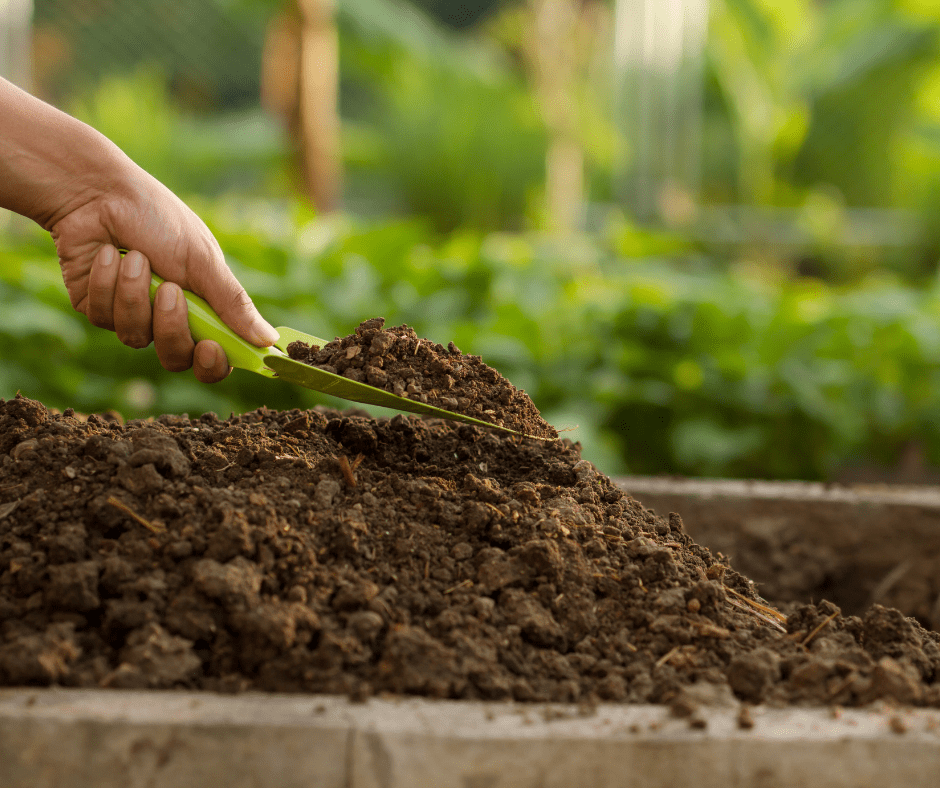
- Mix 3 inches of organic compost (or compost + soil conditioner) into the top layer of soil. We like Nature’s Creation Organic Compost or Landscaper’s Pride Mushroom Compost, and FoxFarm Happy Frog Soil Conditioner or Gardenville Living Mulch. Adding organic matter:
- Improves drainage
- Helps break up compacted soil
- Feeds beneficial microbes
- Makes nutrients more available to plants
💡 If you can dig into your soil in San Antonio without breaking your back—bravo! If not, raised beds and container gardening is a great option!
Local Expert Tips
🌿 Rainbow Gardens Tip #1:
Remember that you don’t have to have a huge plot to enjoy gardening. You can create some fabulous displays with container grown plants, as well as grow pently of veggies, herbs and fruits in pots.
🌿 Rainbow Gardens Tip #2:
Keep your plant tags and create a journal so you can make notes along your spring planting journey. Note when you planted, where you planted, when plants bloomed, what products you used, etc…
It might sound tedious, but you will gain a wealth of knowledge. You will learn what works in your landscape and gardens and what doesn’t.
Visit Us
Come see us this spring at Rainbow Gardens. It’s bustling, busy, and oh so gorgeous at the nursery this time of year.
Bandera Location
8516 Bandera Road
San Antonio, TX 78250
(210) 680-2394
Thousand Oaks Location
2585 Thousand Oaks
San Antonio, TX 78232
(210) 494-6131


