



Enjoying the Great Outdoors Inside!
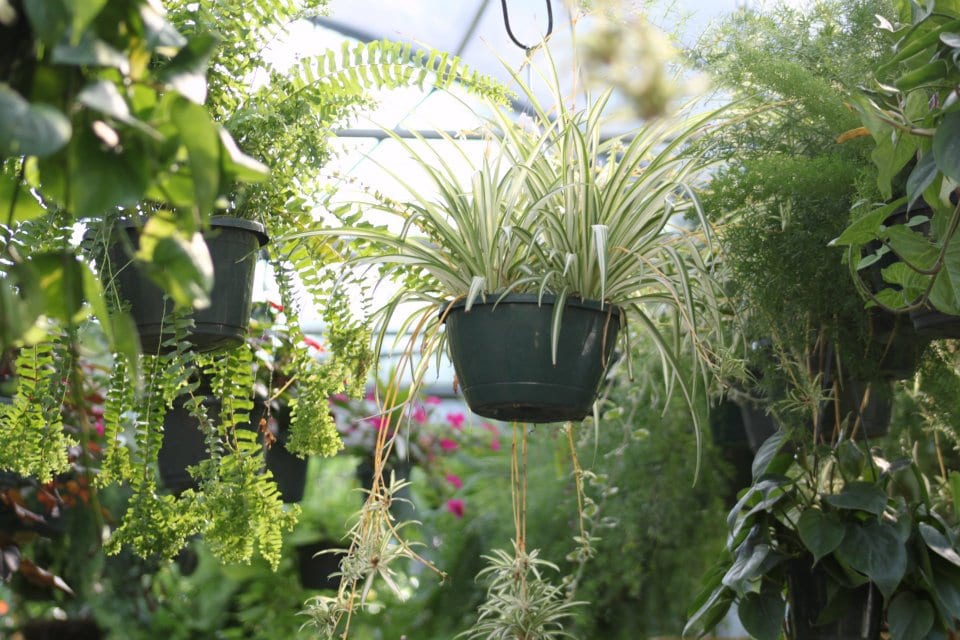
With the bright colors of spring and summer’s perennials and annuals luring us outside, it’s easy to neglect our old companions who stick with us through all types of weather. You know the ones we’re talking about. The ones you walk by, with your watering can in your hand, on your way outdoors. The ones who sometimes don’t get a second glance unless they have been naughty and dropped a yellow leaf or two. That’s right, we are talking about your old faithful houseplants. This is a great time to pep them up a bit. It doesn’t take much, but a little attention will go a long way.
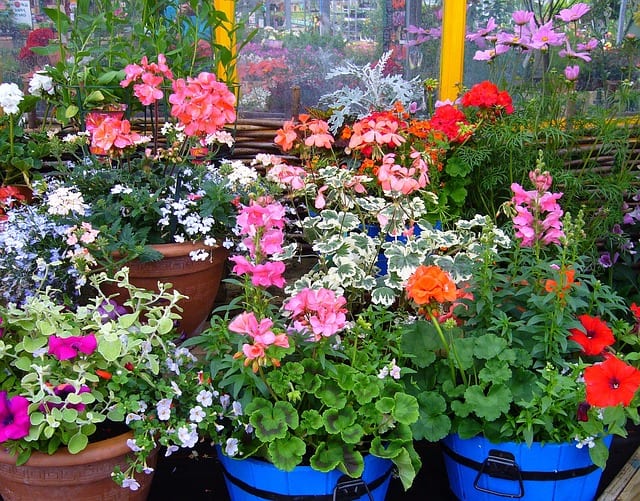
(We’ve been paid attention to!!!)
Depending on how long you have had your houseplants, you may need to start off by repotting them. Take them outside (but in the shade so they wont be scorched while you work) and tap on the sides of the pot and gently lift out your plant to inspect the root ball. If what you see looks like a tangled clump of spaghetti, it is probably time to repot your plant. There are some exceptions, as there are some plants that prefer to be root bound. But for the most part, let’s give them a little more room. When changing the size of your pot, you should choose a container that is no more than twice the diameter of the pot you already have. Any larger and you will create too much volume with the soil and you could risk root rot damage to your plant. If you decide that your root ball is not constrained, it would still be good to change out the potting soil, and clean out your pot. Make a 10% bleach to 90% water solution and scrub out the pot, removing all the calcium build up on the sidewalls and bottom inside the container. Gently tap the root ball removing as much old soil as you can, then repot with new soil, leaving a 2-3 inch margin from the top of the pot. By the way, you really should do this for your container plants every two years.
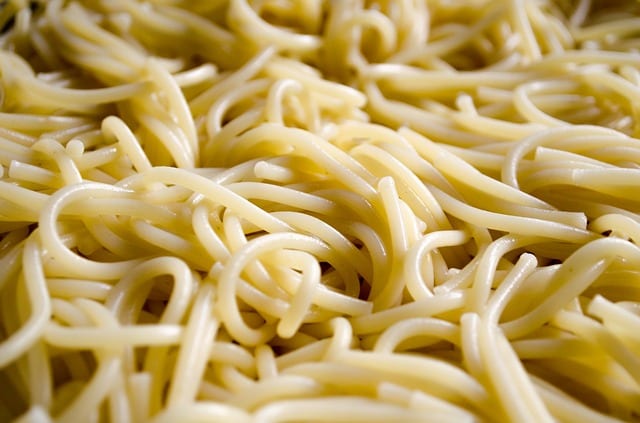
(Your root ball should not look like this! Ha!)
Now that you have a freshly repotted plant, let’s take a look at where they’ve been residing the past few years and see if it is really working out for them. The correct light is crucial to plants. You need to know the light requirements of your plants to place them where they need to be. Bright light requirements mean the plant should be placed within 1-6 feet of a window. Your hottest windows and brightest light should be reserved for plants like cactus and succulents.

(We like the sun!!!!!)
Medium light requirements should find your plant within 4-8 feet of a window. Plants like Swedish Ivy, Creeping Fig, Cordyline, and Spider Plant do well in medium light levels. Low light requirements would place your plant 6-10 feet from a window. Peace Lily, and White Butterfly Plant do well in low light levels. Pay attention to your plant, and you will see if it stretches, or reaches toward a light source. This may mean you need to move it to receive a bit more light. Also, just as we like to turn our face to the sun to receive it’s warmth and light, so do plants. Take the time to rotate them now and again and they will grow more uniformly and even.
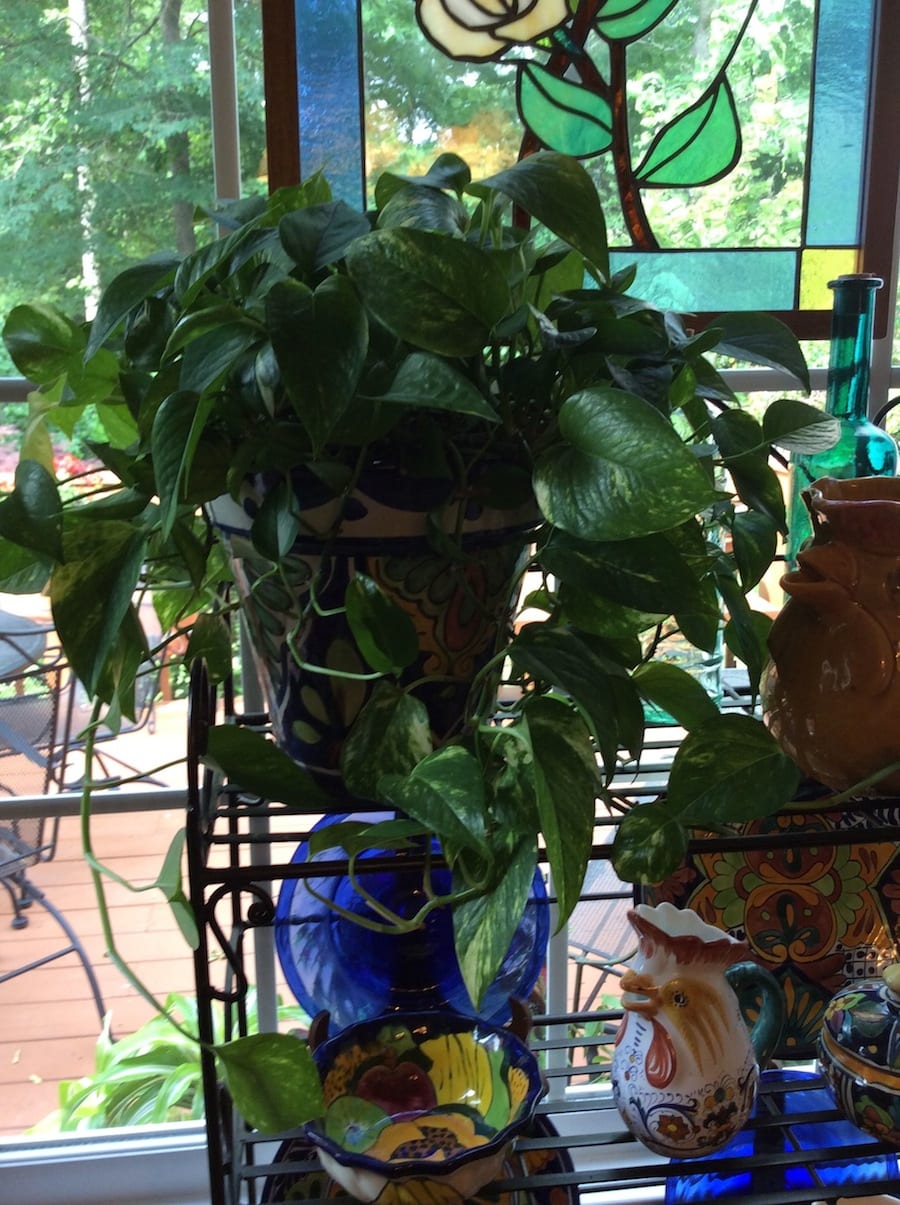
(Happily situated right where he wants to be!)
Ok, now that we’ve gotten our green friends situated in their correct habitat, let’s give them a nice drink. The preferred temperature is the type that Baby Bear would like, not too hot, not too cold. Ideally you could place your pots in a bathtub or shower to water them. You need to water thoroughly, to where the water runs out the drainage hole freely. You did use a pot with a drainage hole right? Many people buy saucers to place under their pots to catch the water from the drainage hole. Just remember to empty the saucer after about 20 minutes, or your plant’s roots will not be getting oxygen. Knowing when to water your plants is just as important. The finger method test is really the best tried and true method for checking when you need to water. Poke your finger down into the soil, up to your second knuckle. If the soil is moist and sticks to your finger, wait on watering, if it’s bone dry, fill ‘er up.
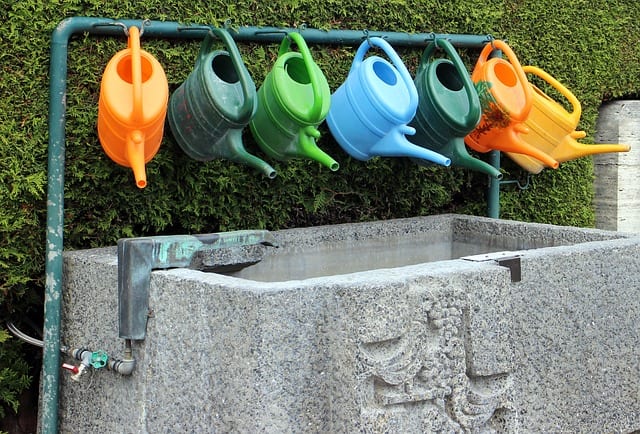
(Fill us up with “just right” water. Not too hot, not too cold)
Finding little annoying gnats all over your house? Looking out the window only to find a massacre of tiny black gnats in heaps on your windowsill looking as though they tried in vain to escape? Occasionally we run into problems from overwatering our plants, like fungus gnats. They can also occur in old potting soil (See how it is beneficial to clean out your pots every two years?). If you find you are a victim of a fungus gnat invasion, take your plant into the garage or patio with shade, remove the top ½ inch of potting soil (bag it up), and then spray with BT, which will kills the larvae of the fungus gnats. Be sure to follow instructions if follow up is needed.

(Spray outside the house, but protect plants from the scorching sun)
Houseplants would like the occasional feeding too. A water-soluble plant food like Miracid will do fine for most plants. Plant spikes and granular fertilizer are available as well. Water thoroughly before feeding, and be sure to follow the dosage instructions or give less. Your plant will not grow more by doubling up the fertilizer (Feed me, Seymore!), you will actually risk damage to your plant. In the wintertime you can cut back on your feeding schedule, as plants are mostly dormant then. And remember, when you bring a new plant home, wait for several weeks to feed it, so it can get acclimated to the new surroundings.
(Ooh, I hope they put Miracid on the menu today!)
Hopefully these tips will get you on your way to getting the most out of your indoor plants, and you can begin to enjoy the great outdoors inside!
The Happy Gardener


