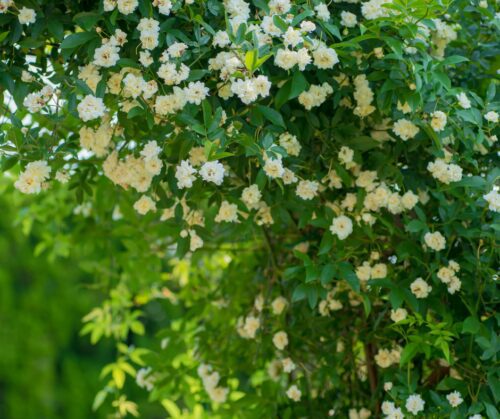
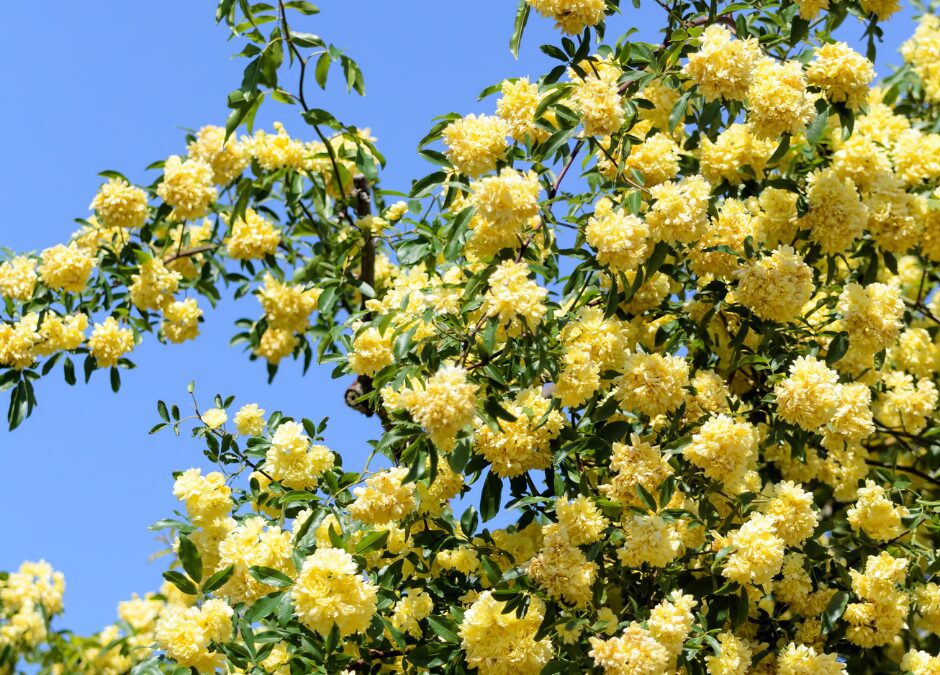
If you’re looking for a low-maintenance, high-impact climbing rose, the lady banksia rose might just be your dream plant. Known for its vigorous growth, thornless canes, and breathtaking spring blooms, this heirloom rose can transform fences, arbors, and even entire buildings into a cascade of soft color.
What is a Lady Banksia Rose?
The lady banksia rose (Rosa banksiae) is a fast-growing, nearly thornless climbing rose that produces clusters of small, delicate blooms in early spring. The most popular varieties are:
- Yellow Lady Banks (Rosa banksiae ‘Lutea’) – soft buttery yellow blooms
- White Lady Banks (Rosa banksiae ‘Alba Plena’) – creamy white, slightly fragrant flowers
Some of the reasons we love this rose:
- Virtually thornless (easy to train and maintain)
- Extremely vigorous grower
- Low maintenance once established
- More disease-resistant than many modern roses
- Perfect for large-scale coverage
Unlike many roses, this one blooms once per year—but in a massive, unforgettable show. If you’ve ever wanted a rose that behaves more like a flowering vine, the lady banksia rose delivers.
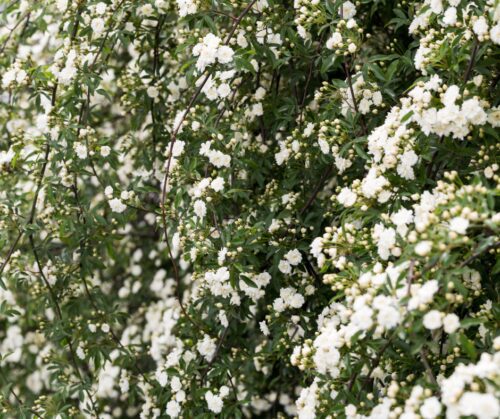
Growing Conditions for Lady Banksia Rose
To get the best performance from your lady banksia rose, focus on these key conditions:
Sunlight
- Needs full sun (6–8+ hours daily) for best blooming
- Will tolerate light shade, but blooms may be reduced
Soil
- Prefers well-drained soil
- Adaptable to a wide range of soil types
- In heavier soils, amend with compost to improve drainage
Spacing
- Plant at least 10–15 feet away from other large plants or structures
- Average mature growth is: 20-40′ Long x 10-15′ Wide (or more with support)
- Give it room to spread and climb freely. If you don’t give it space, it will take it anyway.
- Ideal for:
- Large fences
- Barns or outbuildings
- Long trellises or pergolas
Water
- Moderate water while establishing
- Once established, it becomes fairly drought-tolerant
- Avoid overwatering—roots don’t like soggy conditions
Fertilizer
- Feed lightly in early spring with a balanced or rose fertilizer
- Avoid overfeeding—this plant thrives with minimal input