



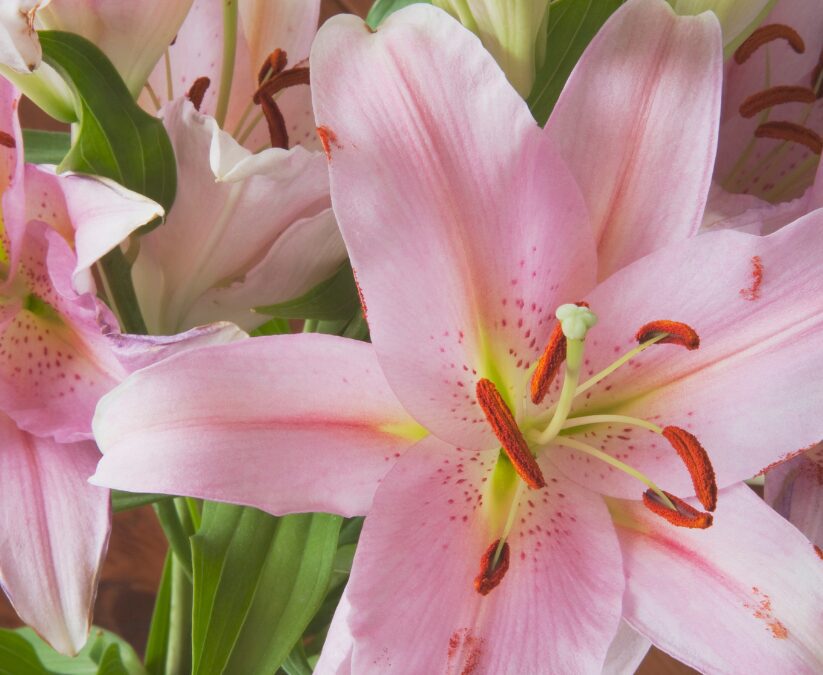
If you’re looking for a flower that brings big, vibrant color with very little fuss, Asiatic lilies are one of the best bulbs to grow in San Antonio gardens. Their upright blooms come in shades of orange, yellow, red, pink, and white, and they add instant impact to flower beds, borders, and containers.
Unlike some other lilies, Asiatic lilies are known more for their showy blooms than fragrance, making them perfect for adding visual drama to your spring and early summer landscape. I personally love this fact as the fragrance of other lilies tend to give me a headache. So here is some more good news. With the right placement and a few care tips, they perform beautifully in our South Texas climate.
Sun and Light Exposure
Asiatic lilies perform best in full sun to part sun, with at least 6 hours of direct sunlight daily. In San Antonio, morning sun with a little afternoon protection is often ideal, especially as we move into late spring and early summer heat.
A great rule for lilies is: “heads in the sun, feet in the shade.”
They love bright light on their stems and blooms, but their roots and bulbs prefer cooler soil. Planting low-growing companion plants around the base, or adding a light mulch layer, helps keep the bulbs cool.
Best Soil for Asiatic Lilies
Drainage is everything.
Asiatic lilies need loose, well-drained soil. In San Antonio’s heavier clay soils, it’s important to amend the planting area with compost, soil conditioner, expanded shale, or fine pine bark mulch to improve drainage and prevent bulb rot.
They prefer soil that is slightly acidic to neutral, but they are fairly adaptable as long as the soil never stays soggy. Raised beds are an excellent option here, especially in areas with dense clay.

Watering Through the Seasons
Watering needs change a bit throughout the year.
Spring:
As new shoots emerge and flower buds begin to form, keep the soil consistently moist but never wet. A deep watering once or twice a week is usually enough, depending on rainfall.
Summer:
After blooming, continue watering regularly while the foliage remains green. The leaves are feeding the bulb for next year’s blooms. During hot San Antonio weather, check soil moisture often and water deeply when the top inch begins to dry.
Fall:
Reduce watering as temperatures cool. If bulbs are dormant and the foliage has died back, natural rainfall is often sufficient.
Winter:
Minimal supplemental water is needed unless we experience an unusually dry winter.
The key is to avoid overwatering, especially in winter, since wet soil can cause bulb rot.

Fertilizer Recommendations
Feed Asiatic lilies in early spring when the first shoots emerge.
Use a balanced slow-release fertilizer, such as 10-10-10 or 12-6-6, lightly worked into the soil around the bulbs. This supports strong stems and plenty of blooms.
After flowering, a second light feeding can help recharge the bulb for next year.
Avoid very high-phosphorus bloom boosters. While we usually recommend Espoma Bulb-Tone or Bonemeal for feeding bulbs because it has a higher phosphorus number, Asiatic lilies are an exception. They benefit more from balanced nutrition and healthy soil than excessive phosphorus. Compost mixed into the soil each season also works beautifully.
Winter Care in San Antonio
Asiatic lilies are perennial bulbs and can return year after year.
Once flowering is finished, do not cut the foliage back right away. Let the leaves remain until they naturally yellow and dry. This is how the bulb stores energy for the next blooming cycle.
In San Antonio, winter protection is usually minimal. A light mulch layer of shredded bark or pine straw helps insulate the soil and regulate temperature swings, but these lilies generally handle our winters well.
Do They Need Staking?
Some taller varieties may benefit from support, especially in windy locations.
Use:
- thin bamboo stakes
- small ring supports
- discreet green plant stakes
Install supports early in the season before stems become top-heavy with blooms. Shorter dwarf varieties usually do not need staking.

Pest Control and Common Problems
Asiatic lilies are generally easy-care, but there are a few things to watch for.
Common pests include:
- aphids
- try blast of water to dislodge them
- employ beneficial insects to erradicte them
- or spray with insecticidal soap or neem oil
- spider mites during dry heat
- try neem oil (never apply when temps are over 85ºF, or risk burning plants)
- try spinosad (applied in evenings only, ot reduce harm to pollinators)
- occasional caterpillars or chewing insects
- try Bt (Bacillus thuringinesis)
The biggest issue in our area is often bulb rot caused by poor drainage, rather than insect pressure.
If leaves develop brown spotting, this may be fungal leaf spot or botrytis, often caused by overhead watering and poor air circulation. Water at the base and space plants well to prevent this.
Pro Tips for Bigger, Better Blooms
One of the best tricks for growing Asiatic lilies in San Antonio is to plant them a little deeper than you think—about 5 to 6 inches deep. This helps keep the bulbs cooler and gives stems better stability. When planting bulbs that have develpped and are transplants at the nursery, plant depth should be where the soil in nursery container is level with surrounding soil of planting hole.
Another pro tip: plant them where they’ll get spring sunshine before surrounding perennials leaf out, then allow neighboring plants to shade the soil as temperatures rise.
Divide clumps every 2 to 3 years if blooms begin to decline. Overcrowded bulbs produce fewer flowers.
We hope this blog has inspired you to take a closer look at Asiatic lilies, for big, bold, beautiful blooms spring though summer each year.
~The Happy Gardener, Lisa Mulroy


