



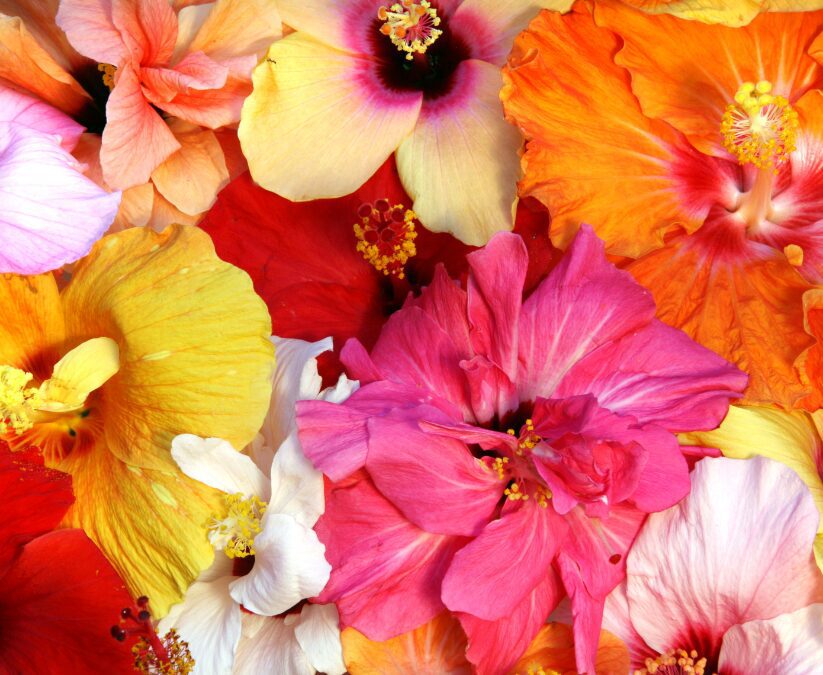
If you’ve ever wanted your garden to feel a little more like a vacation, tropical hibiscus is the plant that gets you there. With big, bold blooms and glossy green leaves, it brings instant color and that unmistakable tropical feel to patios, porches, and garden beds.
Here in San Antonio, Texas, tropical hibiscus can absolutely thrive in our hot climate. Let’s walk through how to grow it successfully so you get those nonstop, showy blooms all season long.
Why Gardeners Love Tropical Hibiscus
Tropical hibiscus (Hibiscus rosa-sinensis) is all about the flowers. The blooms are large, vibrant, and often multi-colored, with glowing shades of red, orange, pink, and yellow. Each individual flower only lasts a day, but the plant continuously produces new buds in warm weather, so it rarely goes without color. The foliage is a dark glossy-green, and the contrast between foliage and the brightly hued blooms is striking.
Tropical plants seem to naturally become a focal point—perfect for dressing up an entryway, anchoring a patio container, or adding a punch of color near outdoor seating.
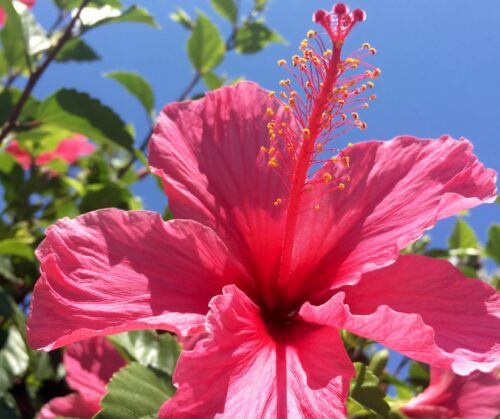
Growing Tropical Hibiscus in San Antonio
Tropical hibiscus loves heat, which works in our favor for most of the year. Give it plenty of sun and warmth, and it will grow quickly and bloom heavily.
Light Exposure and Soil
Full sun is ideal, especially in the morning. In the peak of summer, a little afternoon shade can help prevent stress, particularly for plants in containers. Soil should drain well—this is not a plant that likes to sit in soggy conditions. If you’re planting in the ground, mixing in compost or a soil conditioner can improve both drainage and soil structure.
That said, most San Antonio gardeners find that tropical hibiscus does best in containers. It gives you flexibility, especially when temperatures start to dip. Use a high-quality potting mix that provides excellent drainage.
Watering: Finding the Right Balance
Tropical hibiscus likes consistent moisture, but not constantly wet soil. During the heat of summer, especially in pots, you may find yourself watering frequently—sometimes even daily.
Instead of sticking to a strict schedule, check the soil. When the top couple of inches feels dry, it’s time to water.
If the plant starts to droop, it’s often a sign it needs water. However, on our hottest days, plants tend to droop by the end of the day, so it’s not a sure sign of your hibiscus needing water. Plants that aren’t underwatered generally bounce back by the following morning. On the other hand, yellowing leaves can be a clue that it’s getting too much water. It’s a bit of a balancing act, but once you get the rhythm, it’s easy to maintain. It’s always best to feel the soil a few inches below the surface to know for sure.
Fertilizing for Healthy Growth and More Blooms
Tropical hibiscus are heavy feeders, and regular fertilizing makes a noticeable difference in how they perform.
A balanced fertilizer or one slightly higher in nitrogen works well, applied every few weeks during the growing season. This supports both leafy growth and steady blooming.
One thing to avoid is a fertilizer that’s high in phosphorus. While phosphorus is often associated with flowering plants, hibiscus actually responds poorly to too much of it. Excess phosphorus can interfere with the plant’s ability to absorb important micronutrients like iron, which often leads to pale or yellowing leaves. Instead of boosting blooms, it can end up stressing the plant.
Keeping nutrients balanced is the key to healthy foliage and consistent flower production.
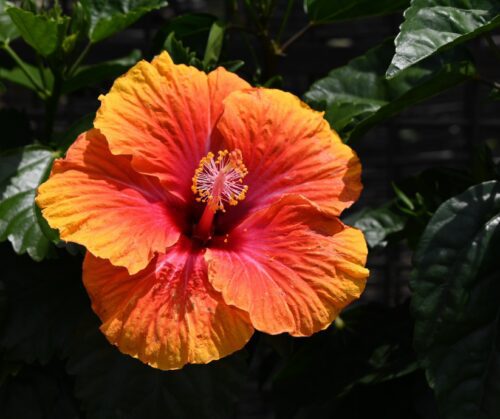
Cold Tolerance and Winter Protection
This is where tropical hibiscus needs the most attention in San Antonio.
These plants are sensitive to cold and can begin to suffer damage when temperatures drop below about 50°F. A hard freeze can kill the plant back completely, especially if it’s left unprotected.
That’s why containers are so helpful. When cold weather is on the way, you can simply bring your hibiscus indoors. A bright window or sunroom is ideal, and the plant will typically slow down and rest until spring.
If your hibiscus is planted in the ground, protection becomes more important. Covering it with frost cloth (maybe even doubling up) and adding a layer of mulch around the base can help insulate the roots. Even if the top growth is damaged, there’s a chance it can return from the roots once warmer weather comes back.
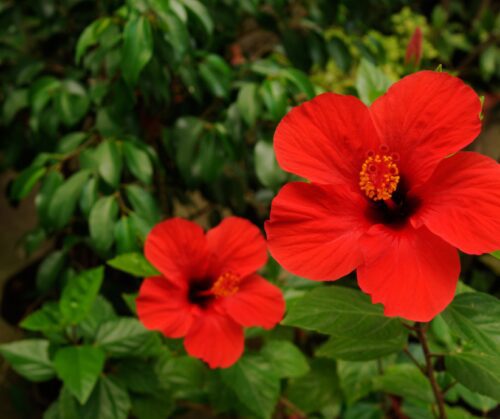
Troubleshooting Common Pests
Like many lush, leafy plants, tropical hibiscus can attract a few pests—especially during warm weather.
- Aphids are one of the most common. You might notice sticky residue on the leaves or clusters of tiny insects on new growth. They’re usually easy to manage with a strong spray of water or regular applications of insecticidal soap or neem oil. Take caution when treating plants with any type of pest control during summer. Applications should be made in the early morning hours, and when temps are below 85º F to avoid burning your plant.
- Thrips are a bit trickier. They tend to go after the blooms, causing streaking or distorted flowers, and sometimes buds will drop before they open. Removing affected buds and using a targeted treatment like spinosad can help get them under control.
- If conditions are especially hot and dry, spider mites can also show up. Keeping the plant well-watered and occasionally rinsing the foliage can help prevent them from settling in.
Tropical hibiscus might need a little extra care during winter, but the payoff is hard to beat. Few plants deliver this level of color and impact through the long Texas growing season.
Treat it like a seasonal star—give it sun, consistent water, balanced nutrition, and a plan for cold weather—and it will absolutely shine in your garden.
~The Happy Gardener, Lisa Mulroy


