



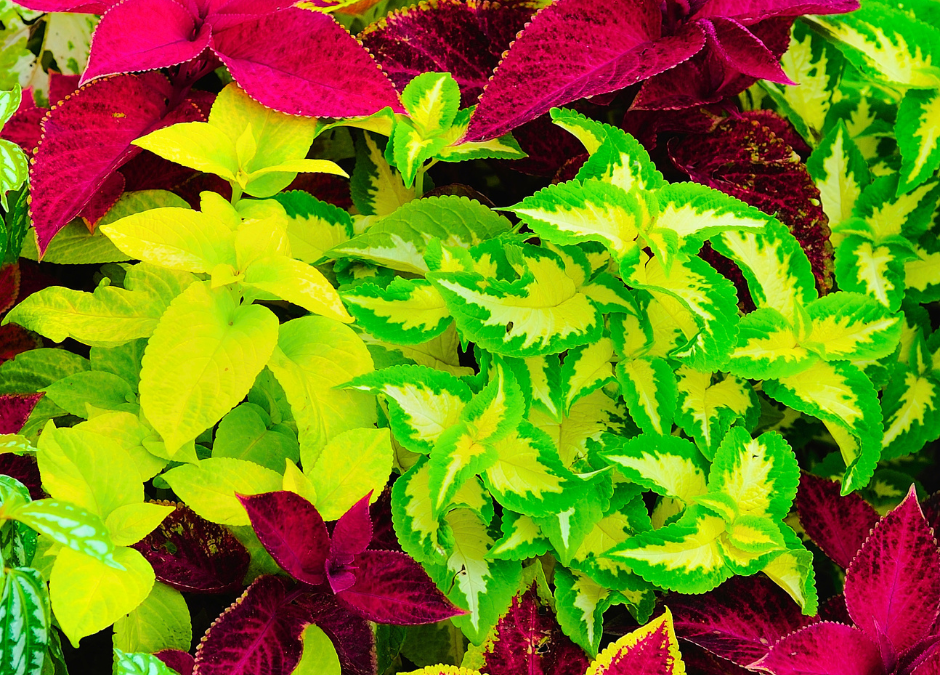
When most people think about adding color to the garden, they immediately picture flowers. But some of the most eye-catching plants don’t rely on blooms at all. Instead, they steal the show with leaves painted in shades of burgundy, chartreuse, lime green, deep purple, copper, pink, orange, cream, and nearly every color in between. These are foliage plants, plants grown primarily for their colorful leaves rather than their flowers. The best part? While many flowers bloom for only a few weeks, colorful foliage provides season-long interest from spring until frost (and year-round for many tropical houseplants).
What makes foliage plants so valuable in the landscape is that they provide a constant backdrop of color that doesn’t disappear between bloom cycles. Colorful foliage also helps brighten shady corners and adds texture and depth that helps create a great contrast with flowering plants. When you mix colorful foliage plants into container arrangements, it can make your container look fuller and lusher. Let’s take a look at a couple of our favorites.
Some of Our Favorite Colorful Foliage Plants
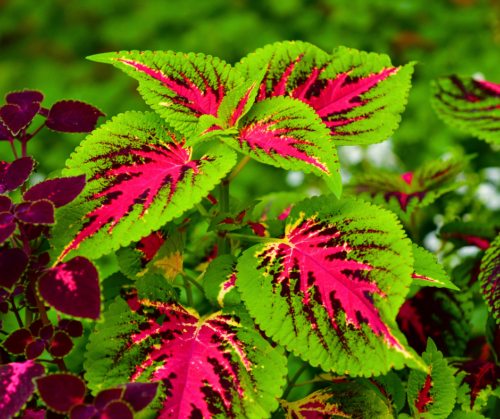
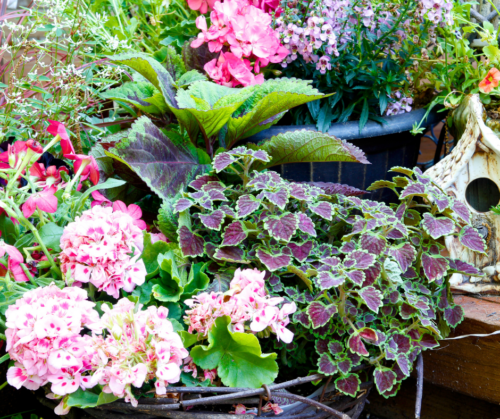
Coleus: Few plants offer as much color as coleus. Available in hundreds of varieties, you’ll find leaves splashed with lime green, burgundy, pink, red, purple, gold, cream, and nearly black. Some have dramatically serrated leaves, while others feature smooth edges or unusual patterns. Best of all, coleus thrives in both containers and landscape beds, and now there are varieties available for sun or shade.
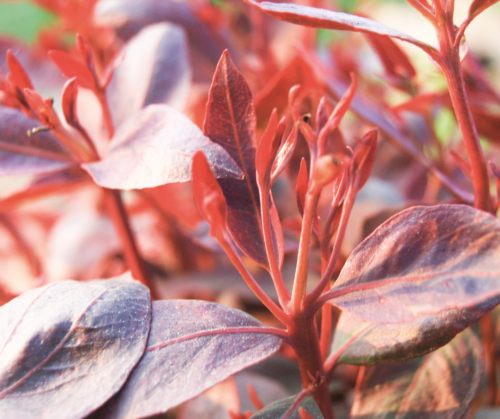
Alternanthera: Often overlooked, alternanthera delivers rich jewel tones throughout the growing season. Depending on the variety, foliage ranges from deep burgundy and purple to bright chartreuse and hot pink. It’s excellent for adding bold color to container arrangements.
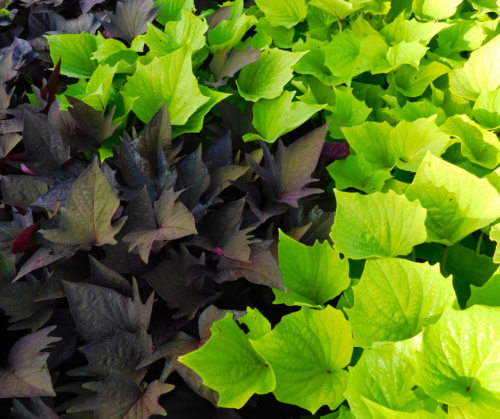
Sweet Potato Vine: One of the fastest-growing foliage plants you’ll ever grow. Sweet potato vines spill beautifully over the sides of containers and hanging baskets, softening hard edges with cascading foliage. Some gardeners choose to use it as a stunning groundcover option. It pairs beautifully with flowering annuals. You can find foliage color in hues of lime green, almost black, purple, tricolor, and even bronze.
Croton: This topical beauty makes a stunning patio plant during the warm months and can be overwintered indoors in a bright area. Its leathery leaves are painted with dramatic shades of yellow, orange, red, green, and burgundy, often all on the same leaf.
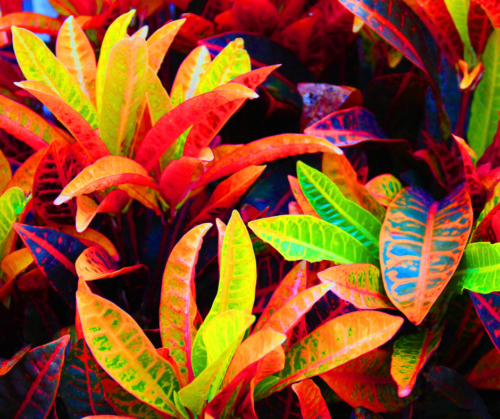
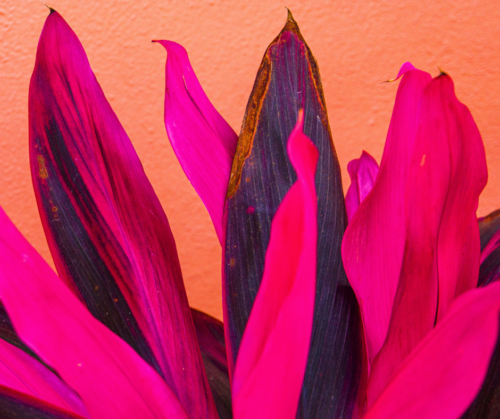
Hawaiian Ti Plant: Nothing says “tropical” foliage quite like a Ti plant. Long, elegant leaves come in shades of burgundy, pink, cream, right green and deep red. They instantly add height and drama to containers and they’re also beautiful indoors during winter.
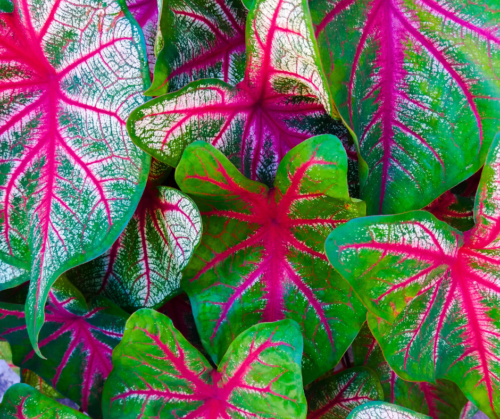
Caladiums: For bright shade, few plants rival caladiums. Heart-shaped leaves are splashed with combinations of white, pink, red, rose, and green. These beautiful foliage plants are sought after during our San Antonio summers. they love warm weather. Caladiums are perfect for brightening shady porches, patios, garden borders.
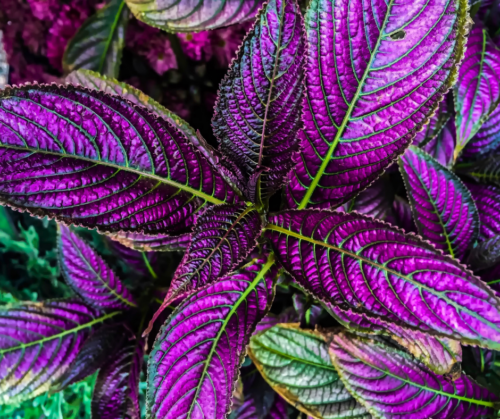
Persian Shield: This one is not always readily available in the nursery, and when we get it in, it doesn’t stay in inventory long. The metallic purple foliage almost seems to glow in the sunlight. Shimmering leaves make this one of the most dramatic foliage plants available.
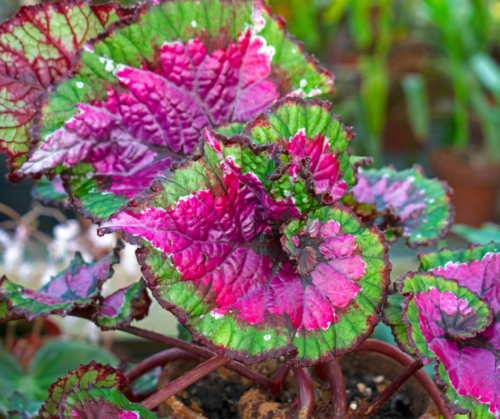
Rex Begonias: Rex begonias feature intricate leaf patterns in silver, burgundy, pink, green, and purple. They are grown almost entirely for their foliage beauty and texture. We love using these as houseplants for year round interest.
Designing with Foliage Plants
One of the easiest ways to create professional-looking containers is by mixing foliage colors. Instead of relying on flowers alone, combine contrasting leaves.
For example:
- Burgundy coleus with lime sweet potato vine
- Purple alternanthera with chartreuse coleus
- Croton with bright green ferns
- HawaiianTi plant surrounded by colorful caladiums
The combinations are practically endless. Different textures and leaf shapes create interest even when very few flowers are present. But don’t think we are saying flowers don’t have a spot with these combos. Foliage color can create a striking contrast to flowering annuals, or even perennials, elevating your container arrangements to star status.
How to Keep Foliage Colors Bright
The richest foliage colors don’t happen by accident. Here are a few ways to help your plants look their best.
- Give Them the Right Amount of Sun. Not all foliage plants have the same light requirements, so make sure you know what type of light is best for your plant.
- Water Consistently. Many foliage plants prefer evenly moist soil. Allowing them to dry out repeatedly can result in brow leaf edges or leaf drop, faded color and lack of growth. And don’t forget that if your foliage color plants are potted up in containers, they will most likely need more frequent watering than landscape beds, especially during the hottest months of summer.
- Fertilize, But don’t Overdo it. Healthy foliage needs nutrients and a balanced, slow-release fertilizer provides the best option for steady growth throughout the season. Avoid overfeeding with high-nitrogen fertilizers, which can encourage overly soft growth. Another note on container grown foliage color: Supplementing with a diluted balanced liquid fertilizer every few weeks can help maintain lush growth.
- Pinch Plants for Fuller Growth. Plants like coleus and alternanthera become much bushier when their growing tips are pinched regularly. Removing the newest tip, and any inconspicuous flowers that develop, encourages branching, creating a fuller, more compact plant with even more colorful leaves.
While flowers certainly deserve their place in every garden, colorful foliage plants offer something equally valuable, long-lasting beauty that doesn’t depend on bloom cycles. Whether you’re planting a dramatic croton on your front porch, spilling lime green sweet potato vine from a hanging basket, or creating a bold combination of coleus and alternanthera in a flower bed, these plants bring reliable color from spring through fall.
So, the next time you’re shopping for plants, don’t just look at what’s blooming. Take a closer look at the leaves. You might discover that some of the most beautiful color in your garden doesn’t have to do with flowers at all.
~The Happy Gardener, Lisa Mulroy


