



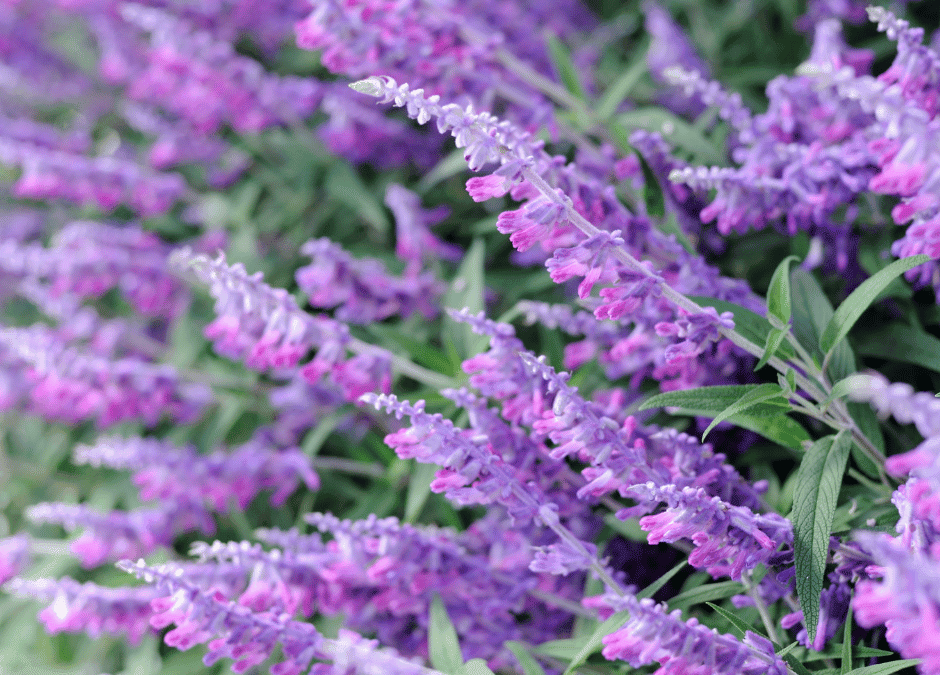
For many people, the word xeriscape brings to mind a yard filled with cactus, rocks, and gravel. While cactus certainly has its place in water-wise landscapes, that’s only a small part of what xeriscaping can be. Here in San Antonio, some of the most beautiful landscapes are filled with colorful flowering perennials that thrive in our climate while using far less water than traditional landscapes. The key is choosing plants that are native, or well-adapted to our region, improving your soil, mulching well, and watering wisely. Texas A&M AgriLife and SAWS both emphasize that xeriscaping is about using the right plant in the right place.
Once established, many drought-tolerant perennials can survive on natural rainfall for much of the year. However, it’s important to understand that even xeriscape plants first enough water to get their roots established, and they also appreciate occasional supplemental irrigation during the hottest, driest stretches of a South Texas summer. A deep watering every couple of weeks during prolonged drought helps plants stay healthy, continue blooming, and enter fall in excellent condition. Think of it as helping your plants through extreme weather rather than routine irrigation.
What Does Xeriscape Really Mean?
Xeriscaping isn’t a plant list, it’s a landscaping method designed to conserve water while creating an attractive landscape. The seven principles include:
- Planning and design
- Healthy, well-prepared soil
- Choosing native, and well-adapted drought tolerant plants
- Efficient irrigation
- Mulching
- Practical lawn areas
- Proper maintenance
Notice that “plant cactus everywhere” isn’t on the list! In fact, well-designed xeriscapes often contain shrubs, ornamental grasses, flowering perennials, vines, and even trees that provide year-round beauty. We’re highlighting a few of our favorite xeriscape, fall-blooming plants today because even though it’s only July, we know that our favorite planting season is just a couple of months away.
Why Fall Is One of the Best Blooming Seasons in San Antonio
Many people expect spring to be the biggest flower season, but experienced Texas gardeners know that fall can be spectacular.
As temperatures cool after summer and occasional rains return, many drought-tolerant perennials begin blooming again—or bloom more heavily than they did during the heat of July and August. Pollinators are also especially active during fall migration, making these flowers valuable sources of nectar for butterflies, native bees, and hummingbirds.
Beautiful Xeriscape, Fall Blooming Perennials for San Antonio
The following xeriscape plants give your landscapes some of the best fall interest with their spectacular blooms, but they don’t stop there. They also feed our local pollinators that come through San Antonio during the fall months, and many also push out blooms in spring and summer too! If you are looking to cut back on your water usage without sacrificing colorful flowers and the health of your plants, it’s time to take a closer look at xeriscape plants.
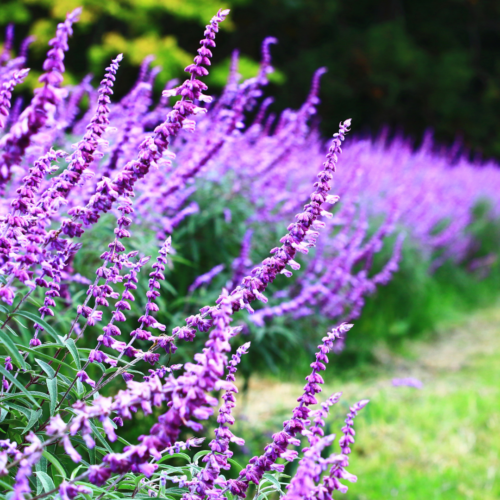
Mexican Bush Sage
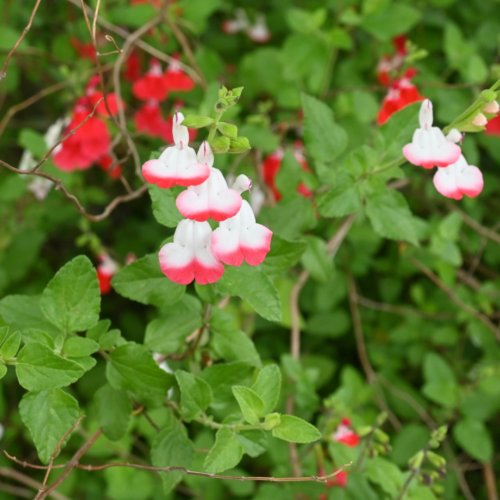
Salvia Greggii
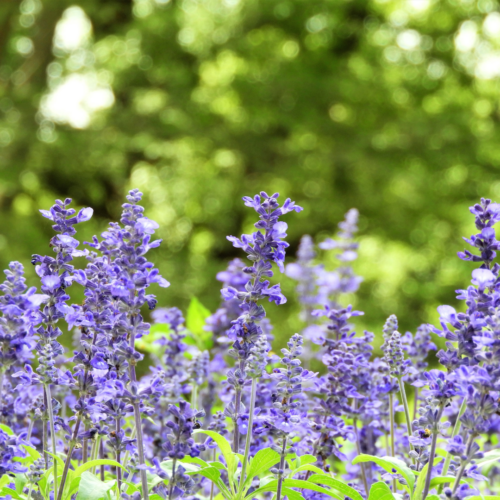
Mealy Blue Sage
Mexican Bush Sage (Salvia leucantha)
One of the stars of the fall garden.
- Purple and white velvety flower spikes
- Blooms late summer through fall
- Full sun
- Low water once established
- Loved by hummingbirds and bees
Autumn Sage (Salvia greggii)
Despite its name, many varieties bloom nearly all year, with one of the biggest flower displays occurring in fall.
- Red, pink, coral, purple or white flowers
- Full sun
- Extremely drought tolerant
- Native to Texas
- Excellent hummingbird plant
Mealy Blue Sage (Salvia farinacea)
A Texas native that provides months of color.
- Blue, purple or white flower spikes
- Blooms spring through fall
- Full sun
- Excellent pollinator plant
- Very water-wise once established
Texas A&M AgriLife lists mealy blue sage as one of the most dependable South Texas perennials.
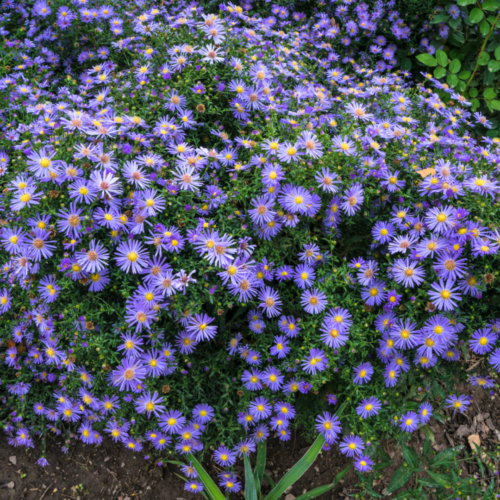
Texas Fall Aster
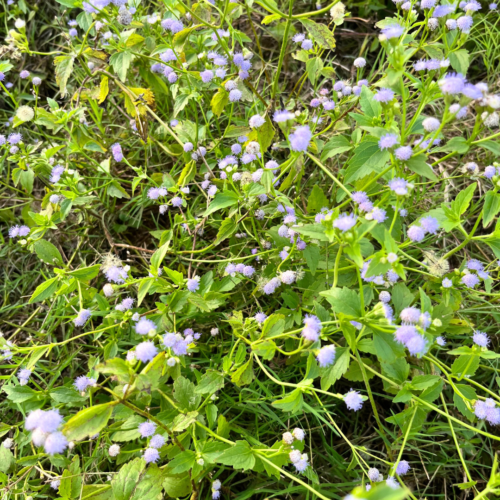
Gregg’s Blue Mistflower
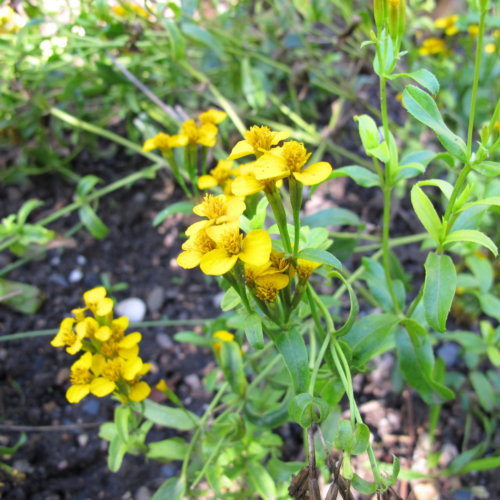
Mexican Mint Marigold
Fall Aster (Symphyotrichum species)
One of the signature flowers of autumn.
- Lavender blooms
- Late-season nectar source
- Full sun to part shade
- Drought tolerant
- Great for butterflies
AgriLife recommends shearing plants during summer to encourage heavier fall flowering.
Gregg’s Mistflower (Conoclinium greggii)
One of the very best butterfly plants for autumn.
- Clouds of lavender-blue flowers
- Blooms late summer through fall
- Native perennial
- Spreads naturally
- Especially attractive to migrating butterflies
GardenStyle San Antonio frequently recommends it for pollinator gardens.
Mexican Mint Marigold (Tagetes lucida)
A beautiful perennial with bonus culinary uses.
- Golden-yellow flowers
- Blooms in fall
- Aromatic foliage
- Drought tolerant
- Pollinator favorite
Texas A&M AgriLife lists it among the best South Texas perennials.
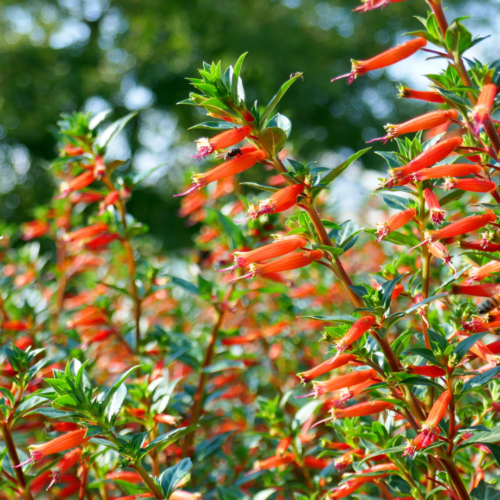
Cigar Plant
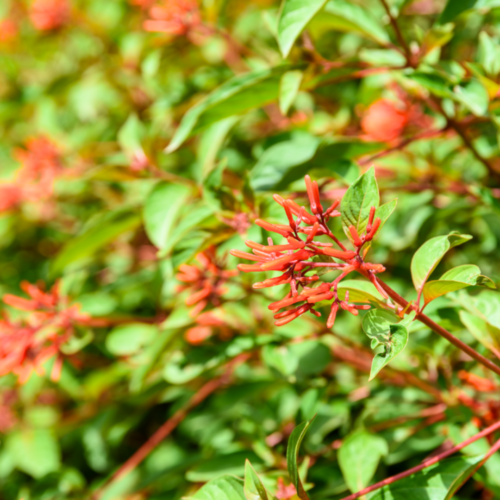
Firebush
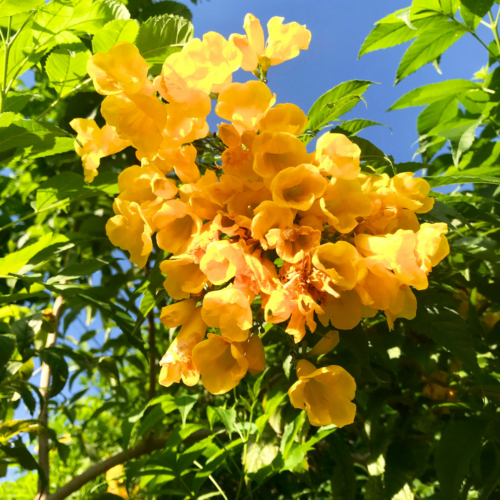
Esperanza
Cigar Plant (Cuphea micropetala)
A hummingbird magnet.
- Orange and yellow tubular flowers
- Blooms heavily in fall
- Heat loving
- Drought tolerant once established
- Great accent plant
Firebush (Hamelia patens)
One of the longest-blooming shrubs for South Texas.
- Orange-red tubular flowers
- Blooms from spring until frost
- Heat tolerant
- Low water once established
- Loved by hummingbirds and butterflies
Esperanza (Tecoma stans)
A San Antonio favorite.
- Bright yellow trumpet flowers
- Blooms spring through fall
- Full sun
- Extremely heat tolerant
- Drought tolerant after establishment
GardenStyle San Antonio and Texas A&M both recommend esperanza for water-wise landscapes.
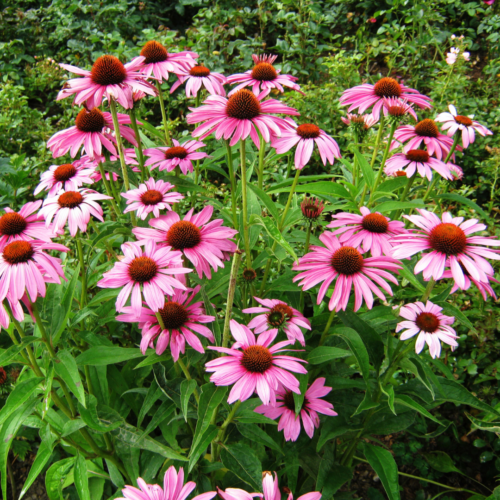
Purple Coneflower (Echinacea purpurea)
Classic prairie beauty.
- Pink-purple blooms
- Summer into fall flowers
- Pollinator favorite
- Seed heads feed birds
- Drought tolerant
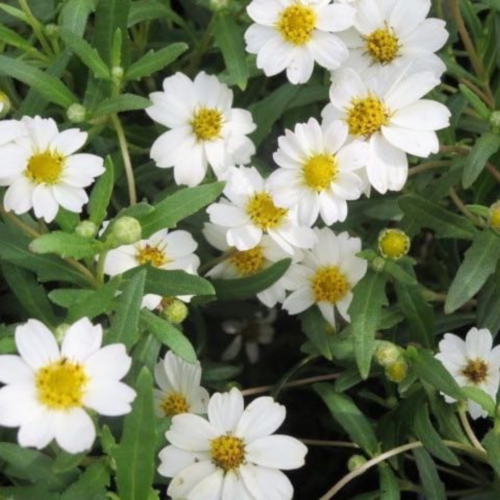
Blackfoot Daisy (Melampodium leucanthum)
One of the toughest flowering perennials for Texas.
- White daisy flowers
- Blooms much of the year
- Loves poor soils
- Extremely drought tolerant
- Sweet fragrance
Texas water-wise programs consistently recommend Blackfoot Daisy for xeriscapes.
Tips for Success
Even drought-tolerant plants need a little help while getting established.
- Water regularly during the first growing season.
- Apply 2–3 inches of mulch to conserve moisture.
- Improve heavy clay soil with organic matter before planting.
- Water deeply but less frequently to encourage deep roots.
- During prolonged summer drought, provide an occasional deep soaking every couple of weeks if rainfall is lacking.
- Avoid frequent shallow watering, which encourages weak root systems.
A Xeriscape Landscape Can Be Full of Color
A successful xeriscape doesn’t have to look dry, barren, or covered in rocks. In fact, some of San Antonio’s most colorful gardens are also among the most water-efficient. By choosing flowering perennials adapted to our climate, you can enjoy months of blooms for pollinators while reducing your water bill and maintenance.
The best part? Once these plants settle into your landscape, many will reward you with years of dependable blooms while relying mostly on rainfall—needing only a helping hand during our hottest and driest summers. That’s a beautiful combination for both gardeners and our Texas environment.
~The Happy Gardener, Lisa Mulroy


