



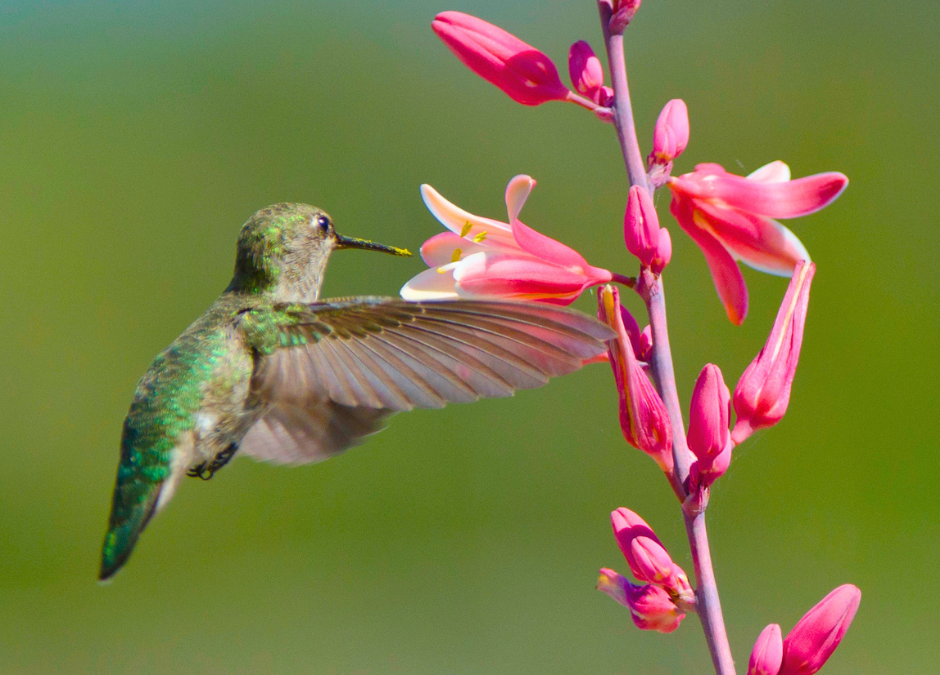
If you’re looking for a plant that can take the San Antonio heat, blazing sun, periods of drought, and still put on an impressive flower show, hesperaloe deserves a spot in your landscape.
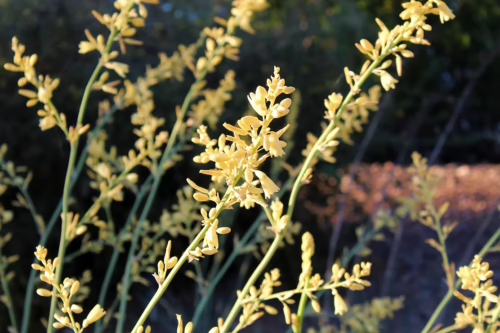
You may know hesperaloe best as red yucca, but despite its common name, it isn’t actually a true yucca. These evergreen, yucca-like perennials are native to Texas and northern Mexico and produce fountains of narrow foliage topped with tall spikes of tubular flowers. Depending on the variety, blooms may be coral, red, burgundy, pink, yellow, or creamy white.
Once established, hesperaloe requires very little water or maintenance, making it an excellent choice for xeriscapes, pollinator gardens, rock gardens, containers, and other low-water landscapes.
The secret to growing them successfully in San Antonio is surprisingly simple: give them plenty of sunshine and don’t let its roots stay wet.
Growing Requirements for Hesperaloe
Sun Exposure for Hesperaloe:
- Hesperaloe should receive full sun (6+ hours) for the best growth and flowering. Some varieties tolerate partial sun, but full sun is their favorite spot in the landscape.
- This is one of those plants that can handle locations where many others struggle.
- Hesperaloe can tolerate hot afternoon sun, reflected heat (areas beside sidewalks/driveways/rock walls), and open xeriscape beds.
Soil Requirements for Hesperaloe:
- Hesperaloe needs very well-draining soil.
- These plants are naturally adapted to rocky, dry environments. Their roots don’t appreciate sitting in wet soil for extended periods.
- They can adapt to a variety of soil types, including our alkaline soils, but drainage matters more than having rich soil.
*An extra word on soil drainage.
- You can improve drainage by adding soil amendments such as expanded shale, pumice, or a similar coarse material. These amendments open up the pores in the soil to allow for water to flow through more efficiently.
- Expanded shale is particularly useful in heavy Texas soils because it helps create spaces for both water movement and oxygen around plant roots.
- Another option is to consider planting hesperaloe on a berm if you have an area where water naturally collects. But you are better off just finding the right spot for the right plant.
- Whatever you do, don’t create a planting pocket that acts like a bathtub. Water needs to be able to move away from the root zone.
Watering Needs for Hesperaloe:
*It is important to know that although drought tolerant, hesperaloe (and all newly planted specimens) still need regular watering for their root systems to develop and get established.
- For newly planted hesperaloe, water deeply and then allow the soil to begin drying before watering again.
- You’ll probably find yourself needing to water deeply every 5-7 days (more in extremely hot and dry temperatures), for the first 4-8 weeks. This is the most crucial time for root establishment.
- This pattern of deep and infrequent watering encourages roots to travel deeper into the surrounding soil rather than keeping the surface constantly wet. This results in a plant that learns how to “find” water rather than always relying on you to deliver it to them.
- After the first 8 weeks, start increasing the amount of time between watering. You may find you can go a couple weeks before watering again, especially if planting in fall and provided you are watering deeply each time. YOU will have to learn to test for soil moisture so you can gauge when you need to water next.
- Once fully established, rainfall may provide much of the water your plant needs.
- During San Antonio’s prolonged periods of extreme summer heat and drought, an occasional deep watering can keep plants looking better and encourage flowering even when a plant is fully established.
Fertilizing Needs for Hesperaloe:
Very minimal fertilizing is needed if any.
- A light dose of a slow-release fertilizer can be offered in early spring, but it’s generally not needed.
Pruning Needs for Hesperaloe:
Pruning hesperaloe is more of a grooming task than a bunch of maintenance.
- Remove completely browned material from around the base of plant.
- Cut flower stalks down to the base once they have finished blooming.
- And of course, don’t keep anything that is broken on the plant.
Dividing Hesperaloe:
Over time, this plant produces offsets and develops into a larger clump. Eventually, an older plant may become wider than you’d like or simply look overcrowded. That’s when it’s time to divide it.
The cooler temperatures of fall make it an excellent time to divide established hesperaloe in San Antonio. There will be less stress on the newly separated plants and soil will still be warm enough to support root development.
To divide:
- Dig around the portion of the clump you want to remove.
- Separate an offset with a healthy section of roots attached.
- Replant it at approximately the same depth it was growing previously.
- Water thoroughly after planting.
- Provide occasional water while the division establishes.
And just like that, you’ve got another hesperaloe for your landscape or one to share with a gardening friend!
A Comparison of Hesperaloe Varieties:
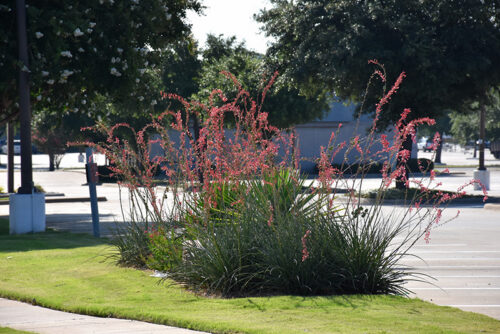
Although most commonly known as red yucca, hesperaloe actually comes in a range of colors and sizes. Here are the average mature sizes of some of the hesperaloe we carry and their bloom color:
- Desert Dusk®: 2-3′ T x 2-3′ W, deep burgundy maroon
- Stoplights®: 2′ T x 2′ W, crimson red
- Brakelights®: 2′ T x 2′ W, bright red
- Little Miss Sunshine: 3′ T x 3′ W, bright yellow
- Red Yucca: 3′ t x 3-5′ W, coral-pink to red
- Yellow Yucca: 3-4′ T x 3-4′ W, yellow
- Giant: 4-6′ T x 4-6′ W, creamy white
Why We Love Hesperaloe
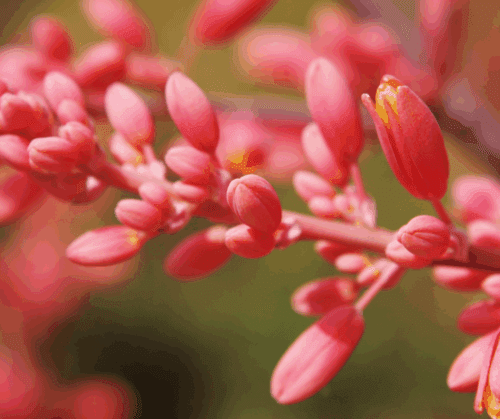
San Antonio summers are no joke. The heat and drought-like conditions we face on an almost yearly basis is intense. The fact that this plant survives and thrives throughout these desert-like conditions is just one of the reasons we love hesperaloe. It’s not the only reason, but it is a darn good one. We also love that it is particularly useful anywhere you want structure, texture, and some great pops of color.
But have we mentioned the pollinators? The tall tubular flowers are especially attractive to hummingbirds. And since hesperaloe bloom summer and well into fall. You will be making our local pollinators very happy when you add this plant to your landscape. Try pairing hesperaloe with other San Antonio xeriscape heat lovers such as agaves, cactus, salvias, lantana, ornamental grasses, Blackfoot daisy, skullcap, and Texas sage.
Give it full sun, excellent drainage, deep but infrequent watering, and plenty of room to reach its mature size, and you’ll have an easy-care perennial that provides year-round texture and months of flowers. There aren’t many flowering perennials that can handle blazing afternoon sun, reflected heat, drought, and our unpredictable Texas weather while requiring so little attention. This one is worth scooping up!
Happy Xeriscaping!
~The Happy Gardener, Lisa Mulroy


This plant is considered poisonous (mildly) to cats and dogs. It would help to include this information. Thank you
Thank you for pointing this out! We appreciate you sharing this information with fellow pet owners. Because plant toxicity can vary by plant species and by animal, we always encourage customers with pets to research the specific plants they are considering and their pets’ individual needs before bringing a new plant home.
Our plant articles primarily focus on growing and care information, so they may not include pet-toxicity information for every plant. However, we certainly understand how important this information can be to pet owners, and we appreciate you bringing it to the attention of our readers!