


There’s something special about planting a garden that feels right at home in South Texas. Native plants have spent generations adapting to our heat, our unpredictable rainfall, our stretches of drought, and even those occasional cold snaps that surprise us in winter. Because they’re naturally suited to our climate, they typically need far less fuss once established. That means less watering, less fertilizing, and less overall maintenance compared to many non-native choices. After their roots are settled in, most native plants can rely largely on natural rainfall, making them a smart and sustainable option for San Antonio landscapes.
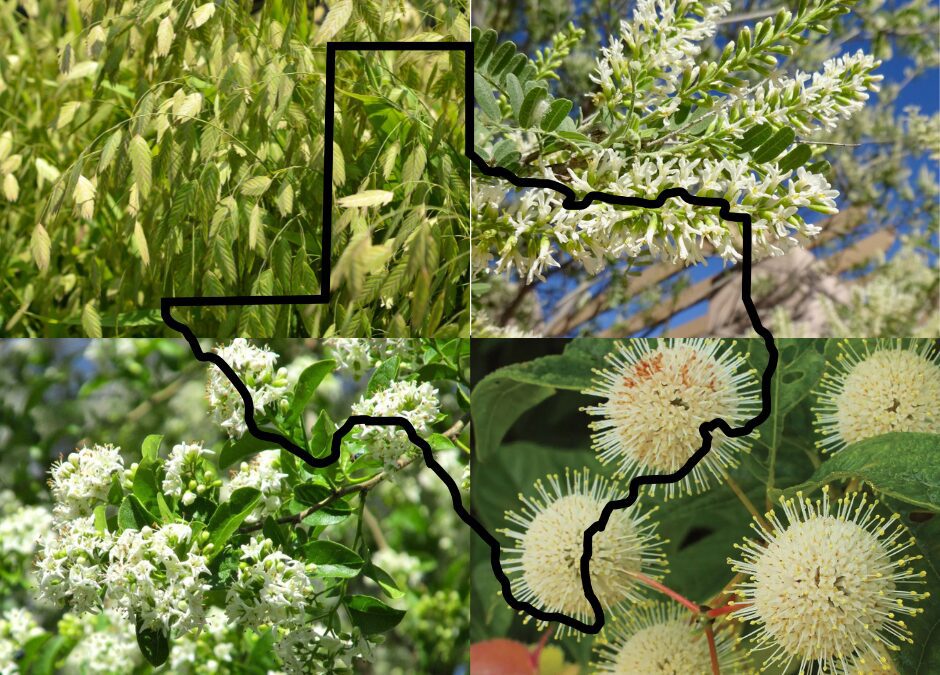
Beyond being easy-care, native plants play an important role in supporting our local ecosystem. They provide food, shelter, nectar, and nesting spaces for birds, butterflies, bees, and beneficial insects that have evolved alongside them. Choosing natives helps create a garden that not only looks beautiful year-round but also gives back to the wildlife that makes our Texas landscapes so vibrant. Let’s take a look at four native plant options we are highlighting this month at each of our Rainbow Gardens locations.
4 Native Plants to Consider for San Antonio, Texas
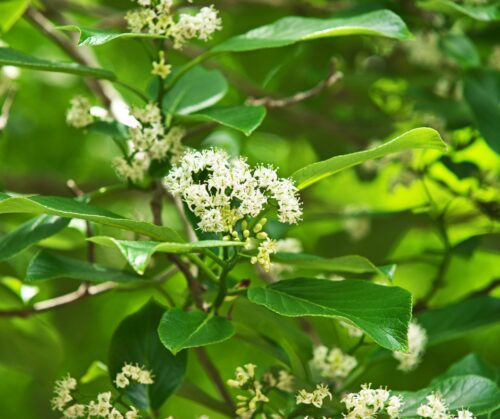
Anacua Tree
The Anacua tree is one of those underappreciated Texas natives that deserves far more attention in San Antonio landscapes. With its broad canopy, textured bark, and rich green foliage, it brings a lush, established look to the garden. In spring and early summer, it produces clusters of delicate white, star-shaped flowers that almost resemble small jasmine blooms, filling the tree with a soft, elegant look.
Later, it sets bright orange fruit that birds absolutely love, adding seasonal interest and bringing extra wildlife activity into the yard. Its dense shade makes it an excellent choice for patios, sitting areas, or anywhere you need relief from the intense summer sun.
What makes Anacua especially valuable here is its toughness. It handles our heat extremely well, tolerates drought once established, and stands up beautifully to the limestone-based soils common throughout San Antonio. It’s a tree that gives the landscape structure and shade while still feeling natural and regionally appropriate.
For anyone wanting a distinctive shade tree that supports birds and thrives in South Texas conditions, Anacua is a standout choice.
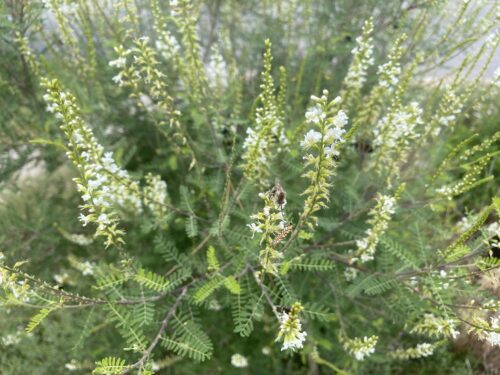
Kidneywood
Kidneywood is a true Texas gem, especially for pollinator gardens. This airy native shrub has fine-textured foliage that gives it a light, delicate appearance, but don’t let that fool you—it’s incredibly tough. In late spring through summer, it becomes covered in slender spikes of creamy white flowers with an almost sweet, vanilla-like fragrance that draws in bees, butterflies, and other beneficial insects.
The foliage has a fresh and citrusy scent, reminiscent of grapefruit, when crushed between your fingers. This native plant has a naturally loose, graceful habit that works beautifully in native gardens and wildlife-focused landscapes.
In San Antonio, Kidneywood is a fantastic fit because it thrives in heat, rocky soils, and drought conditions. Once established, it asks for very little water and performs beautifully through our long hot summers. When it’s extremely hot, kidneywood may shed its leaves, but once a rain hits, the shrub gets flush with foliage again. It’s especially well-suited for xeriscapes and low-water gardens, where it provides months of bloom and pollinator activity without demanding much in return.
If you want a native shrub that feels soft and natural while being incredibly resilient, Kidneywood is an excellent choice.
Buttonbush
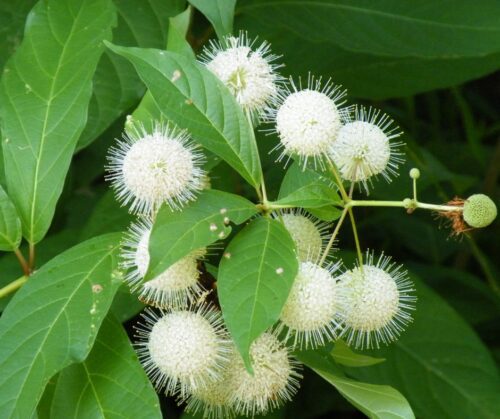
Buttonbush is one of the best native plants you can add if your goal is to support pollinators and birds. Its blooms are unforgettable—perfectly round, pincushion-like white flower spheres that look almost whimsical in the landscape.
These unique blooms are magnets for butterflies, bees, and hummingbirds, creating nonstop activity when the plant is in flower. Later, its seed heads continue to provide visual interest and food for wildlife.
This plant is especially useful in San Antonio landscapes where you may have a low-lying area, rain garden, or spot that tends to stay a bit more moist after storms. While it thrives in moisture, it is surprisingly adaptable once established and can still handle our summer heat.
Because of its wildlife value and striking blooms, it’s one of the best choices for gardeners wanting something both beautiful and ecologically meaningful. Buttonbush proves that native plants can be every bit as eye-catching as any ornamental while being far better suited to our local conditions.
Inland Sea Oats
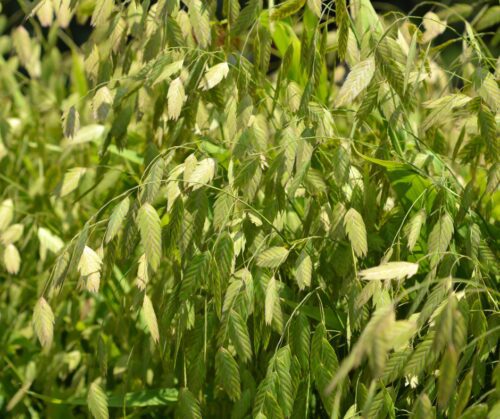
Inland Sea Oats bring movement and softness to the landscape in a way few grasses can. This graceful native ornamental grass forms arching clumps of bright green foliage topped with dangling seed heads that catch every breeze. Those flattened, oat-like seed heads begin green and mature into a soft bronze-tan, giving the plant beauty across multiple seasons.
In a garden bed, along pathways, or mass planted in naturalized areas, it adds texture and a relaxed, flowing feel that works beautifully in both formal and cottage-style designs.
For San Antonio gardens, Inland Sea Oats is especially useful because it tolerates a range of conditions, including part shade and dry periods once established. It’s fantastic for erosion control on slopes and performs well in areas that can be tricky for other plants.
It also provides cover and seed for birds, making it both beautiful and beneficial. It’s one of those plants that quietly does a lot of work in the landscape while still looking elegant year-round.
Together, these four Texas natives create a landscape that feels rooted in place—beautiful, resilient, and full of life. In San Antonio, where water-wise gardening and heat tolerance matter so much, plants like these truly shine. They don’t just survive here—they thrive.
~The Happy Gardener, Lisa Mulroy


