



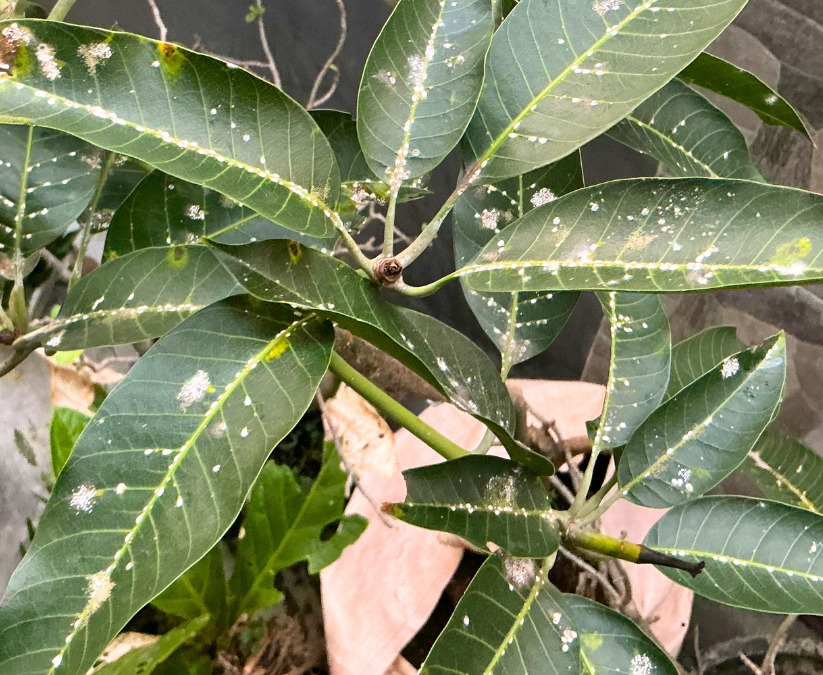
Are your plants showing signs of weakness? Perhaps they just don’t look like they are growing healthily, or maybe you’re seeing yellow leaves or leaves dropping? Mealybugs are out and about right now, and it’s possible that they may be out and about on your plants. Let’s take a closer look at these garden pests so you can clearly identify them and kick them to the curb.
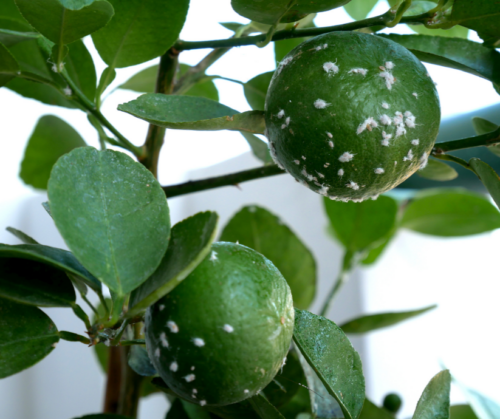
Mealybugs fall into the category of insects that suck, literally and figuratively. They are soft-bodied garden insects, like aphids, with piercing mouthparts that they use to stick into plant material and suck out the sap. The sap depletion is what eventually leads to yellowing leaves and/or leaf drop and wilting of plants. Like aphids, mealybugs also secrete honeydew, a sugary and sticky waste product that sooty mold may eventually grow upon. Eventually this sooty mold fungus can reduce the plant’s ability to conduct photosynthesis, which in the garden world means your plant starts to suffer. You may even see an ant infestation around plants that have a mealybug infestation as they are attracted to the honeydew.
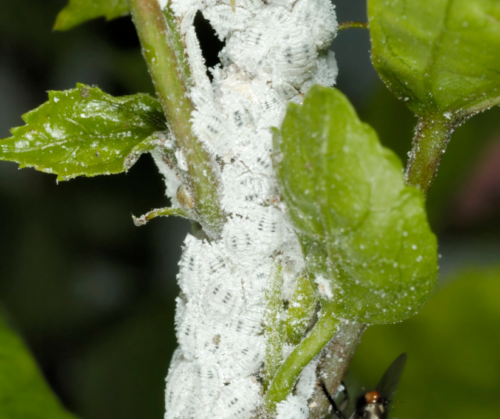
Mealybugs have a ‘cottony’ or ‘dusty’ appearance, but they actually have a waxy coating. The crevices of your plant stems may have a coating that looks like tiny fibers of shredded cotton, and when you inspect closer, you may see slightly larger clumps actually moving! Gross!
It’s easy to get freaked out if you haven’t encountered these pests before, but they are actually quite common and frequently found on houseplants as well as in the garden. Don’t worry, we got you. We have quite a few options for control.
How to Control Mealybugs
- Spray plants with a stream of water from the hose. Oftentimes this is effective enough to dislodge and displace the pests. No chemicals needed, no risk of harming beneficial insects in your garden.
- Release beneficial insects. If your mealybugs are on outdoor plants, releasing beneficial insects like ladybugs and lacewings is a great, non-toxic way to let nature do the pest control for you.
- Manually remove pests, by pruning of infected sections if possible, or treat by dabbing isopropyl alcohol on them and wiping them off. If you don’t have a huge infestation of mealybugs, you can use a Q-tip dipped into isopropyl alcohol (at least a 70%, or less, solution) and dab the pests individually. They will eventually dry up and die and fall off the plant. This is a great treatment option for houseplants.
- Spray with insecticidal soap. This is a pretty effective treatment, especially if you make the recommended follow up applications which are usually every 7-10 days (read your labels), until you don’t see any more pests.
- Spray plants with Neem oil. Neem is a great natural pesticide, but you need to be careful about applying it when it is hot outside. You should only apply this in the early morning hours or late evening hours, out of the exposure of sunlight, and when temperatures are below 85º F, or you can risk burning your plant.
- Apply a systemic insecticide. The last step would be to use a systemic insecticide, and we recommend this only in the case of a severe infestation of mealybugs. Systemic insecticides are taken up by the plant and pests are killed off after ingesting the plant. Try all the other methods above before reaching for systemic insecticide as it is a strong chemical that can harm pollinators and is also not safe for edible plants.
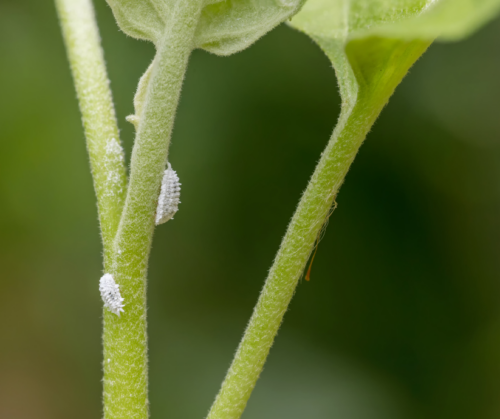
Early detection is always your best chance for successful pest control. Pests in their early stages are easiest to treat. Take some time to inspect your plants thoroughly on a daily basis. Mealybugs can hide under leaves (pests LOVE the undersides of foliage), in the crevices of stems, around the base of stems, wedged between nodes, and elsewhere. They are really good at hiding, so when applying any insecticides or even when just spraying a stream of water, the undersides of the leaves are really the first place to start.
Mealybugs can affect many plants, but a few of their faves are: most houseplants, hibiscus, philodendron, citrus, and spider plants. However, this is not an extensive list by all means. I just found some mealybugs on my coral honeysuckle vine. They can show up anywhere, which is why it’s always important to keep a keen eye on all your garden and landscape plants.
Hope this has helped, and happy gardening!
~The Happy Gardener, Lisa Mulroy


