



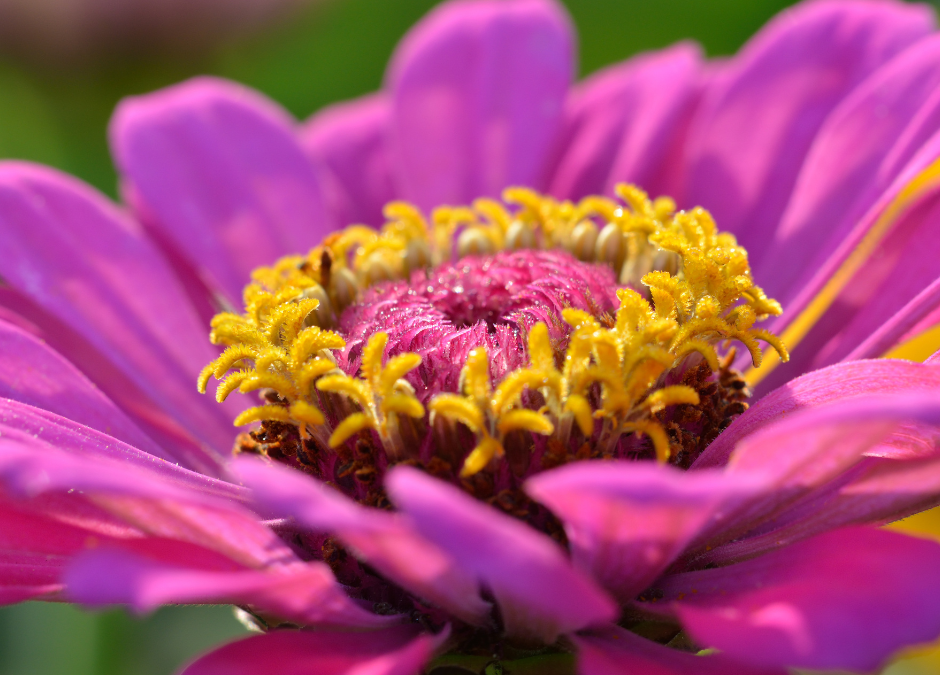
If you’re looking for one annual flower that delivers months of colorful blooms with very little fuss, it’s hard to beat zinnias. These cheerful annuals thrive in the Texas heat, attract butterflies and other pollinators, make excellent cut flowers, and are one of the easiest flowers to grow from seed. By sowing seeds every few weeks, you can enjoy fresh blooms from spring all the way until the first frost. Let’s take a closer look at these vibrant, cheerful annuals and get some expert advice for growing zinnias.
Why Grow Zinnias?
There are plenty of reasons gardeners return to zinnias year after year.
- Easy to grow from seed
- Fast-growing and quick to bloom
- Flowers late spring, all summer long, and well into fall
- Loves Texas heat
- Excellent cut flower
- Attracts butterflies and pollinators
- Available in nearly every color except true blue
- Great for beginners
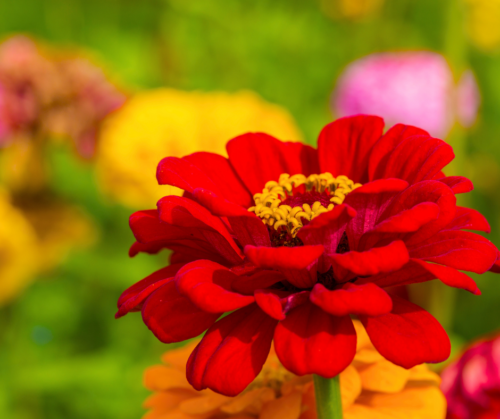
Growing Zinnias from Seed Is Surprisingly Easy
One of the best things about growing zinnias is that they don’t require any special treatment before planting. They don’t require cold stratification or indoor seed starting; in fact, they often perform better when sown directly into the garden.
Simply wait until the danger of frost has passed and soil temperatures have warmed in spring. Plant seeds about ¼ inch deep, cover lightly with soil, and keep them consistently moist until they germinate. Most varieties sprout in 5 to 10 days, and many begin flowering in as little as 6 to 8 weeks.
The Secret to Zinnia Blooms from Spring Until Frost
If you’ve ever planted just one crop of zinnias in spring and wondered why the flowers begin slowing down later in the season, it might be because you’ve never tried succession planting. Succession planting is the practice of sowing seeds or planting new crops at regular intervals—rather than all at once—so that fresh plants mature and bloom as older ones begin to fade. This simple gardening technique extends your harvest or flowering season and provides continuous color or produce for months.
For zinnias: Sow a new batch of seeds every 2–3 weeks from spring through late summer. As one planting reaches its peak and begins to slow down, the next planting will be coming into bloom, giving you a continuous display of flowers until the first fall frost. In San Antonio and much of South Texas, you can usually continue sowing seeds until about 8 weeks before your average first fall frost, giving you colorful flowers well into autumn.
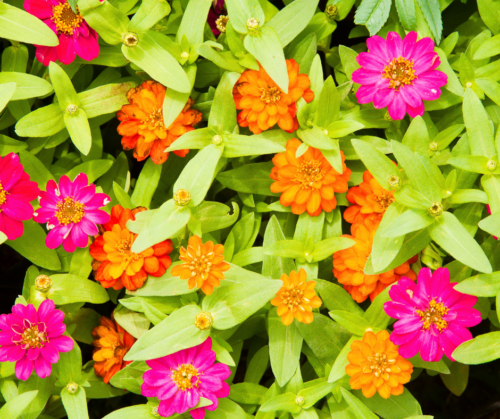
Quick Zinna Growing Guide
Sun
- Full sun (at least 6-8 hours daily)
- More sun equals more flowers.
Water
- Water deeply when the soil begins to dry.
- Always water at the base of the plant.
- Avoid wetting the leaves whenever possible to reduce powdery mildew and other fungal diseases.
- Morning watering is best so foliage dries quickly if it does get wet.
Soil
- Well-drained soil is essential.
- Average garden soil works well.
- Amend heavy clay with compost before planting.
Fertilizer
- Mix compost into the soil before planting.
- Apply a balanced, slow-release fertilizer at planting.
- Feed lightly every 4–6 weeks during the growing season if needed.
- Avoid excessive nitrogen, which encourages leaves instead of flowers.
Average Mature Size for Zinnias (There’s a zinnia for every garden.)
Dwarf varieties (Perfect for borders and containers.)
- Height: 6–12 inches
- Width: 8–12 inches
Medium varieties (Great for landscape beds.)
- Height: 18–30 inches
- Width: 12–18 inches
Tall cutting varieties (Ideal for cutting gardens and attracting pollinators.)
- Height: 3–4 feet
- Width: 18–24 inches
Now here are a couple of easy tricks professional flower growers use that many home gardeners never learn. Once young zinnia seedlings reach 8 to 12 inches tall and have 3 to 5 sets of true leaves, pinch off the growing tip just above a pair of leaves. Although it may feel strange removing that first stem when you think your zinnia is just getting started, you’ll be rewarded with many more blooms throughout the season. This simple step encourages the plant to branch out instead of growing one tall stem. The result is fuller plants, more and stronger stems, and the best part…more flowers!
The second trick is even easier. The more flowers you cut, the more flowers the plant makes. You can enjoy these zinnias in beautiful cut flower arrangements. Removing faded blooms regularly before they begin producing seed, keeps the plant from thinking its bloom period is ending. The more you harvest, the more they bloom. However, I sometimes like to allow some of the flowers to dry and in fact, go to seed. Then I can use those seeds for my successive plantings. Free seeds, hooray!
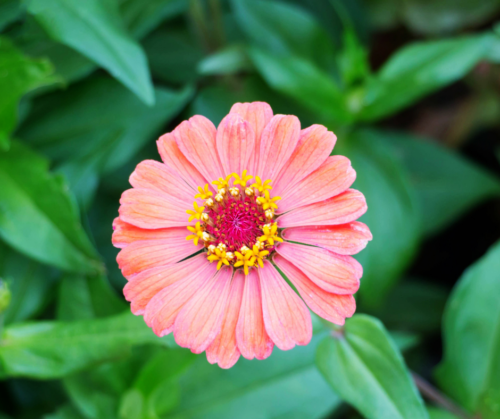
Common Zinnia Problems (and How to Avoid Them)
The most common problems with zinnias are actually pretty easy to avoid.
- Powdery Mildew can show up on the leaves of zinnia. You can easily prevent this by:
- Watering beneath the foliage
- Providing good air circulation
- Spacing plants properly
- Growing in full sun
- Removing heavily infected leaves
Some modern varieties are also more mildew resistant than older heirloom types.
2. Tall Plants Falling Over Many cutting varieties reach 3 to 4 feet tall and seasonal winds can take their toll. Prevent this by:
- Installing stakes or plant supports early.
- Growing them close enough together (without overcrowding) so neighboring plants help support each other.
- Pinching early also creates sturdier stems.
3. Too Few Flowers. This problem is usually caused by one of three things:
- Too much shade
- Too much nitrogen fertilizer
- Failure to deadhead spent blooms
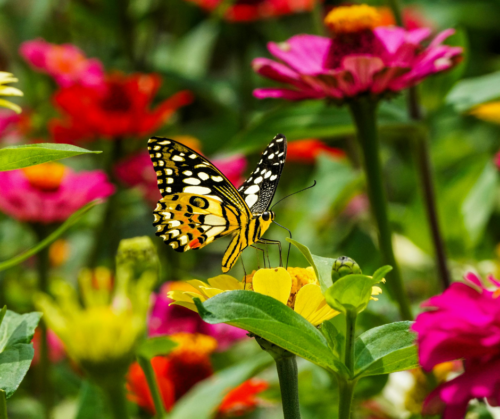
Zinnias bring a lot of joy to gardeners who love vibrant, colorful annuals. They also bring a lot of joy to our local pollinators. Butterflies are especially attracted to zinnias. But you’ll also most likely see: native bees, hoverflies, beneficial wasps, and occasionally hummingbirds (who usually visit the taller varieties). Single-flowered varieties tend to provide easier access to nectar and pollen than double blooms, making them especially valuable in pollinator gardens.
If you’ve never tried growing zinnias, this is a good year to start. They’re inexpensive, easy to grow from seed, thrive in Texas heat, and reward you with months of colorful blooms that brighten your landscape while supporting butterflies and other pollinators. Go get some zinnias today!
~The Happy Gardener, Lisa Mulroy


Getting seeds from removed flowers ?
Yes! Once the flower centers are all dried up, you can open up the center and the seeds are actually stored right down in there. It’s a great way to stock up on your seed collection. We’ll try to do a YouTube video on it soon.