


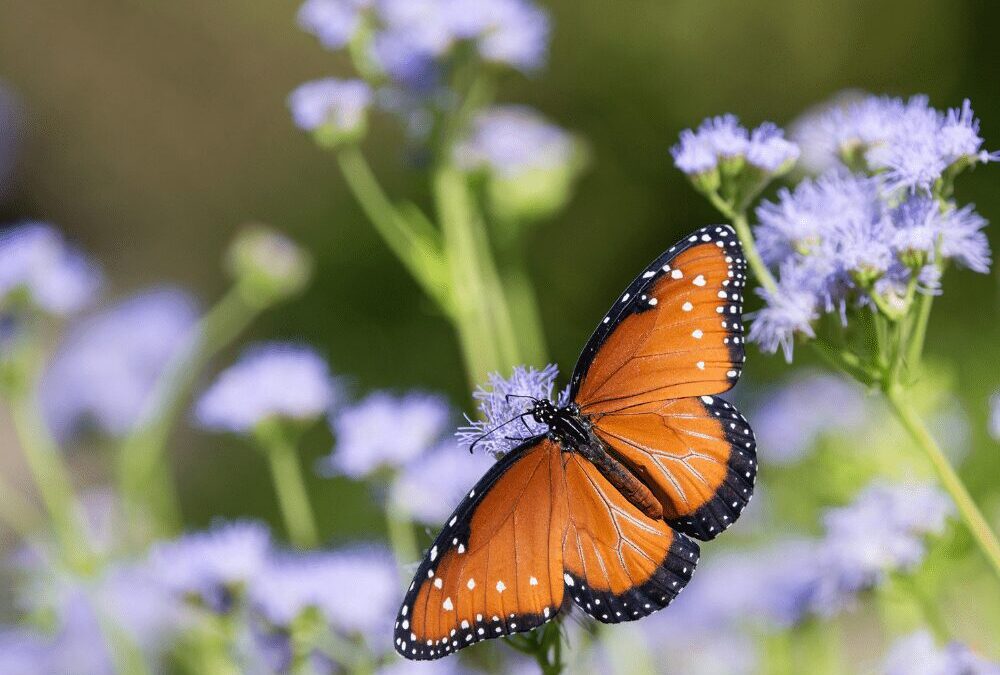
There’s something magical about stepping into the garden and seeing butterflies fluttering through the lantana, bees humming around the salvias, and hummingbirds zipping from bloom to bloom. But if you really want a pollinator garden that feels alive—not just pretty—you need both host plants and nectar plants.
Think of it this way:
- nectar plants = the restaurant
- host plants = the nursery
If you only plant nectar flowers, you’re inviting pollinators over for a snack.
If you include host plants too, you’re giving them a place to live, lay eggs, and raise the next generation. That’s when your garden truly becomes a habitat.
Two Reasons For Host & Nectar Plants
#1 More Pollinator Activity (Butterflies That Actually Stay)
This is the big one.
A butterfly may visit your garden for nectar, but she won’t stay to raise caterpillars unless the right host plant is nearby.
For example:
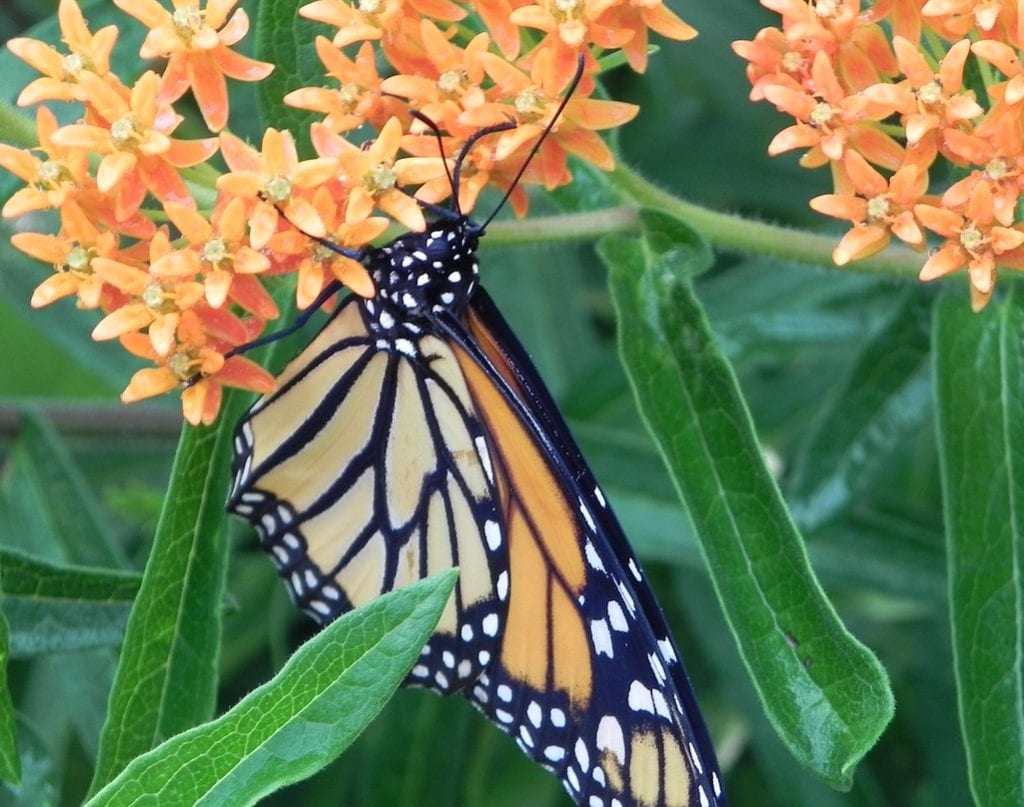
Monarchs
Adult monarchs love nectar from:
- lantana
- salvias
- mistflower
- zinnias
But they must lay eggs on milkweed.
No milkweed = no monarch caterpillars.
That’s why gardens with only nectar plants may see butterflies visit, but gardens with host plants become places where butterflies return again and again.
Gulf Fritillaries
These bright orange butterflies absolutely love to sip on:
- pentas
- zinnias
- lantana
But their caterpillars need:
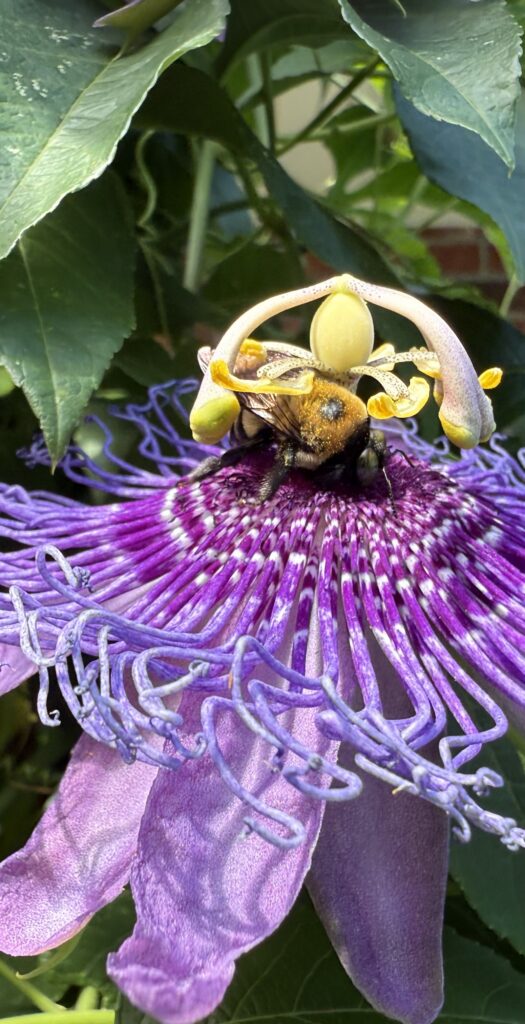
- passion vine / passionflower
Once you plant passion vine, you’ll often start seeing them almost immediately.
Black Swallowtails
Adults visit nectar plants like:
- verbena
- zinnias
- salvias
Their caterpillars feed on:
- dill
- parsley
- fennel
- rue
Which means your herb garden can double as a butterfly nursery. Share your herbs and buy one for you and one for the pollinators.
#2 Support for Local Wildlife & Our Ecosystem
This is where pollinator gardening becomes bigger than flowers. A true pollinator garden helps support the entire local ecosystem.
When you plant host and nectar plants, you’re supporting:
- butterflies
- native bees
- hummingbirds
- moths
- beneficial insects
- birds that feed on caterpillars
So when you grow milkweed, passion vine, dill, and frogfruit, you’re not just helping butterflies—you’re supporting birds, lizards, beneficial insects, and the larger food web in San Antonio landscapes. It’s one of the easiest ways to turn a garden into a living habitat.
Pollinator Host Plants That Double as Nectar Plants
We love when a great host plant can also feed the adults in the room. The following are a few of our favorites that take on double duty. We’ve included pollinators besides butterflies that particularly enjoy the following:
1) Milkweed (Asclepias)
Best for:
- monarch butterflies
- queen butterflies
Top picks:
- butterfly weed
- green milkweed
- antelope horns
- zizotes milkweed
- tropical milkweed (best used carefully and cut back seasonally)
2) Passion Vine / Passionflower
Best for:
- Gulf fritillary butterflies
- variegated fritillaries
- bees
This is one of the most rewarding vines for San Antonio gardens. The flowers are beautiful and the butterflies absolutely love it. Just keep in mind that this vine doesn’t really know boundaries. It can show up in random places in the landscape.
3) Dill, Fennel & Parsley
Best for:
- black swallowtail butterflies
- little bees and beneficial insects
A fun choice for vegetable and herb gardeners. Seeing little striped caterpillars on dill is basically a badge of honor. Plus, you get a great herb for making pickles!
4) Frogfruit
Best for:
- phaon crescent
- buckeye butterflies
- bees
A fantastic low-growing groundcover for local pollinator gardens. Frogfruit is quickly shedding its underrated status and more and more gardeners are realizing its benefits. Once established, frogfruit doesn’t need much care at all. Its flowers are adorable and the pollinators love it.
5) Flame Acanthus
Best for:
- Crimson Patch and Texas Crescent butterflies
- hummingbirds
A San Antonio, Texas native favorite that handles heat beautifully. It’s not just butterflies that love this perennial, the hummingbirds will be delighted. I recommend not skipping a pruning session each year around mid July. It can take it, and if you don’t, it tends to flop outward. Cut it back by 1/3. This one also likes to reseed and can pop up in other places around the landscape.
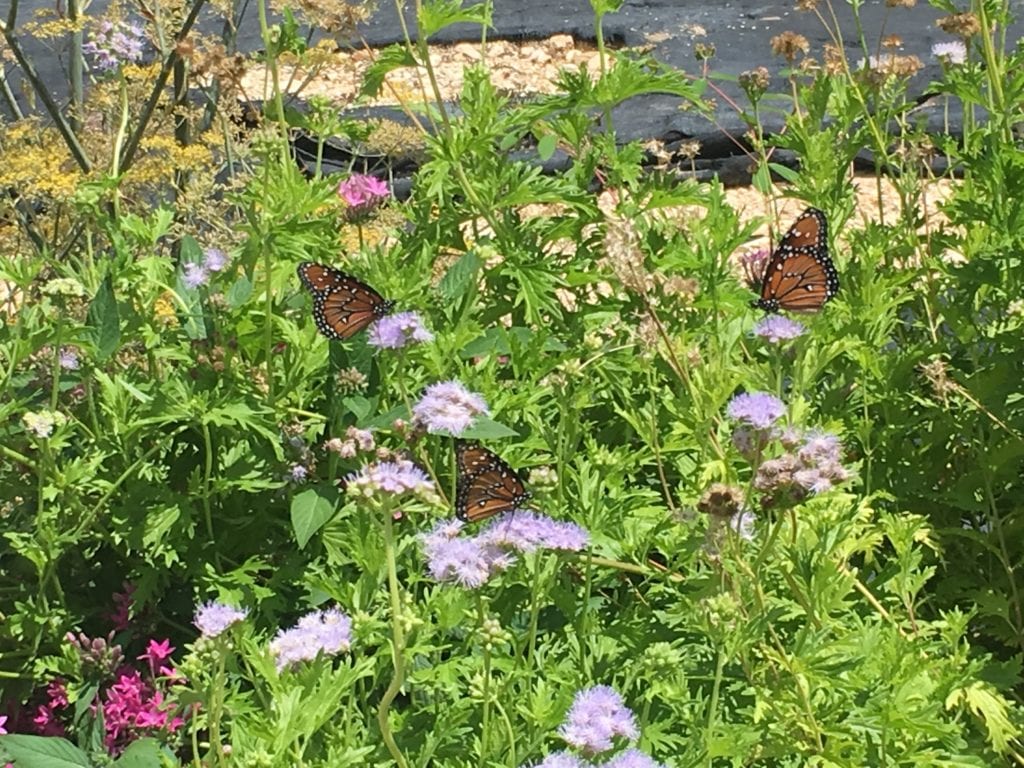
6 Great Nectar Plants for San Antonio
These are your heavy hitters. These plants are full of nectar for the pollinators and they are generally easy to find as they are commonly well stocked in the nursery.
1) Salvias
Great for:
- bees
- butterflies
- hummingbirds
Top choices:
- Salvia greggii
- Mystic Spires
- mealy blue sage
Possibly the best all-around pollinator plant for San Antonio. The reason being is that salvia not only has a long blooming period, it can also bloom multiple seasons, and sometimes throughout the full year. I’d recommend cutting it back by 1/3 after each season’s bloom so it can grow in fuller with more blooming potential for the next season.
2) Gregg’s Mistflower
Especially loved by:
- queens
- monarchs
- skippers
- bees
Honestly one of the best butterfly plants for our area. It is a complete butterfly magnet. Plant a patch of Gregg’s Blue Mistflower and on a sunny day, the butterflies will dance around the top of the flowers all day long. This plant does like to stretch its legs, so it’s best in the ground as opposed to containers.
3) Lantana
Perfect for:
- butterflies
- bees
- hummingbirds
Heat-loving and nonstop color. There are a ton of colors and growing habits you can choose from when it comes to lantana. The only Texas native variety is Lantana horrida (or urticoides), a gorgeous bright orange hue. But ‘New Gold’ and ‘Purple Trailing’ are vareties that are sterile and don’t go to seed, making them non-invasive. Great in landscape and containers.
4) Zinnias
Great for:
- swallowtails
- monarchs
- bees
- hummingbirds
Easy, cheerful, and fantastic for butterflies. These brightly-hued annuals are a cinch to grow from seed, making it easy to establish a nice patch of nectar-filled flowers for visiting pollinators. There shouldn’t be a bare spot in your sunny gardens. Plant some zinnias.
5) Pentas
Terrific for:
- butterflies
- hummingbirds
These are great nectar providers that work wonderfully in container arrangements. Tiny, individual flowers make each giant cluster on the plant, and that makes for a lot of spots for a humminbird’s or butterfly’s probocis to poke into. We particularly love the ‘Butterfly’ variety of pentas. Excellent summer performer.
6) Turk’s Cap
A must-have for:
- hummingbirds
Once you see the adorable flowers on Turk’s Cap, we think you’ll get it. Cherry-red flowers top the deep-green foliage stems and make the more shaded areas of your landscape come alive with color and the movement of darting hummingbirds.


Do you have salvia gaurganita
Yes, we do carry that. Is there a specific variety you are looking for?