



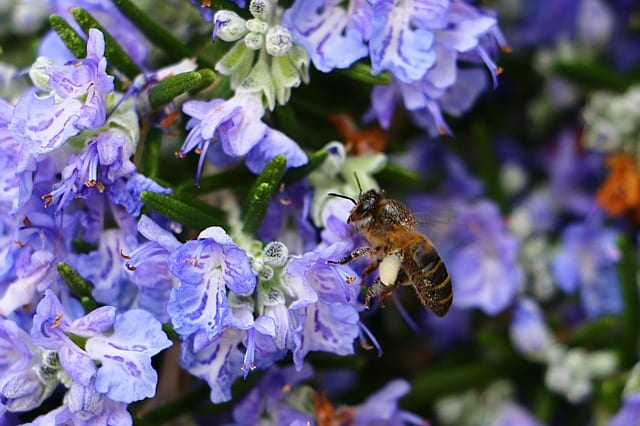
For the most part, we are all pretty hip to the idea of including pollinator-attracting plants into our gardens, whether we have full landscapes or compact patio/balcony gardens. We understand the importance of protecting this incredibly vital part of our food chain. Today I wanted to give you a reminder that one of the easiest ways you can help protect pollinators is by being mindful about how you treat for pests.
4 Easy Ways to Protect Pollinators When Treating Pests
Wait until early evening to treat plants.
- Bee activity greatly decreases as the day fades. If you wait until they tuck themselves in, you’ll be less likely to accidentally spray the bees that are getting in their last sips before the sun goes down. It’s also better for your plants to treat in the cooler evenings or very early mornings. The mix of sun, high temperatures, and chemicals is a recipe for chemical burns to your plants. Even natural products like Neem Oil can scorch your plant’s foliage if applied under the sun’s rays.
Avoid spraying on windy days.
- Products can be set adrift by a gust of wind and may end up settling on a pollinator host plant nearby. I remember spraying a wasp nest, only to watch in horror as tiny particles drifted through the air and landed atop my pansy bed, settling over them like a dusting of fine glitter. I spent days trying to ‘wash’ any remnants off. In the end, the pansies got pulled up because I couldn’t trust that they were no longer contaminated. Save yourself the heartache and only treat on calm, cool mornings or evenings and take extra caution to protect and cover surrounding plants from overspray if warranted. The pollinators will thank you.
Allow for more time.
- Allow yourself extra time to observe your garden for pests, as well as extra time to opt for “pinpoint” control. This means you dedicate time to really inspect your plants for early signs of pest damage. Early detection is key for best control. Early detection means you can easily swipe off a cluster of stink bug eggs before they hatch and attack your plants. No pesticide needed. Early detection means you can zone in on the problem and spot treat it before it becomes a full infestation where you would basically need to drench your plant. A little dab of isopropyl alcohol on a Q-tip can target mealybugs directly. Spot treatments or manual removal of pests offers much more protection to the pollinators that live close by.
Learn, learn, learn.
- Learn to read the labels of all products, particularly the precaution section. Labels generally list what they are harmful to. Learn that even though you think you are being safe by choosing organic products, there are some that can be detrimental to specific pollinators. Bt (Bacillus thuringiensis) is an organic product that is very effective against cabbage loopers and cutworms. However, it can also be fatal to a destined-to-be-butterfly caterpillar as well. When you learn that it’s difficult to find a pest control product that wouldn’t have an adverse effect on any pollinator that comes in contact with it, it becomes easier to choose the least toxic options possible or opt for natural control.
- Learn the difference between the “bad” guys and the “good” guys. Oftentimes, the good bugs will take care of the “bad” bugs for you. If you create an environment that offers them food, shelter, and protection from harmful pesticides, beneficial insects can take the place of harmful, toxic sprays.
- Learn what plants attract the “good” guys. Bonus points if you learn what plants double as pollinator attractors AND pest repellants.
We carry a wide range of pest control options. We have everything from mild insecticidal soap to more powerful products when the infestation is serious. But it is so important that we arm you with information that may help you make the best choice when you are trying to create your own little pollinator haven. When in doubt, seek us out. Happy National Pollinator Month!
~The Happy Gardener, Lisa Mulroy


Great advice. I hope more of us will do this. I’ve noticed a significant drop in bees and butterflies in my area over the last couple of years. I no longer use pesticides or wed killer in the yard. A lot of hand pulling weeds, but it is actually relaxing to do a set amount at a time. Hope it helps.
I do believe it helps and thank you so much for doing your part. I, too, find pulling weeds somewhat therapeutic.