




Gorgeous Trees That Say Goodbye Winter and Welcome Spring
When it comes to spring-flowering trees in San Antonio, nothing announces the changing seasons quite like fresh blooms popping against a winter landscape. From the sweet fragrance of Texas Mountain Laurels to the massive amount of snow white blooms of Mexican plums, these trees don’t just look beautiful — they also support pollinators, add structure to your landscape, and bring year-round interest to your garden.
Below, we’re highlighting some of our favorite spring-flowering trees for South Texas: Mexican plums, Redbuds, Barbados Cherry, Texas Mountain Laurels, and Peach trees — along with how they look through the seasons and how to care for them successfully in our climate.
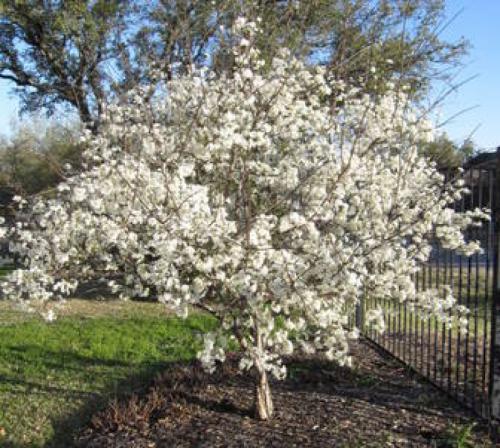
Mexican Plum (Prunus mexicana)
Seasonal Beauty: Spring Through Winter
Mexican plums are among the first spring-flowering trees to bloom in San Antonio, covering bare branches in fragrant white blossoms before leaves even appear. Average mature size in our area is about 15–25 ft tall and 15–20 ft wide. Mexican plums are a beautiful, native option for Texas.
-
Spring: Clouds of sweet-smelling white flowers attract bees and pollinators.
-
Summer: lush, lime-green foliage creates light shade.
-
Fall: Small red-purple plums feed birds and wildlife.
-
Winter: Silvery, textured bark adds structure and interest.
Quick Care Guide
-
Sun: Full sun to part shade
-
Water: Low to moderate once established
-
Soil: Well-drained, adaptable to alkaline soils
-
Fertilizer: Light feeding or compost in spring
Pollinator Value & Benefits
Mexican plum flowers provide early nectar for bees and butterflies, making them excellent pollinator trees and wildlife habitat choices.
Why gardeners love them: Native, drought-tolerant, and incredibly fragrant.
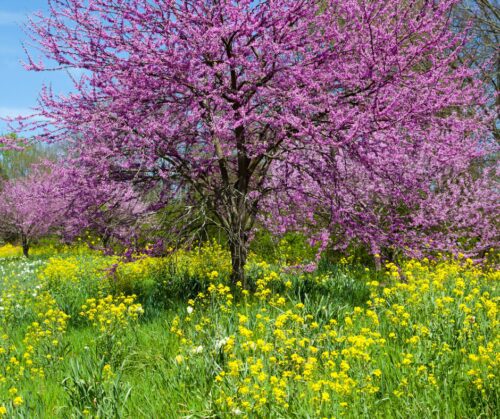
Redbuds (Texas & Eastern Redbuds)
Redbuds are iconic and one of our earliest spring-flowering trees, bursting with pink, magenta-purple (and even white) blooms along branches and even trunks before the leaves appear. When you see the practically fluorescent flowers pop on redbuds, you know spring is here. Average mature size is typically 15–25 ft tall with spreading branches.
-
Spring: Showy, vibrantly hued blooms (pink, magenta/purple, and even white).
-
Summer: Heart-shaped green leaves create soft shade.
-
Fall: Yellow foliage adds color; some redbuds have burgundy/red foliage. There are many varieties to choose from.
-
Winter: Elegant branching structure.
Quick Care Guide
-
Sun: Partial sun to full sun
-
Water: Moderate during establishment
-
Soil: Well-drained soil is key
-
Fertilizer: Light feeding in spring if needed
Pollinator Value
Redbud flowers attract native bees and long-tongued pollinators, making them a valuable ecological addition.
Why gardeners love them: Early color and beautiful heart-shaped foliage.
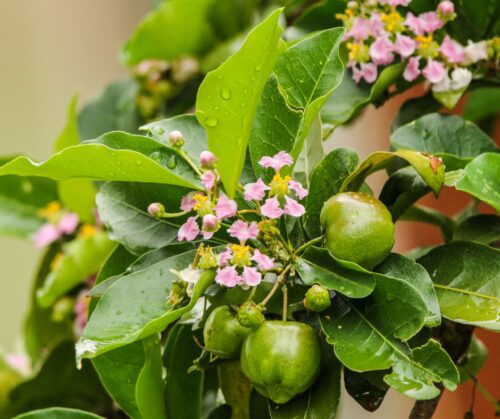
Barbados Cherry (Acerola)
Barbados cherry adds a softer, tropical vibe to the list of spring-flowering trees. These large shrubs can be trained to grow as a small tree, so these are wonderful options for smaller landscapes and gardens where you desire a focal point. Average mature size of a common Barbados cherry is 10 ft tall, while the dwarf variety only reaches heights of about 4-5′.
-
Spring & Summer: Small pink flowers appear repeatedly.
-
Summer: Bright red edible fruit.
-
Fall: Glossy evergreen foliage keeps gardens green.
-
Winter: Semi-evergreen structure in mild climates.
Quick Care Guide
-
Sun: Full sun
-
Water: Low once established
-
Soil: Well-drained soils
-
Fertilizer: Light, balanced fertilizer during growing season
Pollinator Value
Flowers attract pollinators, and this spring flowering tree is a host plant to the Cassius Blue butterfly. The fruit supports birds and wildlife.
Why gardeners love them: Edible fruit, compact size, and evergreen foliage.
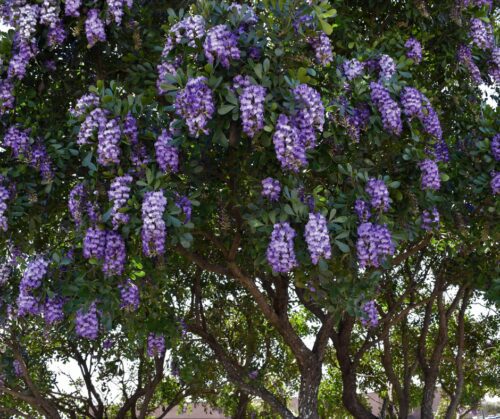
Texas Mountain Laurel (Sophora secundiflora)
Texas Mountain Laurels are unforgettable spring-flowering trees thanks to their grape-scented purple blooms. Their grape Kool-Aid fragrance permeates the air in early spring and practically summons you to stop in your tracks and delight in it. This native tree is a spring favorite, growing to an average maturity of around 10–20 ft tall and 8–15 ft wide.
-
Spring: Clusters of fragrant lavender flowers.
-
Summer: Glossy evergreen leaves provide year-round greenery.
-
Fall & Winter: Dense structure and evergreen color.
Quick Care Guide
-
Sun: Full sun to part shade
-
Water: Low; drought-tolerant once established
-
Soil: Well-drained, thrives in alkaline or rocky soils
-
Fertilizer: Minimal feeding needed
Pollinator Value
The fragrant blooms attract bees and butterflies while the evergreen structure provides habitat.
Why gardeners love them: Texas Mountain Laurels are native, drought-tough, and incredibly fragrant.
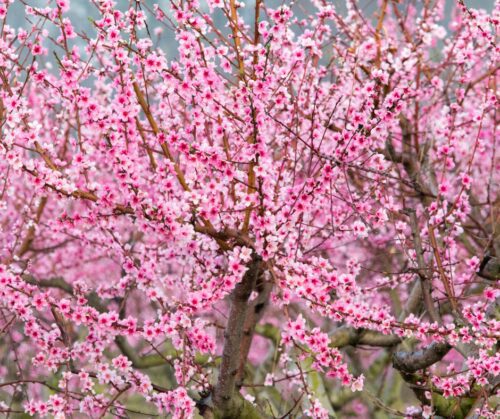
Peach Trees
Peach trees combine beauty and productivity, making them standout spring-flowering trees. Gorgeous blossoms that are followed by some our juiciest fruit options? Yes, please, sign me up! Peaches have an average growth maturity of 12–15 ft tall and wide depending on variety.
-
Spring: Pink blossoms before leaves appear.
-
Summer: Fruit harvest.
-
Fall: Yellow foliage.
-
Winter: Elegant branching structure.
Quick Care Guide
-
Sun: Full sun
-
Water: Moderate, consistent irrigation
-
Soil: Well-drained soil
-
Fertilizer: Balanced fruit tree fertilizer in early spring
Pollinator Value
Peach blossoms are highly attractive to honeybees and early pollinators.
Bonus Tip: Choosing varieties with the right chill hours is key for San Antonio fruit production.
Choosing the Right Spring-Flowering Trees for Your Garden
Whether you’re drawn to the fragrance of Mexican plums, the color of Redbuds, the evergreen beauty of Texas Mountain Laurels, or the edible blooms of Peach trees and Barbados Cherry, these spring-flowering trees bring year-round interest to San Antonio landscapes. Many are drought-tolerant, pollinator-friendly, and perfectly suited to South Texas soils and climate.
If you have a spot in mind to plant one of these gorgeous trees, we suggest you:
- evaluate that area for the type of sun exposure it receives throughout the day
- check that the area provides adequate soil drainage
- review average mature growth of tree, so you can make sure the area provides enough space
Planting the right sized tree in the right location already sets you up for increased success.
Try to get your tree plantings completed by February or March. The later you plant trees, the harder it will be for them to grow and establish a root system that will be strong enough to support your tree through our intensely hot summers. Get them in the ground now!
~The Happy Gardener, Lisa Mulroy


