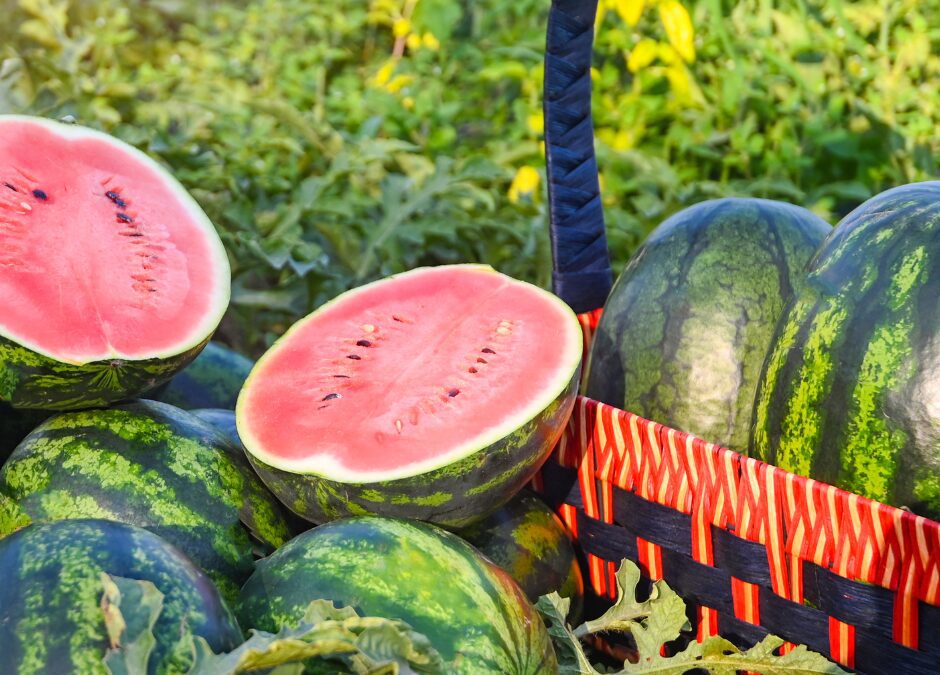
There’s nothing quite like slicing open a homegrown watermelon on a hot San Antonio summer day. Sweet, refreshing, and absolutely worth the garden space, watermelon is one of the most rewarding warm-season crops you can grow.
When it comes to growing watermelon successfully in South Texas, timing, space, soil preparation, and pollination all make a big difference. Let’s walk through everything you need to know for a beautiful harvest.
Spacing and Soil
Spacing
Spring is the ideal time for growing watermelon in San Antonio.
Wait until all danger of frost has passed and soil temperatures have warmed to at least 70°F. Watermelon loves heat, and planting too early into cool soil can slow growth and weaken plants.
For our area, this is usually mid-March through April, once nighttime temperatures stay consistently warm.
Soil
Watermelon roots grow surprisingly deep and wide. Roots can reach up to 4 feet deep and spread as far as the vine itself, so loose, well-prepared soil is key.
For best results:
- Dig the bed 8–10 inches deep
- Work in 2–3 inches of compost or organic matter
- Choose deep, loose, well-draining soil
This gives the roots room to expand and helps the plant handle our Texas heat.
Along with the compost and organic matter, mix in a complete granular fertilizer into the garden plot before planting. Use a rate of about 1 teaspoon per square foot and work it evenly into the soil. The biggest tip here? Don’t overfertilize.
Planting Watermelon by Seed or Transplant
Planting by Seed
If planting from seed, create small hills by mounding the soil 3–4 inches high.
Plant:
- 3–4 seeds per hill
- ¾ to 1 inch deep
Once seedlings emerge and have been growing for about two weeks, thin them down to the two strongest plants. Pinch off the unwanted seedlings at soil level rather than pulling them out. Pulling can disturb the roots of the watermelon seedlings you want to keep.
Planting by Transplant
If using transplants, be extra gentle. Watermelon roots dislike disturbance, so carefully remove the plant from its pot with as little root disruption as possible. Plant so the top of the transplant’s soil is just slightly below the surrounding garden soil. Gently firm the soil around it and water immediately after planting.
Fertilizing Watermelon During Growth
Once you can clearly see vines beginning to form, it’s time to feed your watermelon by side-dressing. Side-dressing means placing the fertilizer in a circle around individual plants or about 15 inches away from the stem along the side of plants when in rows. Apply a nitrogen-heavy fertilizer, such as ammonium nitrate at a rate of 2 tablespoons per hill. Lightly scratch it into the soil and always water afterward.
This is also the perfect time to add mulch.
A layer of mulch helps:
- hold moisture in the soil
- suppress weeds
- keep fruit cleaner as it develops
Watering Watermelon the Right Way
Watermelon will need adequate water to get young plants established, consistent watering from fruit set through fruit development. But you don’t need to overwater. If our summers provided a nice, good rain consistently once a week, watermelon could most likely grow and survive just with natural rainfall thanks to its extensive root system. But rain is seldom reliable in our area and combined with the extra heat in summer, you should regularly check for soil moisture and water when needed. Inconsistent watering can lead to poor fruit quality and smaller harvests.
Pollination: The Secret to Getting Melons
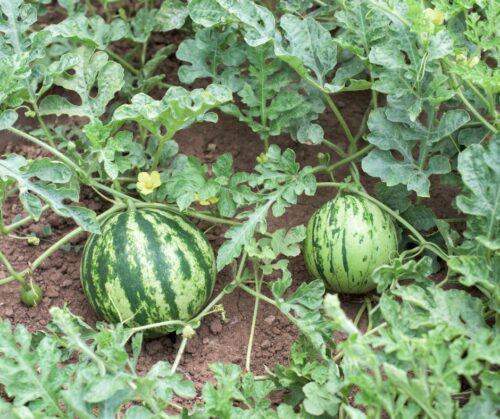
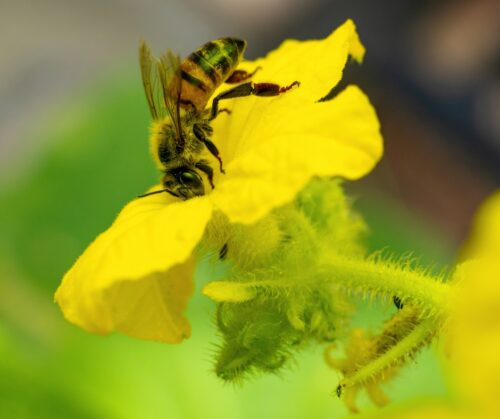
One of the most important parts of growing watermelon is pollination. Like squash and other cucurbits, watermelon produces both male and female flowers. Pollen must be transferred between them in order for fruit to form. No pollination = no watermelon.
Honeybees do most of this work, so it helps tremendously to plant pollinator-friendly flowers nearby. Great companion choices include Mexican heather and other bee favorites that don’t take up much room. To encourage bee activity for adequate pollination, it’s also imperative that you try to limit pesticide use whenever possible. If treatment is necessary, spray only in the early evening when bee activity is low.
If bee activity is low despite your best efforts and pollination seems poor, you can hand-pollinate using a small paintbrush to transfer pollen from male flowers to female flowers.
Fun Fact: Once a female flower has been pollinated by a male flower, it will be roughly 45 days until you can harvest a ripe watermelon!