



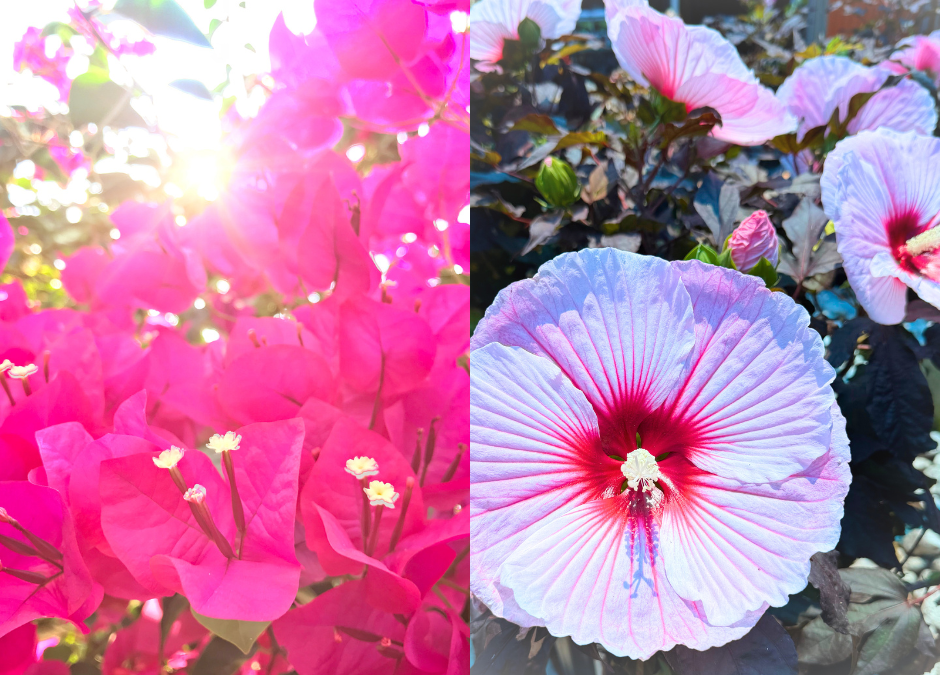
Hardy Hibiscus vs. Bougainvillea in San Antonio, Texas
If you love the lush, colorful look of tropical gardens but don’t want to replant every spring, you’re in luck. Two plants that bring bold, tropical beauty to San Antonio landscapes are Hardy Hibiscus and Bougainvillea. While they have very different growth habits, both thrive in our long, hot summers and reward gardeners with spectacular displays of color.
The biggest difference? Hardy hibiscus is grown for its enormous flowers, while bougainvillea is prized for its vibrant, papery bracts that surround tiny white flowers. Both are considered perennial in the San Antonio area, but each has different needs—especially when winter arrives.
Let’s compare them side by side to help you decide which one belongs in your landscape—or why you might want to grow both!

Quick Comparison: Hardy Hibiscus and Bougainvillea
Hardy Hibiscus
- Plant Type: Herbaceous perennial shrub
- USDA Zones: 4-9
- Average Mature Growth: 4-8′ T x 3-6′ W
- Light Exposure: Full sun (6-8 hours)
- Water Needs: Moderate to high
- Although established plants tolerate short dry periods, they perform best with regular deep watering during hot weather. Don’t allow the soil to stay soggy, but don’t let it dry completely either.
- Flowers: Huge blooms up to 12″ W
- Colors in red, pink, white and combos of these. Flowers last for a day but are quickly replaced by new flowers.
- Bloom Period: Summer – fall
- Soil Preference: Well-draining soil, rich in organic matter.
- Fertilizer: Apply a balanced, slow-release fertilizer (Nelsons Hibiscus Plant Food) in spring as new growth begins. A second application in midsummer can help support continuous flowering.
- Avoid excessive nitrogen, which encourages lush foliage at the expense of blooms.
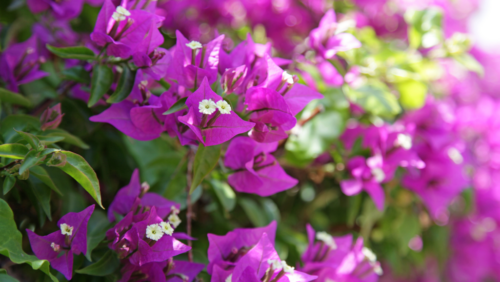
Bougainvillea
- Plant Type: Woody perennial vine/shrub
- USDA Zones: 9-11 (zone 8b with protection)
- Average Mature Growth: 3-30’T x 3-15′ W (depending on variety and training)
- Light Exposure: Full sun (6-8 hours minimum, more is better)
- Water Needs: Low once established
- Once established, it prefers the soil to dry slightly between waterings. In fact, slightly dry conditions often encourage heavier blooming.
- Flowers: Colorful bracts with tiny flowers
- Bracts are found in vibrant magenta, purple, red, orange, pink, yellow, or white. These bracts surround tiny white blossoms. Can remain colorful for months.
- Bloom Period: Spring through frost
- Soil Preference: Excellent drainage is essential. Use containers or raised beds if drainage is an issue.
- Fertilizer: A fertilizer like Nelson’s Bougainvillea Plant Food applied every 6–8 weeks during the growing season, is usually sufficient.
- Too much nitrogen produces vigorous green growth but fewer colorful bracts.
- Make last fertilizer application in Sept. and resume in Feb.
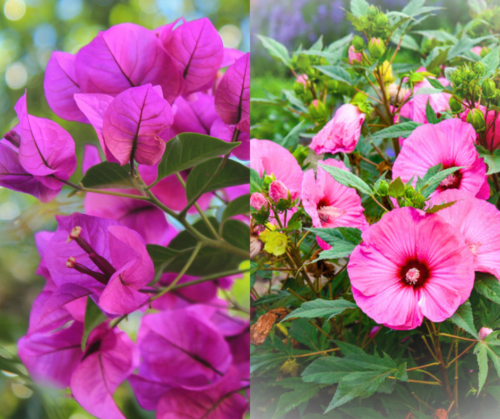
Winter Care for Hardy Hibiscus and Bougainvillea
Although both plants are perennial in our area, they handle winter very differently. Here are a few tips to get your hardy hibiscus or bougainvillea through San Antonio’s winter.
Hardy Hibiscus
Hardy hibiscus is truly winter hardy throughout Central Texas. As temperatures cool in late fall, the foliage naturally yellows and dies back after the first frost. Don’t panic, this is completely normal.
Once dormant:
- Cut stems back to about 4–6 inches above the ground after frost.
- Apply 2–3 inches of mulch around the root zone for added insulation.
- Water occasionally if rainfall is lacking through winter.
- New shoots often don’t emerge until late spring, so be patient before assuming the plant has died. Wait for that new growth.
Bougainvillea
Bougainvillea is more cold-sensitive than hardy hibiscus but can survive many San Antonio winters with protection.
For plants growing in the ground:
- Cover with frost cloth whenever temperatures are expected to fall below freezing.
- Water the soil before a freeze if it has been dry.
- Apply 2–4 inches of mulch around the base to help insulate the roots.
- Avoid pruning immediately after freeze damage. Wait until spring, when new growth begins, before removing dead stems.
For container-grown bougainvillea:
- Container grown specimens lose some degrees of cold tolerance.
- Move pots into a garage, greenhouse, or to a covered patio before hard freezes.
- If moving isn’t possible, wrap both the container and the plant with frost cloth (possibly double layers) to protect the roots and stems.
- Even if the top growth is damaged during a severe freeze, many established plants regrow from lower stems or the base once warm weather returns.
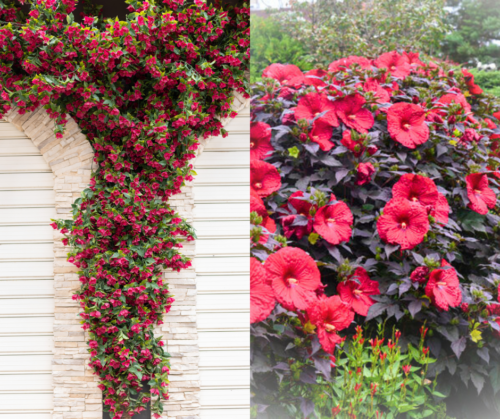
Best Landscape Uses
Hardy Hibiscus
The giant flowers and large foliage make hardy hibiscus an unforgettable focal point and instantly create a lush, tropical feel. Here are some of the best ways to use this plant:
- A specimen plant in landscape beds
- A backdrop for perennial borders
- Around ponds or rain gardens
- Near patios where blooms can be admired up close
- In large decorative containers
- In butterfly and hummingbird gardens
Bougainvillea
Because it thrives in heat and reflects sunlight beautifully, it’s one of the best plants for adding vibrant color to sunny locations. Bougainvillea is incredibly versatile and can be grown in many ways. Try one of these:
- A flowering vine on fences and trellises
- A colorful accent spilling over retaining walls
- A patio specimen in decorative containers
- A hanging basket for trailing varieties
- A shrub or hedge with regular pruning
- A dramatic focal point trained into a small tree (standard form)
- A colorful addition to Mediterranean or tropical-style landscapes
You don’t have to choose between the two. Hardy hibiscus and bougainvillea complement each other beautifully. The massive blooms of hardy hibiscus pair perfectly with the vibrant, long-lasting color of bougainvillea, creating a landscape that feels like a tropical retreat while standing up to the heat of South Texas. This is a good month for our selections at Rainbow Gardens. Come see these beautiful perennial specimens in person. Bet you can’t leave without at least one of them!
~The Happy Gardener, Lisa Mulroy


