




When temperatures stay in the upper 90s and 100s, plants can struggle even when they’re considered “full sun” or drought tolerant. We are all feeling the heat about now, right? The goal during extreme heat is often not to push new growth or blooms; it’s to reduce stress and help the plant survive until conditions improve. If you’re plants are struggling in the heat, today we have a few tips that might get you and your plants through summer.
10 Tips for Plants Battling Heat
- Check the soil BEFORE adding more water.
- A wilted plant doesn’t automatically mean a thirsty plant. Just as soil that looks wet on the top layer, may not have enough moisture down by the roots of your plant. Learn how to feel the soil to check for moisture.
- Stick your finger about 2 inches into the soil, or use a wooden dowel or screwdriver for larger landscape plants (shrubs and trees) and stick it 4-6″ into the soil, to check moisture.
- If the soil is dry and flakes easily off your finger or tool, water.
- If it’s still moist and sticks to your finger or tool, don’t automatically water again.
- Plants can wilt temporarily during the hottest part of the afternoon because they’re losing moisture through their leaves faster than their roots can replace it.
- If the plant perks back up overnight or by morning, it may simply be experiencing temporary heat stress rather than drought.
- Checking soil before watering helps prevent overwatering which can lead to root rot, especially when mixed with extreme heat.
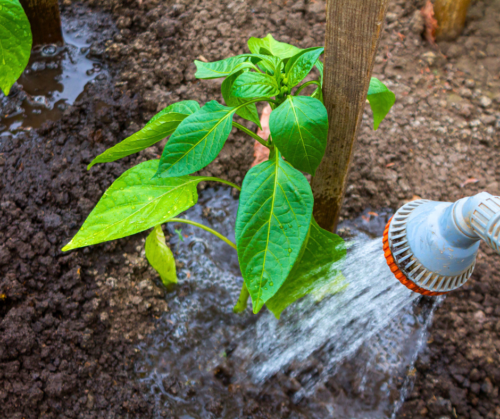
- Water DEEPLY, not just more frequently.
- When the heat is blazing, you may think you are doing your plants a favor by watering them every day, but that quick splash every day encourages shallow roots and we want DEEP roots. You are training your plants to rely on YOU for watering instead of teaching them to send their roots deep into the soil to search for moisture.
- Water slowly enough to thoroughly soak the root zone.
- Rainbow Gardens recommends summer watering that moistens landscape perennial beds approximately 4–6 inches deep.
- Direct water toward the roots and surrounding soil, not onto foliage. Heat and wet foliage is a recipe for fungal growth.
- Drip irrigation and soaker hoses are excellent choices. And you don’t have to stand out in the heat watering!
- Slow, deep watering encourages deeper roots that are better equipped to withstand drought and heat.
- Water in the morning whenever possible.
- Early morning watering gives plants an opportunity to hydrate before the day’s extreme heat.
- Cooler temperatures mean less water is lost to evaporation.
- Avoid wasting water by spraying foliage, pavement or other areas outside the root zone.
- If morning watering isn’t possible during an extreme hot, dry period, evening watering is better than allowing plants to remain severely dry.
- Try watering veggies at the same time each day. Some, like tomatoes and peppers, are pretty particular about this.
- MULCH! One of the best defenses against Texas heat.
- Mulch isn’t just for appearance; it protects the plant’s root system.
- Apply approximately 2–3 inches of mulch around plants; Rainbow Gardens recommends 3–4 inches around roses during the hottest months.
- Mulch reduces evaporation, meaning more moisture for your plants.
- It helps moderate soil temperature, allowing roots to say a little bit cooler during extreme heat. Any help is help.
- It reduces weeds competing for moisture. This is a time when your plants need all the moisture they can get.
- Keep mulch away from trunks, stems and plant crowns—think “donut,” not “volcano.”
- Give struggling plants some afternoon shade.
- “Full sun” on a plant tag rarely accounts for the intensity of a South Texas afternoon.
- Move struggling containers where they’ll receive morning sun and afternoon shade. Even sun-loving container plants can benefit from temporary relief during prolonged extreme heat.
- Use temporary shade cloth for newly planted vegetables, annuals, perennials. You can also bump small transplants up to a larger pot and grow them in an area that receives AM sun/PM shade until the heat breaks. then you can plant them in their permanent homes (in your garden beds or in larger containers).
- Use temporary shade cloth for landscape plants that you can’t move to shadier spots. You may even have to double up your shade cloth in time of prolonged heat.
- This is especially useful during July and August and sometimes even September, when afternoon sun is most intense.
- Pay extra attention to NEW plants.
- A drought-tolerant plant isn’t a drought tolerant the day you plant it. It needs established roots to develop its drought-tolerant characteristic.
- Newly planted plants have small, undeveloped root systems. These may require extra watering during extreme heat.
- They can’t access moisture as effectively as established plants.
- New trees, shrubs and perennials may require substantially more attention during their first summer.
- Rainbow Gardens generally recommends waiting until fall to plant trees and shrubs when possible because summer establishment requires much more watering and care. Why set your trees and shrubs for failure, just wait a couple months and you’ll be golden.
- Even Texas natives and xeriscape plants require regular watering while becoming established.
- Containers need their own heat-survival plan.
- Containers can dry dramatically faster than garden soil.
- Check pots daily during extreme heat.
- Small containers may need watering every day—and under extreme conditions potentially more than once.
- Water until moisture flows from the drainage holes.
- If extremely dry, water thoroughly, wait a short period, and water again so the rootball can rehydrate. If containers have severely dried out, you can set your container into a larger vessel that can hold water and let it soak the water up through the drainage hole. Check the top of the pot for soil moisture every 30 minutes or so and remove your pot once completely rehydrated.
- Move struggling containers out of harsh afternoon sun.
- Group containers together so taller plants can provide some protection for smaller ones.
- Check whether a container plant is ROOTBOUND.
- If you’re watering constantly and the plant still dries out incredibly fast, look at the roots.
- A severely rootbound plant means that your plant has used up all the soil and is no longer receiving nutrients nor any way to aborb water.
- Water may run straight through the pot without adequately hydrating the rootball.
- Move the plant into a slightly larger container with fresh, quality potting mix.
- Loosen circling roots before repotting.
- Repot in the morning when it’s cooler or on a cloudy day, or under a protected area, to avoid stressing the plant out during intense afternoon heat.
- Don’t push stressed plants too hard.
- Extreme heat naturally slows plant growth and can put a stop to flowering or fruiting. Ever have tomato plant full of flowers but no fruit? Once temps hit 90 or above, they shut down production.
- Don’t panic if some perennials temporarily stop blooming or growing vigorously.
- Avoid severe pruning during extreme heat unless removing damaged or diseased material.
- Don’t assume extra fertilizer will “fix” a heat-stressed plant. This is a case where more is not more, if you know what I mean. Stick to regular fertilizing schedules for annuals and containers and water thoroughly afterward.
- Focus first on keeping the root system hydrated, cool and healthy.
- Watch for SECONDARY problems caused by heat stress.
- Sometimes heat isn’t the only thing hurting the plant. A stressed plant is more vulnerable to pests and other problems.
- Check underneath leaves.
- Look for spider mites, lace bugs, mealybugs, leaf-footed/stinkbugs, aphids and other summer pests.
- Watch vegetables for issues such as blossom-end rot (which develops mostly due to inconsistent watering) and early blight.
- Check turf for chinch bugs and grubs.
- If the plant continues declining despite adequate moisture and heat protection, investigate pests, disease, drainage and root problems rather than simply adding more water.
This heat shall pass, folks. It always does. Even though it can feel like a lifetime when you are spending so much extra time caring for your plant babies. We appreciate your dedication and even if your plants aren’t telling you, they do too.
~The Happy Gardener, Lisa Mulroy


