



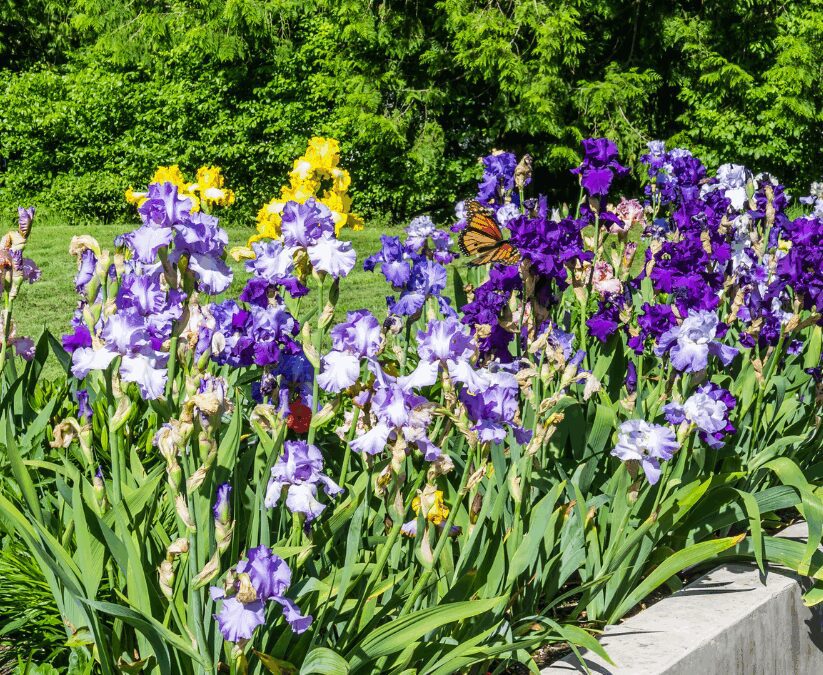
Bearded iris are some of the most iconic spring bloomers in Texas gardens. Their ruffled petals, bold colors, and dependable performance make them a favorite for creating showstopping beds with minimal maintenance. For gardeners interested in extended color, reblooming iris varieties offer an added bonus—flowers not once, but twice a year.
Whether you’re new to growing bearded iris or looking to expand your collection, here’s everything San Antonio gardeners need to know.
What Is a Reblooming Iris?
A reblooming iris is a bearded iris variety that flowers during the traditional spring bloom season and again later in the year—usually late summer into fall.
- Seasonal (Standard) Bearded Iris: Bloom once in spring (usually late March–April in San Antonio).
- Reblooming Iris: Bloom in spring and again in late September through early November, depending on weather and rainfall.
In San Antonio’s long warm season, reblooming iris often perform exceptionally well, making them a fantastic choice for gardeners who want color beyond spring.
Our mild temperatures allow us to plant reblooming iris, as well as other spring blooming bulbs, anywhere from September through November (sometimes later if warm temps continue through December).Rhizomes establish strong roots through winter, setting the stage for spring blooms.
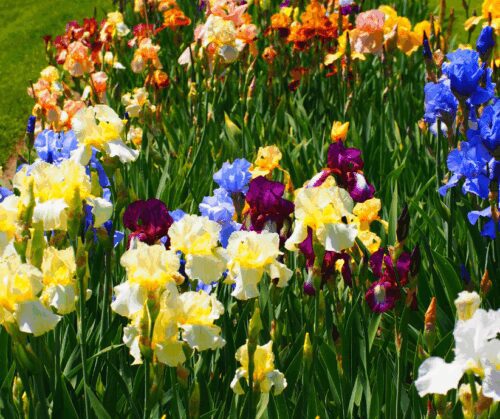
Planting Reblooming Bearded Iris: Growing Conditions
Reblooming bearded iris are tough, but proper site preparation is key for long-term success.
Sunlight Needs
- Full sun is critical: at least 6 hours of direct sunlight daily.
- Morning sunlight is especially beneficial for preventing fungal issues.
Soil Requirements
- Iris must have excellent drainage—their rhizomes rot easily in soggy soil.
- Amend heavy clay soils with compost, expanded shale, or sand to improve drainage.
Planting Depth
Bearded iris prefer to sit higher than most perennials.
- Do not bury the entire rhizome.
- Plant so that the top third of the rhizome is exposed and visible above the soil surface.
- Cover the roots, not the rhizome.
Spacing
- Allow 12–18 inches between each plant to ensure airflow and prevent rot.
- For quicker impact, plant in groups of three.
Proper spacing also prepares your iris for easy division every 3–4 years.
Winter Cold Protection
San Antonio winters are generally mild, but a hard freeze can damage young rhizomes.
- Apply 2–3 inches of mulch only during hard freezes.
- Remove the mulch immediately once temperatures rise—prolonged moisture around the rhizomes can cause rot.
Fertilizing Reblooming Bearded Iris
Fertilizer timing makes a big difference in bloom quality.
- Early spring (February–March): Feed to support strong bloom spikes.
- Just after blooming: Light feeding encourages reblooming varieties to reset for fall.
- Avoid high-nitrogen fertilizers, which encourage leaf growth but reduce flowering.
- We like Espoma Bulb-Tone because:
- It has a balanced, slow-release formula perfect for bulb and rhizome plants.
- Higher phosphorus supports bud formation and strong blooming.
- Organic components improve soil health over time.
- It is gentle and won’t burn new plantings.
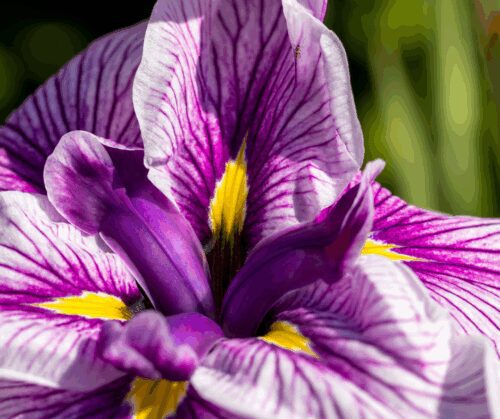
Whether you choose classic spring-only varieties or extend your color with reblooming iris, bearded iris are one of the easiest, most rewarding perennials for San Antonio gardens. With proper planting depth, good drainage, and smart fertilizing—especially with a quality organic option like Espoma Bulb-Tone—you’ll enjoy reliable, eye-catching blooms for years. Plant now and look forward to some truly spectacular color this spring.
~The Happy Gardener, Lisa Mulroy


I’ve never grown reblooming bearded Iris before, only white cemetery iris. About how much do these kind of Iris cost please? Is it cheapter to buy 5 at a time?
Hi Jaqueline,
It depends on whether you are purchasing a transplant or a rhizome. Out transplants currently run around $10.99 – $11.99 per gallon, 3 gallon containers are $29.99. We have some rhizomes that are $3.99/each.