



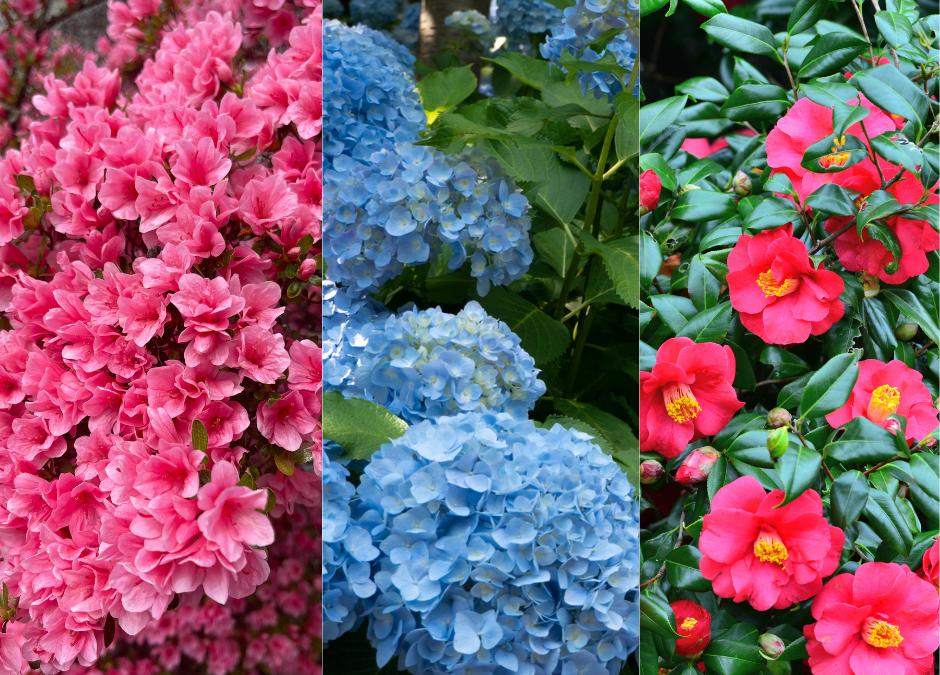
Azaleas covered in vibrant spring flowers. Hydrangeas bursting with their own giant blooms in late spring and early summer. Camellias blooming through winter when much of the landscape is quiet. It’s easy to understand why gardeners fall in love with these classic flowering, acid-loving shrubs.
But growing azaleas, camellias, and hydrangeas in San Antonio comes with one important challenge: our soil.
These plants are all acid-loving shrubs, and our native soil is naturally alkaline and limestone-heavy. That doesn’t mean you can’t grow them here. It means you’ll have much better results when you create the acidic soil conditions they need, rather than expecting them to adapt to our native soil.
Why Do These Plants Need Acidic Soil?
Soil pH isn’t just a number. It directly affects a plant’s ability to access nutrients.
Azaleas, camellias, and hydrangeas evolved to grow in soils that are generally more acidic than what we naturally have in San Antonio. In the proper pH range, essential nutrients such as iron, manganese, and other micronutrients remain more available to their roots.
When soil becomes too alkaline, those nutrients can be present in the soil but chemically unavailable to the plant. One of the most noticeable results is iron chlorosis.
A plant suffering from iron chlorosis may develop:
- Yellow leaves with noticeably green veins
- Pale new growth
- Reduced vigor
- Poor flowering
- Stunted growth
Adding fertilizer alone doesn’t necessarily solve the problem. If the soil pH remains too high, the plant may still have difficulty accessing certain nutrients.
That’s why, with acid-loving plants, fixing the growing environment is just as important as feeding the plant.
The San Antonio Soil Challenge
Much of San Antonio sits on limestone-derived, alkaline soils. Our native soils can also be rocky, shallow, or contain caliche.
That’s pretty much the opposite of what azaleas, camellias, and many hydrangeas would choose for themselves.
You can amend native soil but remember that soil naturally wants to return to its original chemistry. Our alkaline irrigation water can also work against your efforts over time. Soil improvement for azaleas, hydrangeas and camellias should be thought of as more an ongoing maintenance rather than a one-time project.
The Easiest Soil Solution for an Acidic pH: Build Up!
Plant on a Berm
- Create a wide, elevated planting area using quality soil and plenty of organic matter. Raising the root zone above the surrounding native soil can also improve drainage.
- Avoid creating a tiny mound surrounded entirely by native soil. A wide, gradually sloping berm provides roots with a much larger improved growing area.
Use a Raised Bed
- Raised beds are another excellent option because you can largely control the soil from the beginning.
- Rather than trying to transform limestone-heavy native soil, you’re creating a new root zone with the drainage, organic matter, and acidity these plants prefer.
Grow in Containers
- Containers provide perhaps the greatest control over soil pH.
- Start with a high-quality potting mix appropriate for acid-loving plants, provide good drainage, and monitor moisture and fertility throughout the year.
- Containers are especially useful for gardeners who have extremely rocky or alkaline soil or simply don’t want the ongoing task of trying to alter a large landscape bed.
Improving Native Soil
If you’re planting in the ground, prepare a large planting area rather than amending only the individual planting hole.
Organic matter can improve soil structure, drainage, moisture retention, and biological activity. Depending on your planting situation, useful amendments can include:
- Quality compost
- Finely shredded pine bark
- Sphagnum peat moss
- Other organic-rich planting amendments
- Elemental sulfur products formulated to gradually lower soil pH
Mulching afterward with organic material also helps conserve moisture and contributes organic matter as it decomposes.
Know Your Starting pH
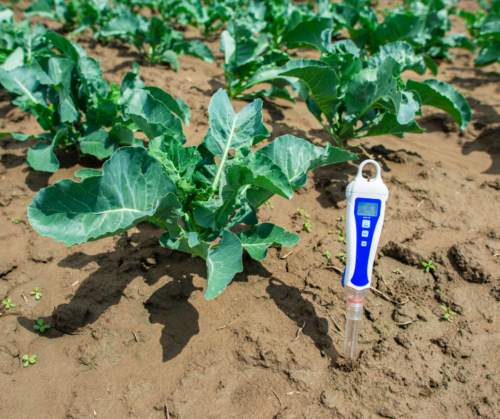
Before trying to dramatically change your soil chemistry, it can be very beneficial to know the current pH your soil has. See more info on getting soil tested in San Antonio here.
Sometimes the smartest solution isn’t trying to completely change your native soil, it’s choosing a raised bed or container where you can start with the right soil from day one.
Can I Just Add Acid Fertilizer?
Fertilizer and soil acidifier serve related but different purposes.
Fertilizer feeds your plants. A soil acidifier helps adjust the soil environment in which those plants obtain their nutrients.
For San Antonio gardeners growing azaleas, camellias, and hydrangeas, both may have a place in your care routine.
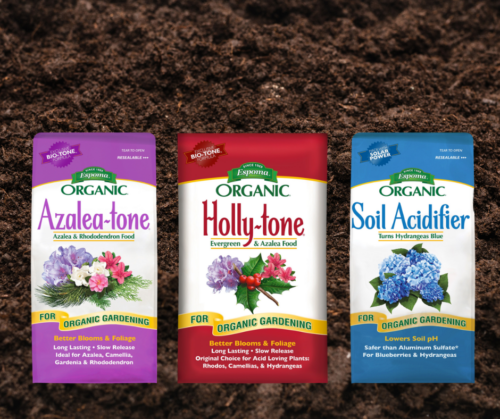
Espoma Soil Acidifier
Espoma Organic Soil Acidifier contains elemental sulfur and can be used to gradually lower soil pH. It’s formulated for acid-loving plants, including azaleas, camellias, and hydrangeas.
This can be especially helpful when maintaining beds or containers where alkaline conditions gradually begin creeping back in.
Don’t try to drastically change your soil pH overnight. Gradual adjustment is better for your plants. Follow label directions and periodically test your soil so you know whether additional applications are actually necessary.
Acid-Loving Plant Fertilizers
Look for fertilizers specifically formulated for azaleas, camellias, hydrangeas, and other acid-loving plants.
Options such as Espoma Holly-tone or Azalea-tone provide nutrients while also containing sulfur to help support the acidic conditions these plants prefer.
Three Acidic-Loving Beauties Worth the Extra Effort
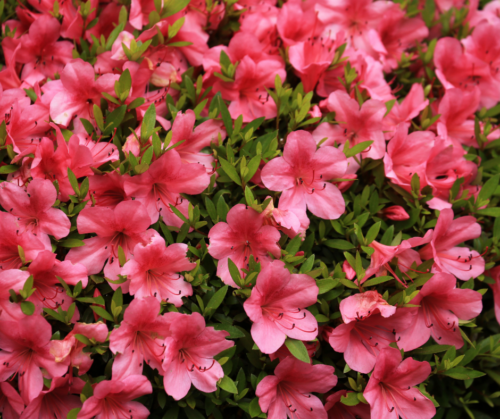
Azaleas
Few shrubs announce spring quite like an azalea. When happy, these evergreen or semi-evergreen shrubs can become absolutely covered in flowers, sometimes producing so many blooms that the foliage nearly disappears beneath them. Depending on the variety, flowers may be white, pink, coral, red, purple, lavender, or combinations of these colors.
Most traditional azaleas put on their biggest show in spring, although reblooming varieties often put out a new flush of flowers later again in fall.
Best Growing Conditions
In San Antonio, give azaleas:
- Morning sun with afternoon shade or bright filtered light (Protect them from our intense western afternoon sun.)
- Acidic, organic-rich soil
- Excellent drainage
- Consistent moisture without soggy conditions
- A 2 – 3″ layer of mulch to help protect their shallow root systems
When Should I Prune Azaleas?
Prune spring-flowering azaleas shortly after they finish blooming.
Many azaleas develop the flower buds for next year’s display on old growth during the previous growing season. Pruning too late can mean accidentally cutting away next spring’s flowers.
Camellias
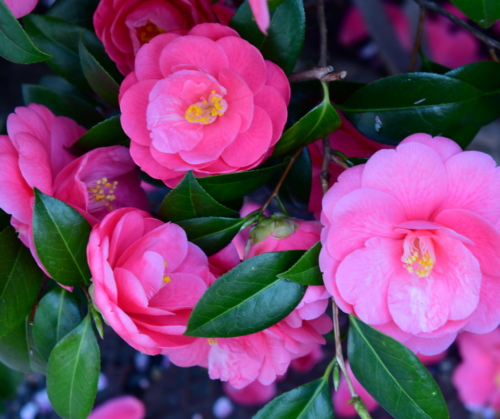
Camellias bring something truly special to the garden: gorgeous flowers during the cooler months when relatively few shrubs are blooming.
Their glossy, deep-green evergreen foliage is attractive throughout the year, while their beautifully formed flowers can resemble roses or peonies. Depending on the variety, blooms may be white, pink, red, variegated, single, semi-double, or wonderfully full and formal.
Bloom time depends on the type:
- Camellia sasanqua varieties generally begin flowering in fall into early winter, while Camellia japonica varieties typically flower from winter into early spring.
- Planting different types can extend your camellia season considerably.
Best Growing Conditions
In San Antonio, camellias appreciate:
- Morning sun or filtered light (A north or east-facing exposure can be particularly useful.)
- Protection from intense afternoon sun
- Acidic, organic-rich, well-draining soil
- Consistent moisture
- Mulch over the root zone
- Protection from drying winds and reflected heat
When Should I Prune Camellias?
Prune camellias soon after they finish flowering and before the next season’s flower buds develop.
Avoid major pruning later in the year. You may be removing the very buds you’ve been waiting months to enjoy!
Hydrangeas
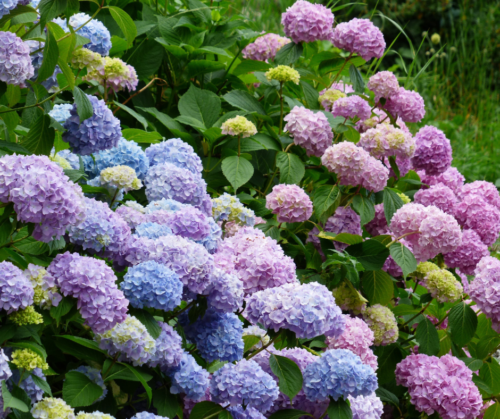
Few flowers make a statement quite like a hydrangea. Their enormous flower clusters create a lush, romantic look that’s difficult to duplicate with other shrubs. Depending on the species and variety, flowers may be blue, pink, purple, white, green, or combinations that change as the flowers mature.
Hydrangeas aren’t the easiest plants for San Antonio, but with afternoon shade, consistent moisture, and properly prepared soil, they can be well worth the extra attention.
Most hydrangeas flower from late spring through summer, with timing varying by species and variety. Some newer varieties can rebloom later in the growing season.
Best Growing Conditions
In San Antonio, hydrangeas generally appreciate:
- Morning sun and afternoon shade
- Protection from our intense western sun
- Moist, well-draining soil
- Plenty of organic matter
- Mulch to conserve moisture and moderate soil temperature
- Consistent watering during hot weather
Does Acidic Soil Turn Hydrangeas Blue?
The famous blue-versus-pink color change occurs primarily with certain bigleaf hydrangeas (Hydrangea macrophylla).
Acidic soil helps make aluminum more available to the plant, which can encourage blue flowers in varieties capable of producing them. More alkaline conditions generally encourage pink coloration.
White hydrangeas don’t suddenly turn blue simply because you acidify the soil.
When Should I Prune Hydrangeas?
Prune according to variety.
- Bigleaf and oakleaf hydrangeas traditionally bloom primarily on old wood, so prune them shortly after flowering. Pruning them heavily in fall, winter, or early spring can remove flower buds.
- Panicle and smooth hydrangeas bloom on new wood and can generally be pruned in late winter or early spring.
- Some modern reblooming hydrangeas flower on both old and new growth, but if you’re unsure which type you have, identify your hydrangea before reaching for the pruners.
The Secret Is in the Soil
Azaleas, camellias, and hydrangeas may require a little more planning in San Antonio, but that’s part of understanding what your plants need.
Most importantly, don’t overlook the soil.
Creating and maintaining an acidic root zone helps these plants access the nutrients they need for healthy green foliage, vigorous growth, and those spectacular flowers that made you want to grow them in the first place.
~The Happy Gardener, Lisa Mulroy


