



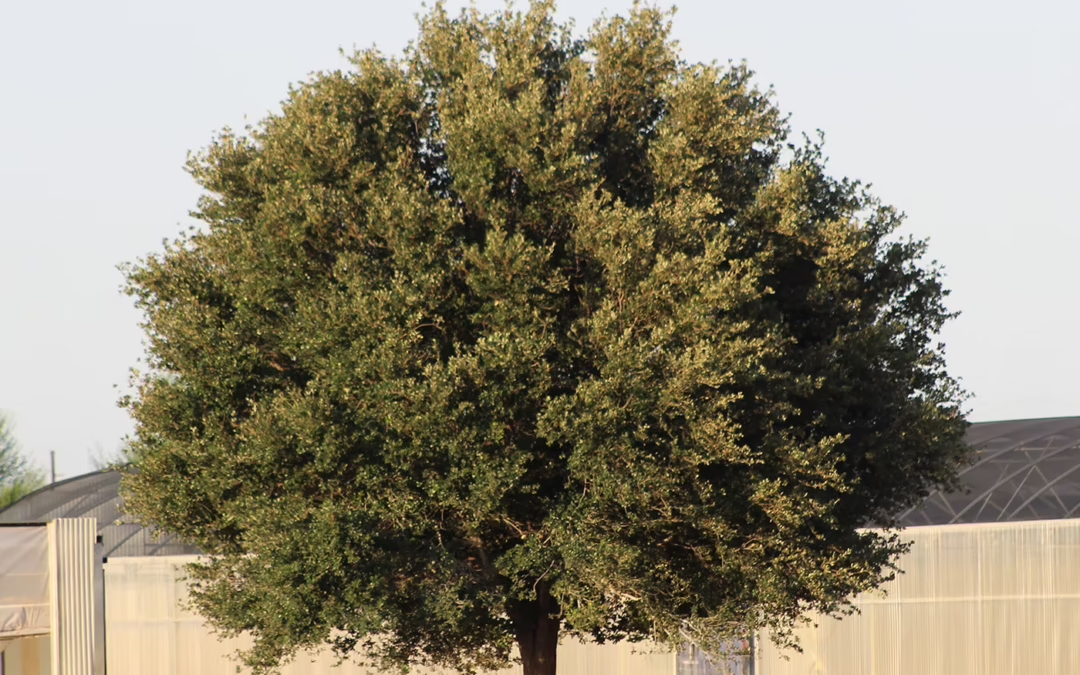
Tis the season for tree planting, and we’ve got a good tree for you to consider if you are looking for a shade tree. With the Joan Lionetti oak tree, you get a combination of the best of its parents’ traits. This results in a superior oak variety which we think you’ll love. Let’s take a closer look at what the Joan Lionetti oak tree can offer your San Antonio, Texas landscapes.
Joan Lionetti Oak Tree Quick Look:
- Tree Type: Evergreen
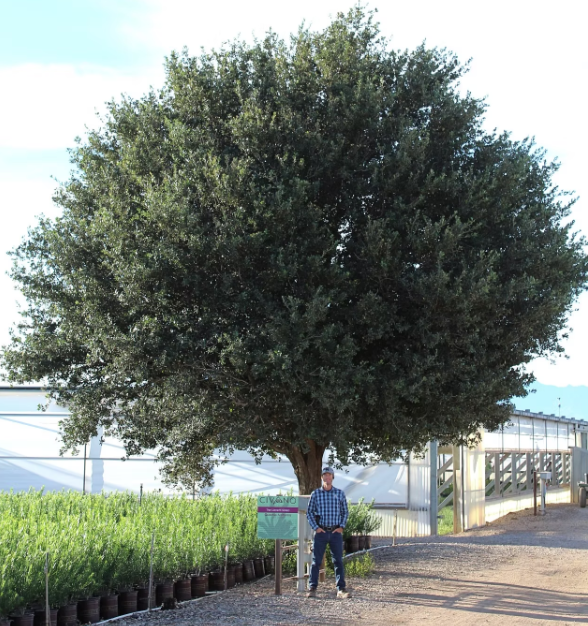
- Avg. Mature Size: 20 – 30′ T x W.
- Light Exposure: Full sun.
- Water Needs: Regular watering offers optimal health (especially during establishment) but has a strong drought tolerance once established.
- Soil Needs: Well-draining soil. Not particular to type. Highly tolerant of alkaline soils.
- Form: Compact, symmetrical, dense, rounded canopy. Straight central trunk.
- Cold Tolerance: 0º F
- Pests/Disease: Strong resilience.
- Wildlife Support: Acorns provide food, small flowers provide nectar, and canopy provides habitats,
Joan Lionetti Characteristics
The Joan Lionetti oak offers predictable growth in an oak tree with a that grows 20-30′ T x W. Although still substantial in size, this oak is actually smaller than other live oak varieties which it makes it a good choice for residential landscapes. The density of the canopy casts a wide net of shade which is definitely welcome relief during our hot San Antonio summers. Because of its upright habit stemming from a straight, vertical trunk, you’ll find there isn’t much need for corrective pruning to maintain a gorgeous shape.
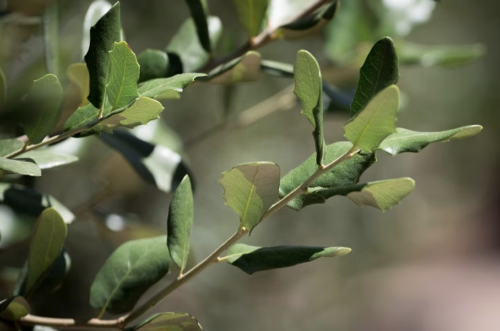
Dark-green leathery leaves stay evergreen both through the heat and cold, with a short shedding period in early spring to allow for the new growth of fresh foliage. Tiny, inconspicuous, greenish flowers appear in springtime attracting insects that numerous local birds feast upon. Female flowers produce acorns also enjoyed by the birds, as well as small mammals.
Its evergreen habit creates a stable landscape presence year-round. This tree can provide permanent shade over your outdoor living areas or playground areas, unlike other deciduous types of shade trees that lose their leaves in winter.
Another bonus to the Joan Lionetti is its non-invasive root system which minimizes foundation issues or damage to surrounding hardscapes later on down the road.
I’ve saved what I feel is one of the best characteristics of this oak tree. It produces very few seedlings compared to other oaks. Whoop, Whoop! If you’ve ever battled against a carpet of seedling shoots sprouting up underneath an oak tree, you will know how wonderful this characteristic is.
Establishing Joan Lionetti Oak Tree
You should make sure your site selection for your Joan Lionetti oak is an area that has well-draining soil. As long as your soil drains well, you should be able to just use the native soil you pull out of the hole to backfill it once the tree is situated.
We’re including our tree planting guide here, but in general, the hole you dig should be at least twice as wide as the pot your oak tree is in and only as deep, or a little shallower, than the soil line of the tree currently. The root flare of the tree should be evident above the soil line. Most trees have the most struggles when they are planted too deeply, so measure your depth carefully, and then measure it again.
After digging the hole, but before planting, we like to fill the hole with water and allow it to drain, so that the roots get a great start in a hydrated environment right from the start. It’s also a good check to make sure your soil truly drains well. Once your tree is placed in the hole, make sure the trunk is perpendicular and straight, then backfill the hole with native soil. Tamp soil down firmly as you go to help eliminate air pockets. Water again immediately after planting.
The first few years, you should be offering Joan Lionetti moderate amounts of water to help it get established. Its drought tolerance properties will take those first few years before they kick in. The best way to water is through slower, longer, but more infrequent waterings, rather than frequent short bursts. This trains the roots of your tree to develop stronger as they travel deeper into the soil in search of water and also trains them to rely more on rainfall than you for supplemental waterings.
Maintenance
Avoid overfertilizing Joan Lionetti as this has been found to reduce its drought resistance somewhat. Fertilize lightly in spring with a balanced granular fertilizer. We like to use Rainbow Gardens 19-5-9, which is our spring lawn fertilizer, but it’s great for trees and shrubs and other plants too! What a great way to use up any extra fertilizer you may have after your spring lawn feeding.
Again, minimal pruning is needed for this variety, but if you need to shape it a little to make sure its trunk is standing straight as a strong leader, do so in late winter/early spring. Other than that, you may need to occasionally remove crossing branches that would rub against each other, and of course any broken or damage limbs can be removed.
We hope we’ve given you enough insight on the Joan Lionetti that you can see how beneficial this evergreen oak variety could be in your landscape. What’s not to like about high drought tolerance, incredible shade canopy, wildlife benefits, low maintenance, evergreen foliage and a massive reduction in those oak shoots that seem to sprout up and cover the ground under canopies of many other oak varieties? Nothing that’s what! It’s fall and it’s the best time of the year to plant a tree. Go get you one!
~The Happy Gardener, Lisa Mulroy


