



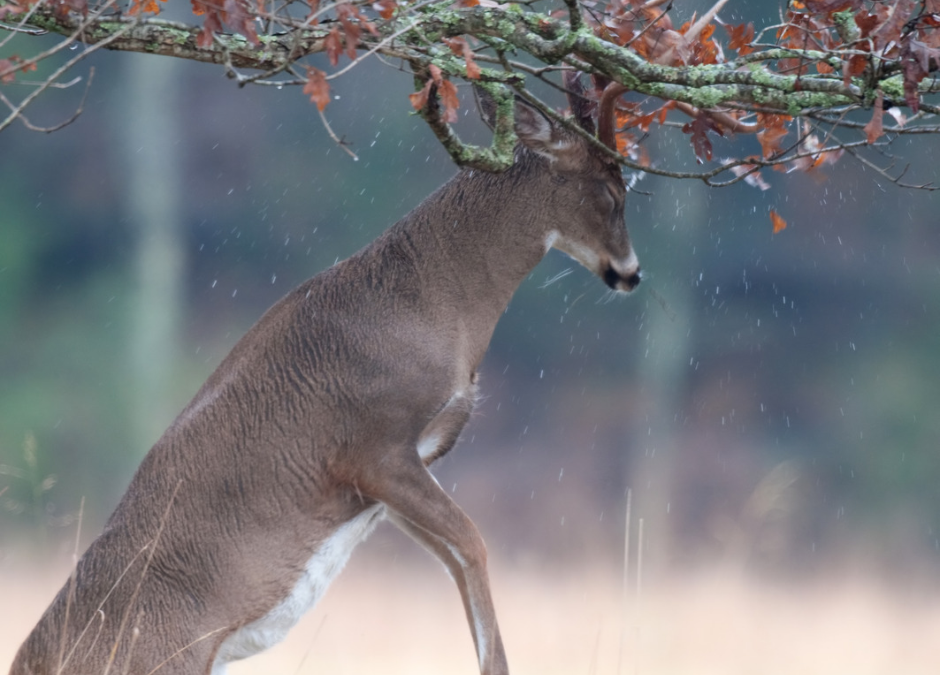
Deer can cause significant damage to young trees by rubbing their antlers against the truck. “Buck Rub” is a behavior that young deer engage in particularly late summer through fall, that can result in some significant damage to young trees. Why do they do it and what can be done about it is hat today’s blog is all about.

Why are Deer Rubbing Antlers on My Tree Trunks?
There are a few reasons deer engage in this tree damaging activity:
- To remove velvet off of antlers. As antlers develop, mature and harden, deer rub the soft, velvety tissue against tree trunks to remove it.
- To mark their territory. Deer rub antlers and their heads against trees to leave their scent and visible marks on trees to communicate with other deer.
- To get ready for mating season. Rubbing antlers along tree trunks strengthens their neck muscles and is a way to show dominance druing rutting.
Trees that are particularly susceptible to this damage are young trees that have trunks with a small diameter. Trees with flexible branches and thin bark are also really vulnerable during this time.
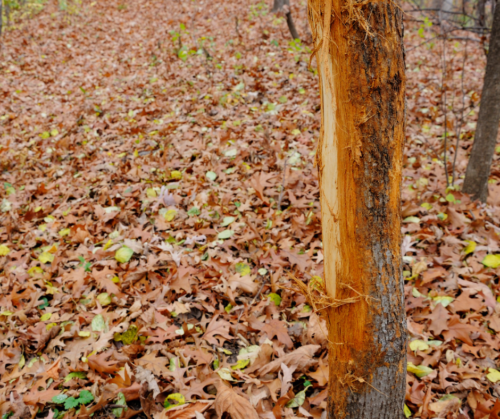
How to Recognize “Buck rub” on Trees
When deer are rubbing antlers against tree bark, they can strip away the layer of living tissue that is responsible for tree growth and transporting sugars. Oh deer! If the damage circles around the entire tree, this is called “girdling” and can damage the tree to the point of death.
Signs that deer have been engaging in this behavior on your trees are:
- shredded bark debris around the tree
- broken lower limbs
- vertical scratching marks
- and exposed wood
Options to Control Deer Rubbing Antlers on Young Trees
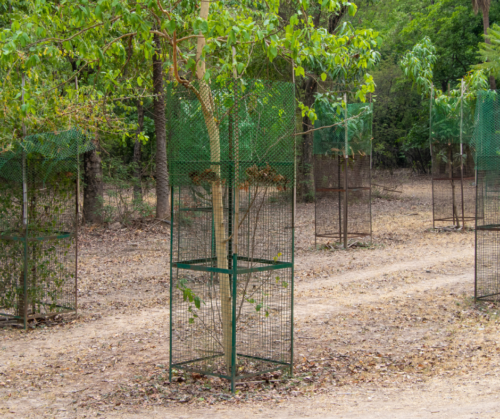
Wire cages are the most effective option for keeping deer away from your trees. Cages must be at least 5-6′ tall, and you’ll need to make sure there is at least 15″, or more space between the trunk and the cage so that deer antlers can’t reach in. Use sturdy wire cage stakes so that the cage doesn’t collapse.
Metal fencing posts can also be used and placed strategically around the tree just to make access a little harder. But I think you might as well combine this with some metal wiring to make a sort of cage for even more protection.
Tree guards are a commercial product that are specifically made for this deer problem. They are gridded guards that go around the tree and still allow for tree growth. They must be secured correctly and need to be tall enough to protect the entire vulnerable area. Pricier option.
My Tree is Already Damaged, Now What?
When you notice some of the early signs of deer rubbing their antlers on your young trees you should:
- Immediately take action and place one of those physical barriers around the tree to prevent further damage.
- Clean up areas where broken limbs have occured by making clean pruning cuts, and carefully remove only peeling and damaged bark. Don’t pull it off in strips, but rather trim away with a sharp knife.
- Do NOT apply pruning paint or any type of wrap directly over the wound.
- Keep trees mulched; never pile against the trunk, apply mulch in a donut pattern around the tree.
- Keep trees watered to eliminate extra stress.
- If worse comes to worse and you already have a “girdling” situation, you may need to consult an arborist to examine the life expectancy of the tree and if it needs to be removed.
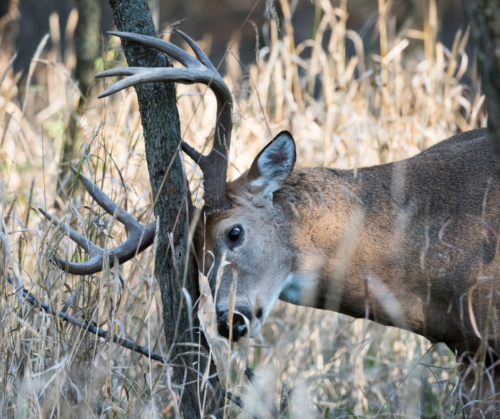
If you live in an area in South Texas where deer are prevalent, make plans to install your physical barriers around your trees in August, before this antler attack season begins. Even if you purchase trees that are deemed “deer resistant”, this just doesn’t apply to the old “Buck Rub”. Deer resistance applies more to feeding preferences, not protectionf from physical damage.
Take heart, many young trees can recover in time, and the earlier you catch what is going on, the earlier you can start protection measures. Now you know what to look for. https://www.rainbowgardens.biz/wp-content/uploads/2023/02/Deer-Resistant-trees.pdfBest of luck!
~The Happy Gardener, Lisa Mulroy


