



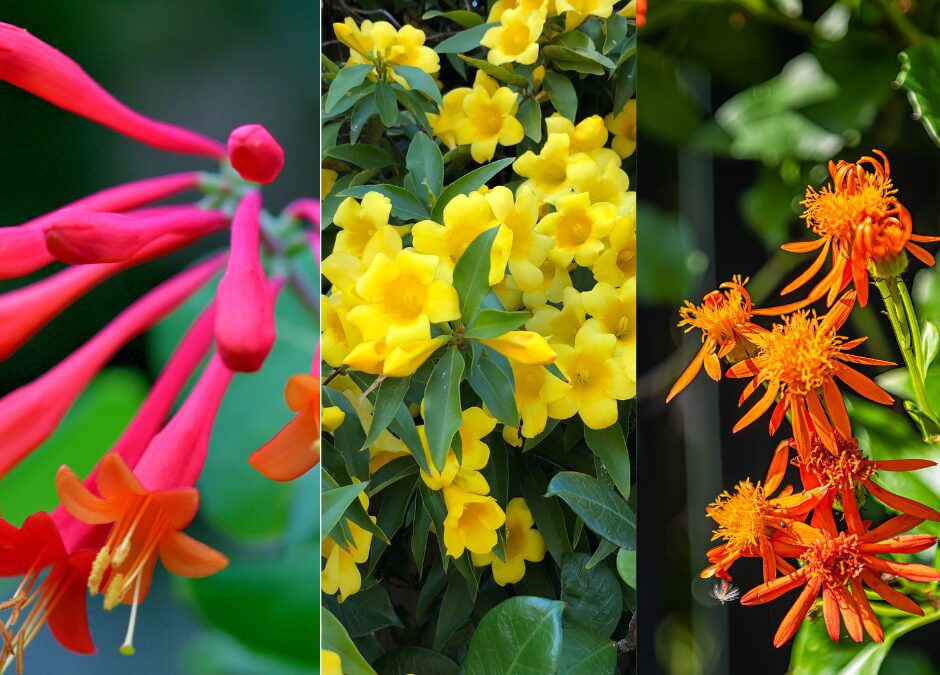
If you’re looking to cover a fence, soften a wall, or add vertical color to your garden, you can’t go wrong with flowering vines. And here in San Antonio, Texas, a few standout choices consistently perform beautifully: Carolina Jessamine, Coral Honeysuckle, and Mexican Flame Vine.
Each of these vines brings something a little different to the garden, but they all share a few things in common—they thrive in our climate, add serious seasonal interest and can really serve a purpose.
Let’s break down how to grow flowering vines successfully and what makes each one worth planting.
Why These Vines Work So Well in San Antonio
San Antonio’s long growing season, heat, and occasional drought conditions mean plants need to be tough. These three vines check all the boxes.
Carolina Jessamine and Coral Honeysuckle are native vines that are especially reliable, while Mexican Flame Vine is well-adapted to our area and brings fast growth and bold seasonal color.
They’re all excellent for:
-
Covering fences, trellises, and arbors
-
Adding privacy and vertical interest
-
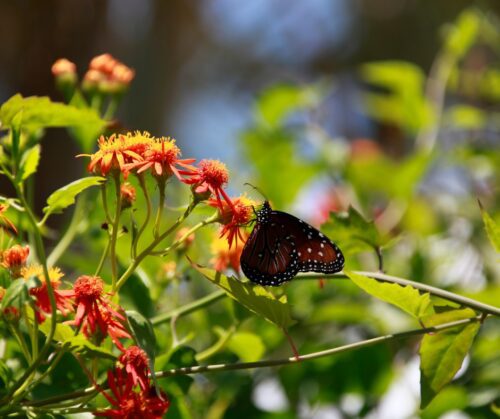
Supporting pollinators like hummingbirds and butterflies (Coral Honeysuckle and Mexican Flame Vine)
Getting Them Planted: Sun, Soil & Support
All three of these vines perform best when given plenty of sunlight. In most cases, full sun will produce the most blooms, though Coral Honeysuckle and Mexican Flame Vine can tolerate a bit of light shade in the late afternoon.
Soil doesn’t have to be perfect, but good drainage is extremely important. San Antonio’s native soils can be heavy, so loosening the planting area and mixing in compost or soil conditioner can help roots establish more easily.
Since these are climbing vines, they’ll need something to grow on. A trellis, fence, or arbor works perfectly—and it’s best to have that in place when you plant so they can start training upward right away. When the weather warms up, these vines start taking off.
Watering and Establishing Healthy Growth
When newly planted, all three vines benefit from regular watering while they establish their root systems. Once established, they become much more forgiving.
Carolina Jessamine and Coral Honeysuckle are both relatively drought-tolerant after establishment, while Mexican Flame Vine appreciates more consistent moisture, especially during peak summer heat, but soil must be well-draining to avoid prolonged exposure to stagnant water.
As a general rule, water deeply but allow the soil to dry slightly between watering. Overwatering can lead to root issues, especially in heavier soils.
Fertilizing for Steady Growth (Without Overdoing It)
These vines aren’t heavy feeders, which makes them relatively low-maintenance.
A balanced, slow-release fertilizer in spring is usually enough to support healthy growth and blooming. You can supplement with occasional feeding during the growing season but avoid going too heavy—especially with high-nitrogen fertilizers. Choose a balanced formula with a ratio like 10:10:10.
Too much nitrogen can lead to nutrient imbalances and excessive leafy growth at the expense of flowers. Keeping things balanced encourages more natural, steady blooming.
A Closer Look at Each Vine
Carolina Jessamine: Early Spring Sunshine
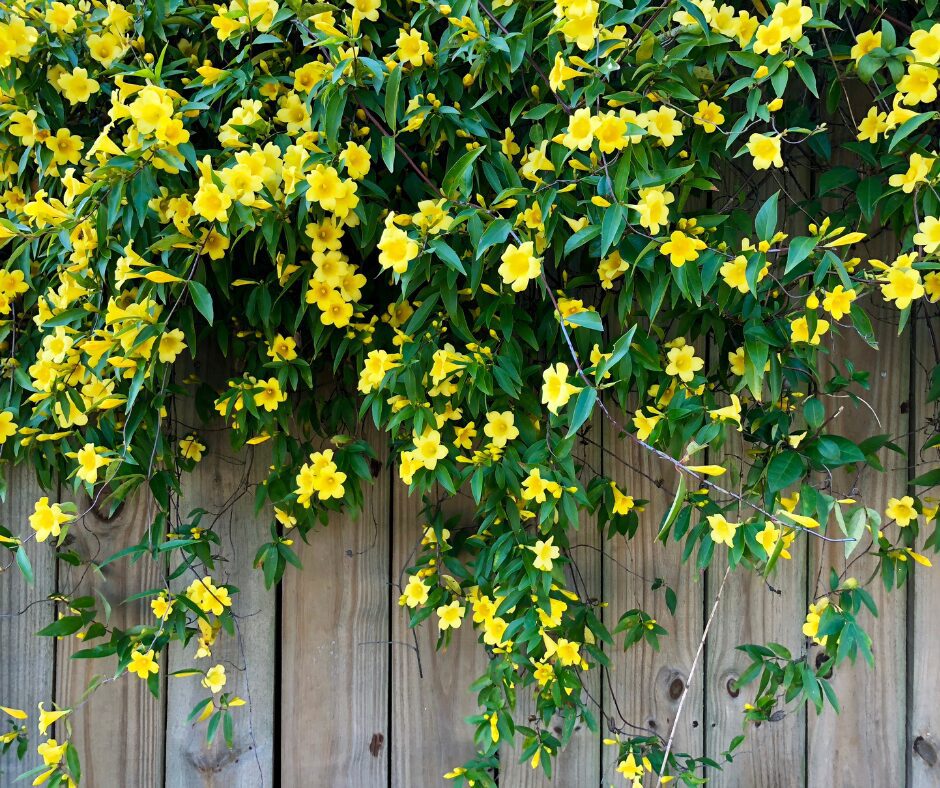
Carolina Jessamine (Gelsemium sempervirens) is one of the earliest blooming flowering vines you can plant. In late winter to early spring, it lights up with cheerful yellow, trumpet-shaped flowers, but can continue blooming through fall.
It’s evergreen, perennial vine, in our area, which means you’ll get year-round coverage, and it has a more refined, controlled growth habit compared to some other vines. If given a fence or arbor to grow on, it will showcase its gorgeous draping form. Average mature growth is around 20′ T x 10-12′ W. Give this vine a little extra water while getting its roots established, but after that, it is one of our more drought-hardy, low water use flowering vines.
This is a great choice for a flowering vine if you want early color and a classic, polished look along a fence or entryway, and yet it is just at home in a xeric landscape.
Coral Honeysuckle: A Pollinator Favorite
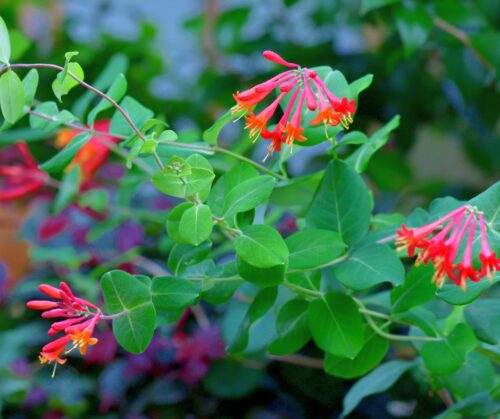
Coral Honeysuckle (Lonicera sempervirens) is a native, perennial vine that absolutely shines when it comes to supporting wildlife. Its tubular red or coral-colored flowers are a magnet for hummingbirds.
Unlike some invasive honeysuckles, this one is well-behaved and easy to manage. It blooms heavily in spring and often continues flowering sporadically through the growing season. Average mature growth is 10-20′ T x 3-6′ W. Drought-tolerant once established, these flowering vines kick out blooms early spring to mid summer, and provide evergreen foliage for most of the remaining year.
If you’re building a pollinator-friendly garden, this is one of the best vines you can plant in San Antonio.
Mexican Flame Vine: Fast Growth & Fiery Color
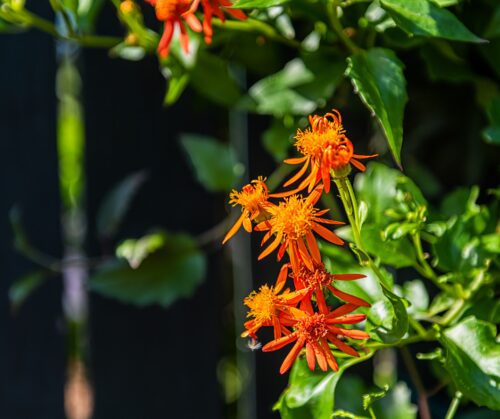
Mexican Flame Vine (Senecio confusus) is all about bold color and quick coverage. It produces clusters of bright orange flowers that seem to glow against its lush green foliage. You can pretty much count on Monarchs and Queen butterflies making an, ahem, beeline to these flowering vines when they are in bloom.
Mexican Flame Vine grows quickly, making it a great option if you want to cover a space in a short amount of time. Average mature growth is 10-12′ T x 2′ W. It tends to bloom most heavily in summer and fall. Be sure you plant this in well-draining soil, and avoid piling mulch up against the base of the vine.
We tend to use this as an annual vine, but when we have very warm winters it may actually stay evergreen.
Pruning and Keeping Vines in Shape
Each of these flowering vines benefits from occasional pruning to keep them looking their best.
For Carolina Jessamine and Coral Honeysuckle, light pruning after their main bloom cycle helps maintain shape and encourages fuller growth. Removing any dead or tangled growth also improves airflow and overall health.
Mexican Flame Vine can be more vigorous, so don’t be afraid to cut it back if it starts to sprawl. If it gets hit by frost, wait until spring to trim away any damaged growth—this gives you a better idea of what’s truly alive.
In general, a little regular shaping goes a long way in keeping vines tidy and productive.
If you’re looking to add height, color, and life to your garden, Carolina Jessamine, Coral Honeysuckle, and Mexican Flame Vine are flowering vines for San Antonio that are hard to beat.
They’re well-suited to San Antonio’s climate, relatively low maintenance once established, and each brings its own unique season of interest. Whether you plant one or all three, you’ll end up with a garden that feels fuller, more dynamic, and more alive.
~The Happy Gardener, Lisa Mulroy


