



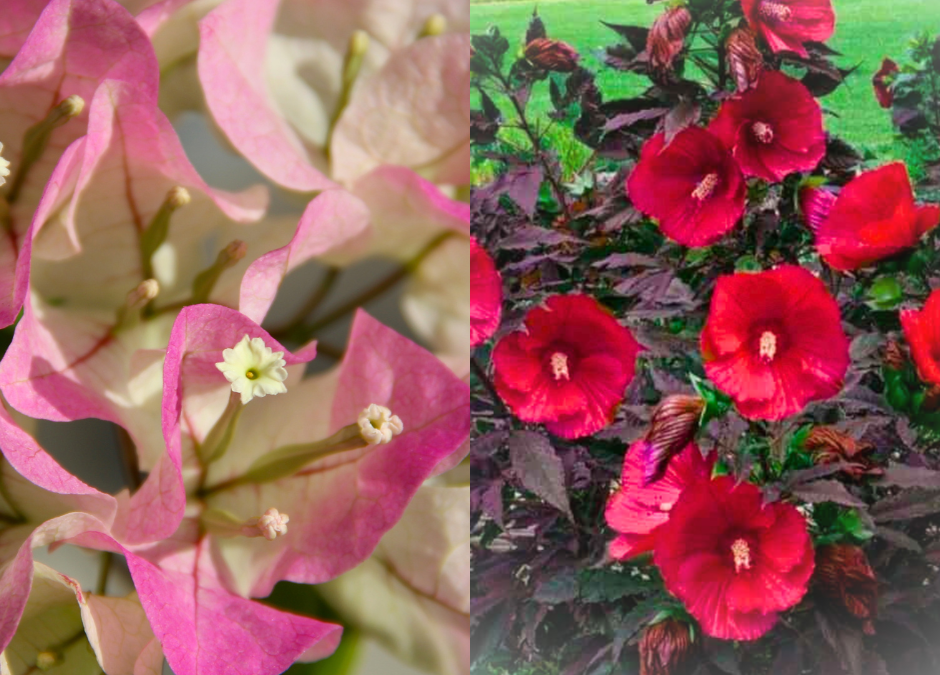
Are you lacking color on your hardy hibiscus or bougainvillea? Are you worried your hardy hibiscus or bougainvillea won’t make it through the winter? Let’s do a little trouble shooting and see if we caneliminate those worries and get you back to the beautiful blooms you bought the plants for in the first place.
Some Reasons Hardy Hibiscus & Bougainvillea aren’t Blooming
Perhaps the biggest draw for purchasing a hardy hibiscus or a bougainvillea is the promise of fantastic color in your landscape or container gardens. These plants offer vibrant hues and a tropical feel in perennial form. But what happens when the blooms won’t come? If cloudy, rainy weather has plagued us for days or weeks on end, there isn’t much you can do about that, but there are a few things you can troubleshoot to eliminate other reasons your plants may not be putting out flowers.
Light Exposure:
One of the biggest things you always need to double check when you aren’t getting the blooms and color you expect on hibiscus and bougainvillea is your light exposure. Are your plants getting full sun? If not, container planted specimens should be moved to an area that receives 6-8 hours full sun exposure. Once that element has been troubleshooted and you still aren’t getting the blooms you desire, try the following:
Water
- Bougainvillea can lack blooms when given too much water, or when soil doesn’t drain well. Yes, you still have to water bougainvillea, but maybe make adjustments to your schedule so that soil dries out some between watering.
- Hardy hibiscus on the other hand need plenty of water to keep their blooms coming. You still need well-draining soil, but soil should be consistently moist (not soggy) for best flower production.
Fertilizer
- Bougainvillea bloom best when they are slightly rootbound. Don’t be quick to repot your plant.
- You can also try offering a diluted solution of complete and balanced water-soluble fertilizer each watering to help your bougainvillea keep pushing out their vibrantly colored bracts. The dilution is important, though, as too much fertilizer can also cause lack of blooms.
- You may think that hibiscus would need a fertilizer with a high phosphorus number (the middle number on fertilizer ration listed on product) to produce all those gorgeous, large blooms. The truth is that is not what they need. Specialty hibiscus fertilizers have a higher nitrogen content. Hibiscus plants produce flowers on new growth; a higher nitrogen number supports this. (This fertilizer is especially important to container plants, as the abundance of water these plants need can flush out nutrients quickly.)
Pests:
- Lush foliage and pretty blooms aren’t just enticing to us, they can look delicious to garden pests as well. The blooms of any plant that has a pest infestation can suffer.
- Pests that can visit hardy hibiscus and bougainvillea are: Aphids, mealybugs, spider mites, and thrips (hibiscus). It’s a good thing to remember that stressed out plants are generally the plants that pests seek out first. If you give your hardy hibiscus and bougainvillea the care they need, it helps you avoid a pest infestation in the first place. But alas, we live in Texas and extreme heat in summer and the propensity for drought through summer can bring on the stress. Take a look at our Top 20 Common Garden Pests List and options for control here. Early detection is always your best defense, as the juvenile stage of pests are usually easier to control than when they reach maturity.
- A stream of water blasted at pests in an early stage can do wonders to eradicate an invasion.
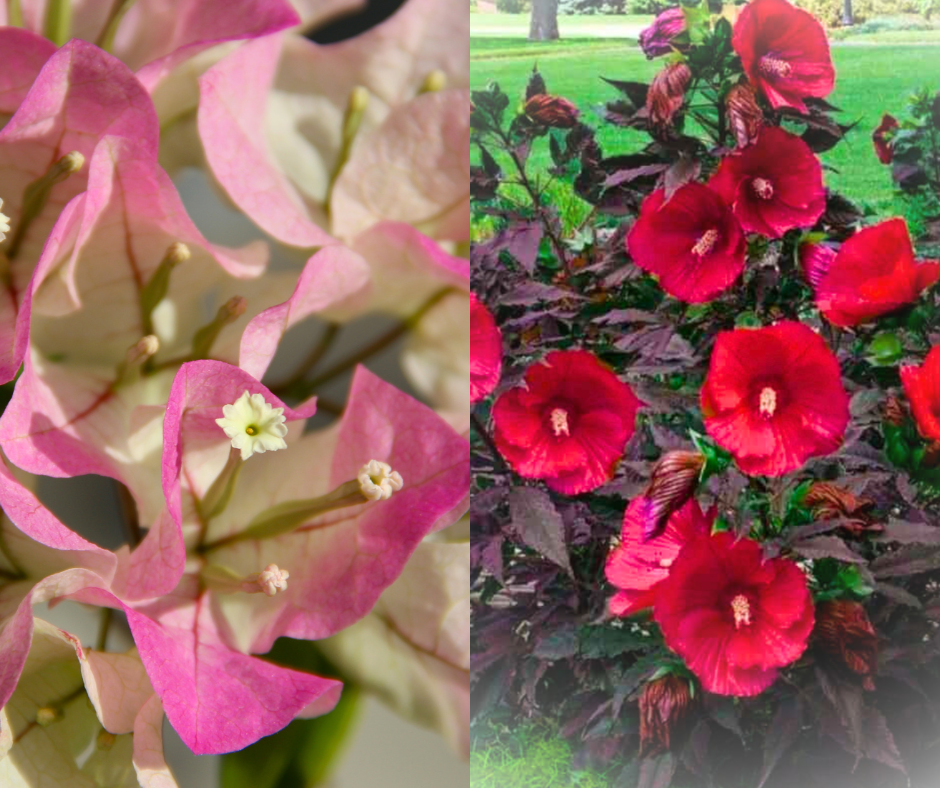
Winter Care: Hardy Hibiscus and Bougainvillea
Our winters in San Antonio are usually fairly mild, and these perennial plants generally revive themselves without too much fuss once the warm weather returns. That being said, here are a few precautions that you can take to make sure you are greeted by your favorite blooms again next summer.
In Ground Plants:
One of the best things you can do to ensure winter survival for both hardy hibiscus and bougainvillea that are planted in the ground, is to mulch your plants. A 3” layer of mulch applied around the base of these plants (but not piled up against the stem or crown of the plant) can provide measurable protection against cold temperatures.This is generally all they need to keep them coming back from their roots in springtime.
Keep in mind that both hardy hibiscus and bougainvillea really count on warm temperatures to get them sprouting. Be patient and don’t give up on them too soon. They will likely be some of your last perennials to emerge, often waiting until very late spring to reveal themselves.
Container Plants:
You can also apply mulch to container plants. But it is important to remember that the roots of container plants are more susceptible to cold damage than plants inground. Potted plants lose a few degrees of cold protection, so you may want to try some of our winter protection methods for container plants, like using freeze cloth, grouping containers together, or even bringing plants indoors, like mentioned in this blog.
Two things are important to remember NOT to do when winter is on the horizon.
- Stop fertilizing both hardy hibiscus and bougainvillea by October. Make your final fertilizer applications in early September and then resume fertilizing in mid to late February.
- Avoid pruning plants in fall or winter and wait until all danger of frost has past to prune and trim.
- An exception is if you have large container plants that you are bringing indoors and need to trim and shape them so they can fit in your space. Make sure you offer a bright sunny window and they’ll fill in nicely.
Both of these actions can help avoid the encouragement of new growth which is much more susceptible to freeze damage. Even if your plants freeze and you see evidence of cold damage to the limbs, leave them be until early spring. Those limbs will provide further protection in the event of another freeze.
Hope these tips have answered a few questions. Enjoy these beautiful plants summer through fall each year.
~The Happy Gardener, Lisa Mulroy


Your newsletter this week said to cut back perrinials so there would be new blooms for fall migration. My salvials still have plenty of blooms, Should I cut them back?
It’s so hard to cut back perennials when they still have blooms on them, but we have found when you cut salvias back after spring, towards the end of summer, and then again in late winter/early spring, you get an even fuller display of blooms. ONLY cut them back by 1/3rd, leaving some blooms on to continue feeding the pollinators while in transition, and give them a good watering and a dose of fertilizer (also watered in). I bet you’ll be surprised.
My hibiscus gots some powdered stuff. Not sure if it’s insects or diseases.
Hi Roger,
It looks like you have mealybugs and aphids, and possibly thrips. I am attaching one of my latest posts that is all about mealybugs and gives you several options for control. You can try insecticidal soap or neem oil, but you just have to remember not to spray anything during the heat of the afternoon. Wait until the sun starts to go down and temperatures drop to 85 or below, or you may risk burning your hibiscus foliage. I would cut off that bud that is infested and any others that look like that and make sure you throw it away right away in the trash. Make sure you cover the entire plant when you treat it, especially under the leaves and in the crevices of the plant. Best of luck.
Oops forgot to attach mealybug post. Mealybugs