



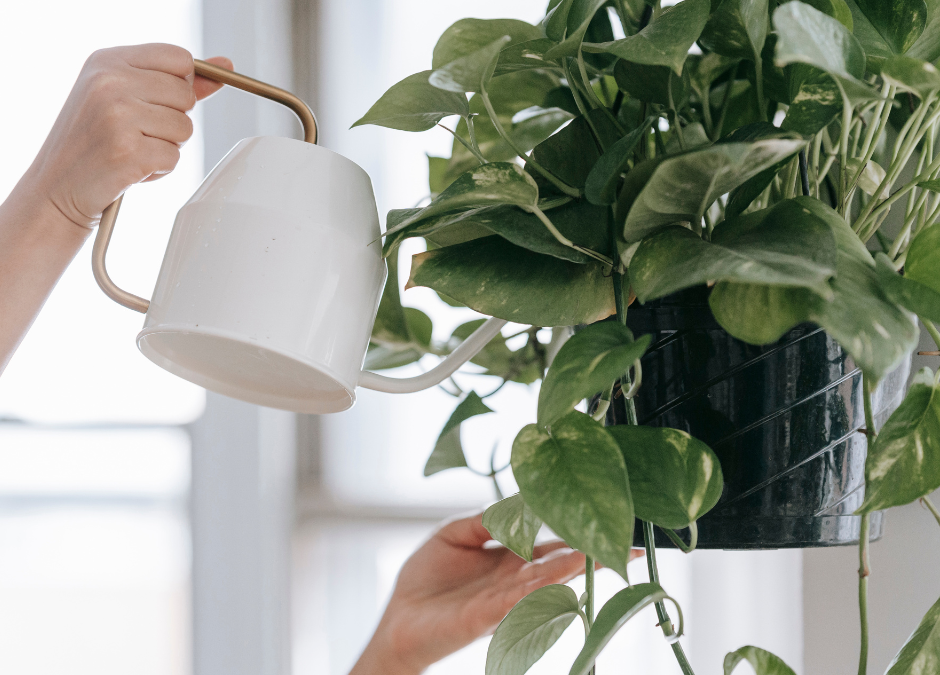
If there’s one thing that causes more houseplant problems than anything else, it’s watering. When our gardening friends are struggling with houseplant issues, oftentimes we just have to figure out if they’ve been giving their plants too little water or too much. While watering houseplants is a common struggle, the good news is it really doesn’t have to be all that complicated. Once you understand a few simple principles, you’ll be able to water with confidence and grow healthier, happier plants.
Be sure to check out our Special Needs Watering Guide at the end of this blog to help you learn about a few extra watering needs that some specific houseplants have.
Moist Soil vs. Soggy Soil: They’re Not the Same
Many plant tags say to keep the soil moist, but this is often misunderstood. Moist soil feels like a wrung-out sponge, slightly damp, but not dripping wet. It contains both water and tiny air pockets that roots need to breathe.
Soggy soil, on the other hand, stays saturated with water. When soil remains waterlogged, oxygen is pushed out, leaving roots unable to breathe. Over time, this can lead to root rot, yellowing leaves, wilting, and plant decline.
Plants need both water and oxygen around their roots. When watering houseplants, too little water causes stress, but too much water can actually suffocate the roots. Learning the specific watering needs of your chosen houseplant will make a world of difference. We think you’ll be amazed at how your houseplant will start performing once its watering needs start getting met.
“Let the Soil Dry Between Waterings” Doesn’t Mean Ignore Your Plant
Another phrase that often causes confusion is “allow the soil to dry between waterings.” Sounds like a free pass to forget about your plantn for awhile, right? Nah, not really. We aren’t telling you to let your plant stay bone dry for days or weeks until it begins to wilt. What we’re recommending is to allow a portion of the soil (often the top two inches) to dry before watering thoroughly again. Roots grow deeper and stronger as they search out the moisture in the deeper soil. This natural wet-and-dry cycle encourages healthy roots while also providing the oxygen they need.
Think of watering houseplants like charging your phone. You don’t keep it plugged in all the time, but you also don’t let it die completely before charging it again. Plants do best with the same balanced approach. Don’t flood them, and don’t leave them gasping for a drink.
Looking at the Soil Isn’t Enough
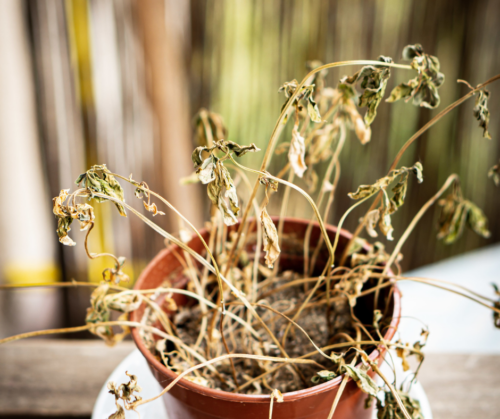
Many gardeners water simply because the soil looks dry. Unfortunately, appearances can be deceiving. Depending on the type of soil mixture you’ve potted your houseplants in, the top half-inch of soil may be dry while the root zone is still holding plenty of moisture. Watering too soon keeps the soil constantly wet, which can create several problems:
- Root rot
- Fungal diseases
- Yellowing leaves
- Weak root systems
- Fungus gnats breeding in damp soil
It’s best to always feel the soil before watering. It takes only a few seconds and can prevent many common houseplant problems.
Best Way to Know When Your Plant Needs Water
- Don’t guess.
- Don’t water on a schedule.
- Don’t judge by how the soil looks.
The best way to know when it’s time to water is to feel/test the soil. Try one of the two following methods to test for soil moisture when watering your houseplants:
1. The Finger Test (Our Favorite Method)
For most gardeners, your finger is the best moisture meter you’ll ever own. Your first and second knuckle are amazing garden tools, and you always have them “handy”, get it?
- Small pots: Check about 1 inch deep.
- Larger pots: Check 2–3 inches deep.
- If the soil feels cool and moist, wait to water.
- If it feels dry at the recommended depth, it’s probably time to water.
If you’ve ever baked a cake, or brownies, you know it’s a good idea to check the center of your baked goods with a toothpick. It’s really hard to judge whether they are done by looking only at the top. If the toothpick comes out clean, the cake is done and doesn’t need anything, if it comes out sticky, there is still moisture in the middle. In this case, your finger acts like the toothpick when checking the soil for moisture. (By the way, you can check your landscape plants for moisture this way too, but you may have to use a dowel or screwdriver to reach down a few more inches into the soil (5-6″ for trees and shrubs”).
2. Using a Soil Moisture Meter (Runner Up Method)
A moisture meter is another excellent tool, especially for large containers or if reaching into the soil isn’t practical.
For the most accurate reading:
- Insert the probe into the root zone—not just the surface.
- Test more than one spot in large containers.
- Wipe the probe clean after each use.
- Check battery power before using.
Moisture meters are helpful, but they work best when combined with observing your plant and checking the soil regularly.
Watering Houseplants: Soil Type Matters
Along with learning the best techniques for watering houseplants, it is super important that you choose the best soil medium to plant in. Garden soil, topsoil, and heavy clay soils should never be used alone in pots. These soils become compacted inside containers and drain very slowly. Instead of allowing roots to breathe, they trap water around them, increasing the risk of:
- Root rot
- Fungal diseases
- Fungus gnats
- Poor root growth
- Stressed, unhealthy plants
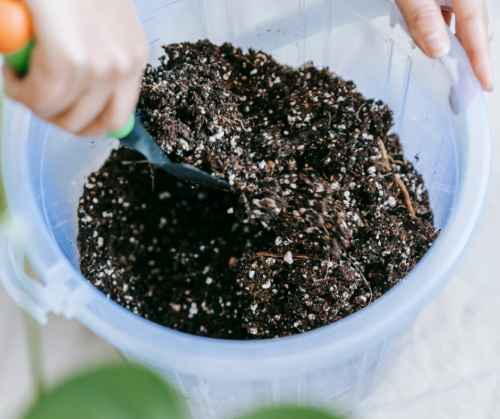
Houseplants should be grown in quality potting mixes as these contain an abundance of organic materials and soil amendments that are great for soil drainage. Ingredients like perlite, peat moss, worm castings, etc… create tiny air pockets that allow roots to receive both water and oxygen. Potting mixes are specially designed for containers. They are light, fluffy, and drain well while still holding enough moisture for plant roots.


The last comment about watering plants with delicate foliage seems to stand alone without elaborating. Can bottom watering result in saturated soil? Should bottom watering always have some water to feed into the pot as it decides it needs more?
One method not mentioned that I use to determine time to water is to pick the pot up. When it hits a light weight, that I learn to recognize, I water again.
Hi Joe,
Thank you for your questions and observation on this blog. Bottom watering could lead to saturated soil if the pot is left sitting in water too long. The pot should always be allowed to drain very well after bottom watering, and you should check for adequate moisture after 20 minutes. But it is great way to water plants that are potted in excess peat moss as it is hard to rewet peat with just top watering. It’s also a good method for really, really, dried out soil where the water just runs down the sides of the soil in the pot and out the bottom. Thanks for the extra tip about picking plants up, that is also helpful. I will get back to the article and include more info. Thank you!