



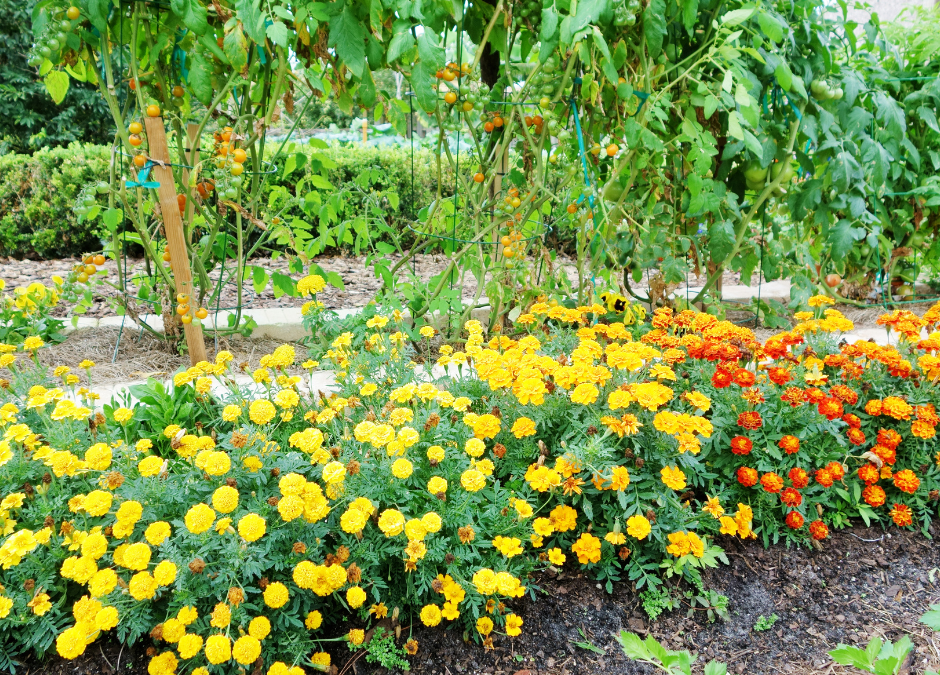
Summer is here and the pests have arrived. If you’ve ever walked out to your vegetable garden only to find aphids covering your peppers, squash bugs attacking your zucchini, or caterpillars chewing holes through your cabbage, you’re definitely not alone. The good news? Nature already has a solution. One of the easiest ways to reduce pest problems is by companion planting, otherwise known as interplanting the right plants alongside your vegetables. Some plants naturally repel damaging insects, while others attract beneficial insects that do the dirty work for you by eating common garden pests.
Companion planting or biological pest control, is a simple, sustainable way to create a healthier garden with less reliance on pesticides. Companion planting repels pests, attracts beneficial insects, and creates a healthier vegetable garden. Today we are highlighting four of our favorite plants that help naturally protect your garden.
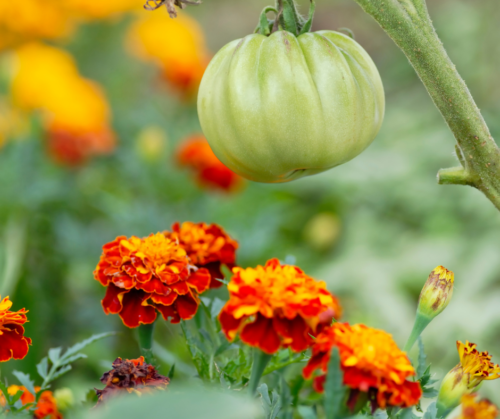
Companion Plants for Natural Pest Control: Marigolds
You’ve probably heard that you should plant marigolds around your vegetables. But have you ever wondered why? French marigolds (Tagetes patula) aren’t just pretty flowers; they actually act like little natural chemical factories. Their roots produce a natural compound called alpha-terthienyl, which has been shown to have nematicidal, insecticidal, antiviral, and cytotoxin properties. One of its biggest benefits is helping suppress certain species of soil-dwelling root-knot nematodes, microscopic worms that attack plant roots and reduce plant vigor.
Plant French marigolds near:
- Tomatoes
- Peppers
- Eggplant
- Cucumbers
- Melons
- Squash
These vegetables are especially susceptible to root nematodes, making French marigolds an excellent companion plant.
French marigolds also do a great job of using their pungent foliage and flower smell to mask the scent of otherwise enticing host plants that insects are seeking out. They can help reduce numbers of aphids, whiteflies by making damaging pests not even realize your tempting veggies are planted nearby. While marigolds won’t eliminate every pest in your garden, they can become an important part of an integrated, natural pest management plan.
When to plant in San Antonio:
- Available in the nursery during spring and fall
- Plant throughout vegetable beds rather than only around the edges for the greatest benefit.
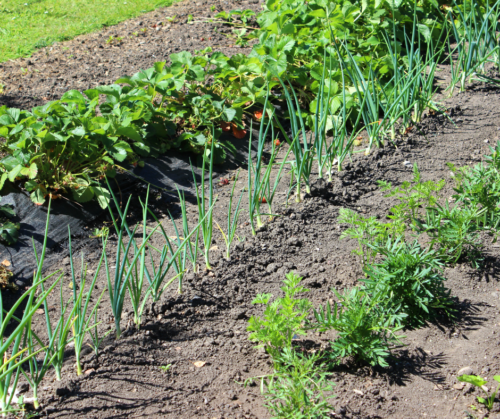
Companion Planting for Natural Pest Control: Alliums
Let’s be honest. Onions have a pretty strong smell, many would say they are downright stinky! To many insects, that’s enough reason to stay away. Plants in the allium family contain sulfur compounds that cause insects to think twice about entering the areas of the garden that they are planted in. These scents can make it harder for insects to locate their favorite host plants Think of it like this, companion planting with alliums is like producing a protective cloud that hovers over your vegetable gardens that pests don’t want to fly into. Kind of like a special ‘force field’.
Great alliums to interplant include:
- Onions
- Garlic
- Shallots
- Chives
These companions may help discourage pests like aphids, cabbage worms/moths, some beetles and other chewing insects. Even better, they don’t take up much room, making them easy to tuck between larger vegetable plants.
When to plant in San Antonio, Texas
- Green onion sets: Spring
- Onion sets: Fall
- Garlic: Fall
- Shallots: Fall
- Chives: Usually available year-round in the herb section
As an added bonus, you’ll have plenty of fresh herbs and vegetables to harvest for the kitchen.
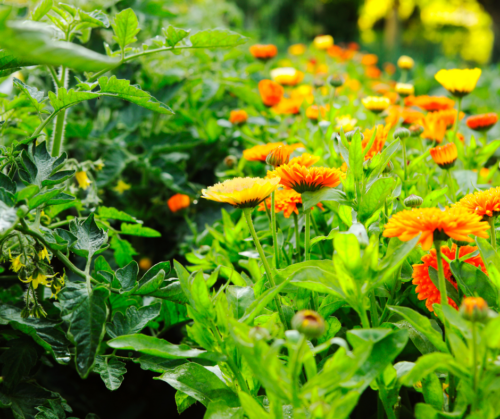
Companion Plantings for Natural Pest Control: Calendulas
Calendulas (a.k.a. Pot Marigolds) actually attract some insects. What? Wait. You thought we were talking about repelling pests, not attracting them. Well, we are. The insects that calendula attract are beneficial predatory insects like ladybugs, green lacewings, hover flies, pirate bugs and more. These beneficial predatory insects feed on the larvae of common garden pests like aphids, whiteflies, thrips, mites, and other soft-bodied insects. This helps to greatly reduce their numbers in your gardens. Biological control at its finest.
When it comes to companion planting, besides marigold, calendulas are the gold standard. Now for the 1-2-3 punch that calendulas provide. Its roots and flowers contain natural compounds called terpenoids, which may help reduce pest pressure in several ways:
- Mask the scent of nearby vegetables, making them harder for pests to locate.
- Produce mild toxins that disrupt the nervous system of pests.
- Act as a “trap plant” for certain pests, drawing them toward the calendula instead of your vegetables.
Bonus: Calendula flowers are edible and are commonly used to make herbal tea.
Best planting time
Calendula can be grown throughout much of the year, but it truly shines in early spring and fall and winter gardens because of its great cold tolerance in South Texas.
Companion Planting for Natural Pest Control: Dill
If you’re growing dill only for pickles, you’re missing one of its greatest talents. Once dill begins flowering, it becomes one of the best nectar sources for beneficial insects. Its umbrella-shaped blooms attract:
- Ladybugs
- Lacewings
- Hoverflies
- Tiny parasitic wasps
- Native pollinators
Those tiny parasitic wasps might sound intimidating, but they’re incredibly helpful. Many species lay their eggs in or on common garden pests like tomato hornworms, aphids, caterpillars, and whiteflies, helping keep their populations under control naturally.
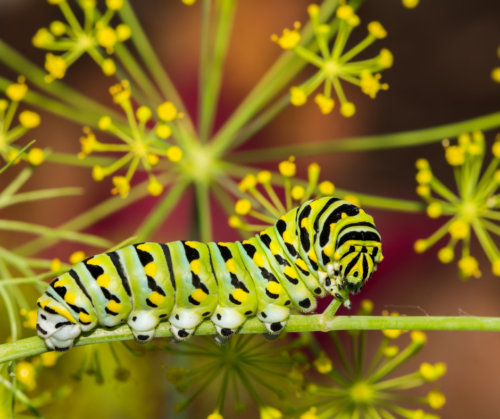
Dill is also a butterfly favorite. It serves as a host plant for the beautiful Black Swallowtail butterfly. In fact, it’s not unusual for young swallowtail caterpillars to hitch a ride home on nursery-grown dill plants. If you spot one, don’t panic. You didn’t bring home a pest; you brought home a future butterfly. Be sure to allow some of your dill to flower. Many gardeners pull dill once it starts to bolt, but we say let it bloom. Those flowers are exactly what beneficial insects are looking for. Dill is a great plant to include when implementing the companion planting method.
For the longest harvest:
- Sow dill successively every few weeks.
- Harvest some for the kitchen.
- Leave plenty to flower for pollinators and beneficial insects.
When to plant:
In San Antonio, dill performs best during the cooler months for culinary purposes. Dill will bolt (go to flower) quickly in hot temperatures, but the flowers are what we want when we are talking about growing it for pest control.
We hope this has given you some insight into natural ways to control pests in your vegetable gardens. Pest control doesn’t have to take up all your gardening time. When you include plants that repel pests and that bring in the beneficial insects, you just might find that you spend more of your time enjoying your garden than battling it.
~The Happy Gardener, Lisa Mulroy


