


If you’re looking for a native plant that delivers unique beauty, pollinator power, and wildlife benefits all in one, button bush deserves a spot in your landscape. Native plants often get overlooked in favor of flashy ornamentals, but button bush proves that you don’t have to sacrifice beauty to support nature. In fact, this unique, eye-catching shrub may end up being one of the most talked-about plants in your yard.
What Is Button Bush?
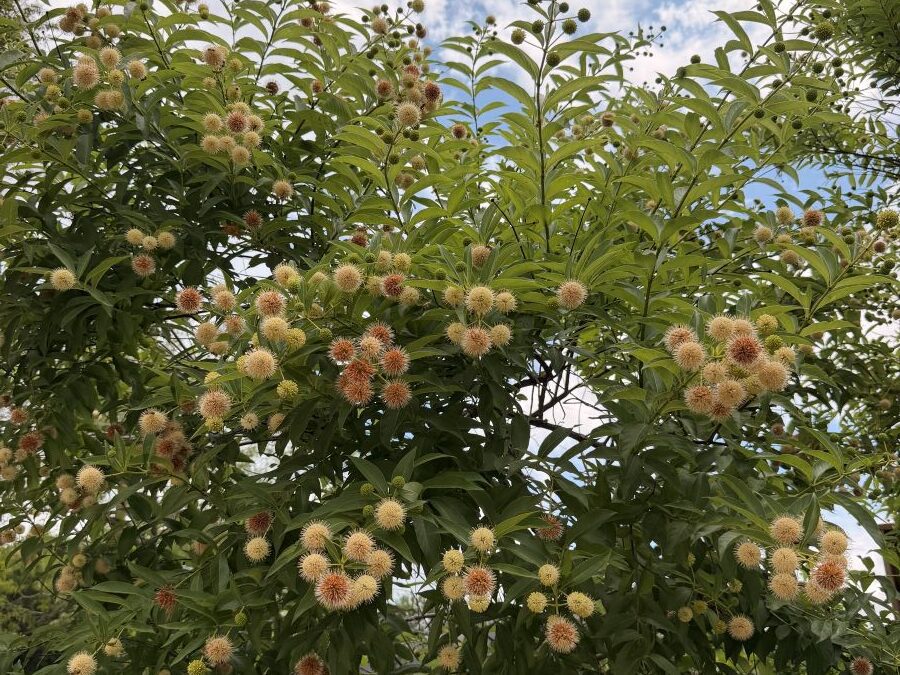
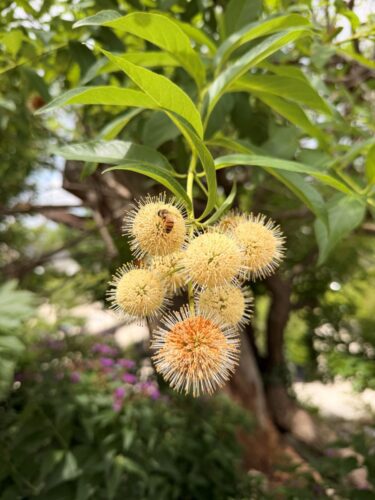
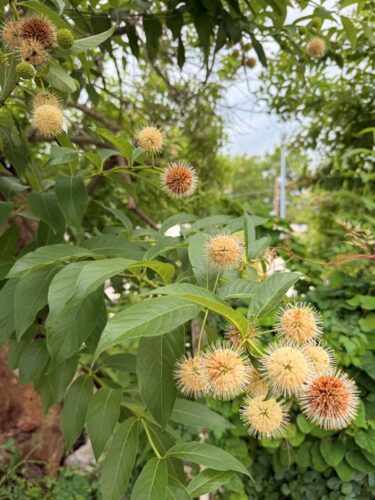
Cephalanthus occidentalis, commonly called button bush, is a North American native shrub known for its unusual blooms. Its flowers form perfectly round, pincushion-like white globes that create a whimsical look in the landscape. In fact, you might feel like you’ve walked into the pages of a Dr. Seuss book when you encounter a button bush in bloom.
Flowering from late spring into summer, these unique blooms instantly draw attention, not only from gardeners, but from pollinators too.
After flowering, button bush develops interesting seed heads that continue adding texture to the landscape while also serving as a food source for birds and wildlife.
When blooming, it becomes a hotspot for:
- Butterflies
- Native bees and honeybees
- Hummingbirds
- Beneficial insects that support a healthy ecosystem
Where Does Button Bush Work Well in San Antonio Landscapes?
San Antonio landscapes can be challenging. Between extreme summer heat, inconsistent rainfall, alkaline soils, and drainage issues, plant selection matters.
This is where button bush shines.
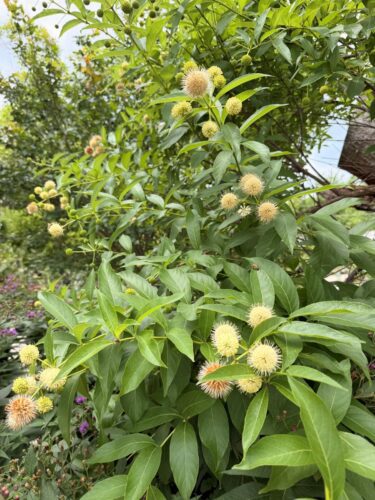
It is especially useful for:
- Low-lying areas of the landscape
- Rain gardens
- Spots that collect water after storms
- Areas that stay slightly moist longer than surrounding beds
Unlike many shrubs that struggle with occasional wet feet, button bush actually enjoys moisture. However, once established, it becomes surprisingly adaptable and can tolerate periods of Texas heat and drought much better than people expect.
It’s one of the few native shrubs that can solve a landscape problem and become a focal point.
Where Should You Plant Button Bush?
In San Antonio conditions, button bush generally matures to about:
Height: 6–10 feet tall
Width: 5–8 feet wide
In ideal moisture-rich environments, it may grow even larger over time. If planted in drier areas or occasionally pruned for shaping, it often stays a bit more compact. This plant prefers to be planted in the ground. Container planted specimens dry out faster than those planted in the ground. With the button bush preference of moist soil, you can see why inground planting is best.
Because of its mature size, it works beautifully as:
- A pollinator anchor shrub
- A backdrop plant in native gardens
- A rain garden specimen
- A loose privacy screen near naturalized spaces
Give it enough room to spread, especially if planting near walkways or patios.
Extra Growing Tips for Success
To get the most out of your button bush, keep these tips in mind:
- Mulch is your friend: Add 2–3 inches of mulch around the root zone to help conserve moisture and moderate soil temperatures.
- Water well while establishing: Even drought-adaptable plants need regular watering their first growing season.
- Don’t over-fertilize: Because it is a native plant, button bush usually performs beautifully without heavy feeding.
- Choose the right location: If you have a spot that stays slightly wetter after storms, this shrub can thrive where other plants struggle.
A Native Plant That Gives Back
One of the biggest misconceptions about native plants is that they can’t compete visually with ornamental shrubs. Button bush completely disproves that idea.
Between its whimsical blooms, nonstop pollinator activity, wildlife benefits, and adaptability to local conditions, button bush earns its place as one of the most rewarding shrubs you can grow in a San Antonio garden. I think you’ll love it!
~The Happy Gardener, Lisa Mulroy


