



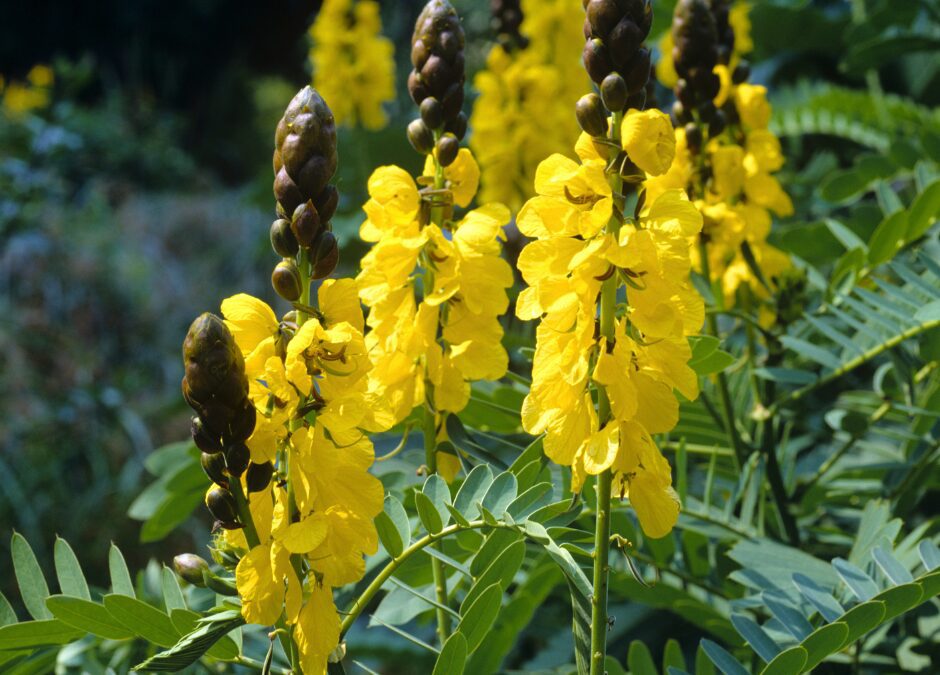
Sulphur butterflies are some of the most cheerful looking pollinators out there. The sight of their sunshine-yellow or tangerine-orange wings flitting around your garden brings instant smiles. If you’ve noticed these happy pollinators coming around to see what you have in your garden and you want them to stay, it might be time to roll out the red carpet for one of their favorite host plants: Popcorn senna. Also known as Cassia didymobotrya, this unique plant doesn’t just support pollinators—it brings bold color, late pollinator interest, fabulous texture, and yes… a surprising popcorn scent to your garden.
When we haven’t even dipped our toes into summer yet, it might be hard to think about fall and winter blooms. But it’s actually a great time to get these types of plants established so you can offer the pollinators nectar and host plants in fall and winter. Let’s dig into why Popcorn senna deserves a prime spot in your pollinator habitat.
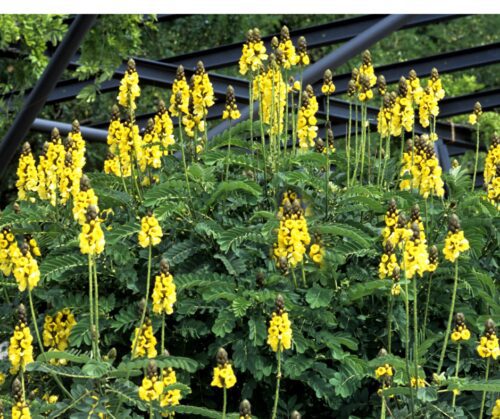
What Makes Popcorn Senna So Special?
The name alone is enough to spark curiosity, but Popcorn senna truly delivers on personality.
- The foliage gives off a light buttery popcorn scent, especially on warm days. Just slightly rub the fuzzy foliage and you’ll think you’re getting ready to watch a feature film in the theater!
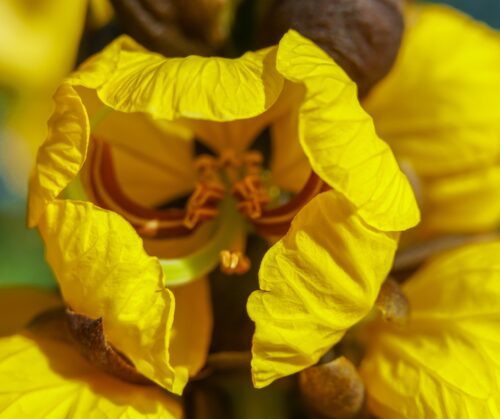
- Dramatic blooms feature dark, almost black buds that open into bright yellow flowers. The flowers form a cylindrical shape and tower above the plant for dramatic effect.
- Popcorn senna is a host plant for Sulphur butterflies, meaning you’ll see caterpillars and butterflies.
- It’s a magnet for bees and other pollinators when in bloom.
- Typically blooms fall through winter
- Can continue into early spring during mild years
- In especially warm winters, it may bloom nonstop for months
When most landscapes are slowing down, Popcorn senna is just getting started—bringing much-needed color and pollinator support during the cooler months. This is one of those plants that people stop and ask about—and once you grow it, you’ll understand why.
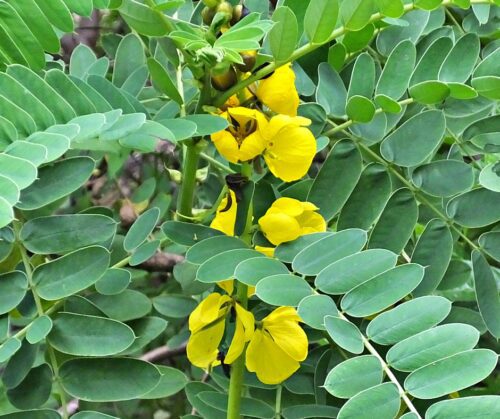
Growing Requirements for Popcorn Senna in San Antonio, Texas
Light: Popcorn senna is flexible, which makes it easy to place in your landscape.
- Thrives in full sun to partial shade
- Also performs well in filtered light
- More sun = more blooms and fuller growth
Soil: This plant isn’t picky, which is always a win.
- Prefers well-draining soil
- Tolerates average to slightly poor soils
- No need for heavy amendments
If you’re gardening in typical San Antonio soil, Popcorn senna will adapt just fine.
Water: While it appreciates moisture, it’s more forgiving than you might expect.
- Regular watering is ideal, especially during establishment
- Can tolerate short dry periods without major damage
- Deep watering helps encourage strong root growth
Once established, Popcorn senna becomes moderately drought-tolerant, but it will look its best with consistent watering. Especially during long bouts of extreme heat and drought.
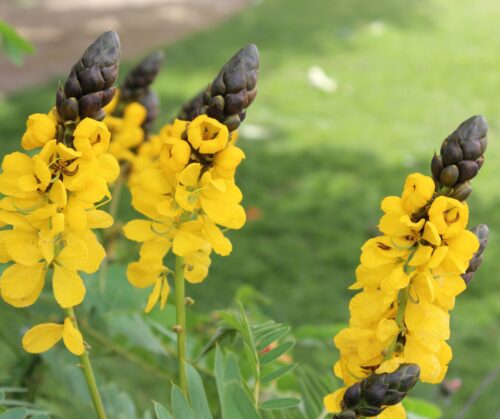
Spacing and Pruning for Popcorn Senna Planting Success
Spacing: This is where you’ll want to plan ahead—Popcorn senna can get big!
- Mature size in San Antonio:
- Height: 6–10 feet
- Width: 4–6 feet
- Spacing: 4–6 feet apart
- Planting depth:
- Plant at the same depth as the nursery container
- Avoid planting too deep to prevent root stress
Give it room, and it will reward you with a bold, architectural presence. You can also plant Popcorn senna in containers. Use a larger, heavier pot as these plants grow tall and can get a little top-heavy.
Pruning: Left alone, Popcorn senna can grow tall and a bit leggy but a little pruning goes a long way.
- Lightly prune early in the growing season (late spring to early summer) to encourage branching
- Avoid heavy pruning late in the season—you don’t want to delay fall blooms
- Shaping early = fuller, bushier plant
Popcorn Senna & Pollinators (The Real Show!)
We’ve saved the best for last. If your goal is a pollinator garden, Popcorn senna is a standout performer. While Sulphur butterflies definitely love this plant, they are not the only butterflies that will wander to it. With its late blooming period, it’s a welcoming sight for straggling butterflies that need a shot of nectar before their migratory journeys.
- Host plant for Sulphur butterflies
- Attracts bees and nectar-loving insects
- Supports the full butterfly lifecycle—from caterpillar to adult
This isn’t just a pretty plant; it’s part of a thriving ecosystem. And just a heads up, if you’re focused strictly on native plants, you can still get similar benefits. Consider planting some of these native Texas alternatives to Popcorn senna; they are fabulous too!
- 2-leaf Senna
- Lindheimer’s Senna
So, if you’re looking for something a little different—something bold, beneficial, and conversation-worthy—Popcorn senna checks all the boxes. It thrives in San Antonio’s climate, supports pollinators when they need it most, and brings unexpected charm to the garden with its popcorn-scented foliage and dramatic blooms.
Plant one this season, and don’t be surprised if it becomes your new favorite fall tradition.
~The Happy Gardener, Lisa Mulroy


