



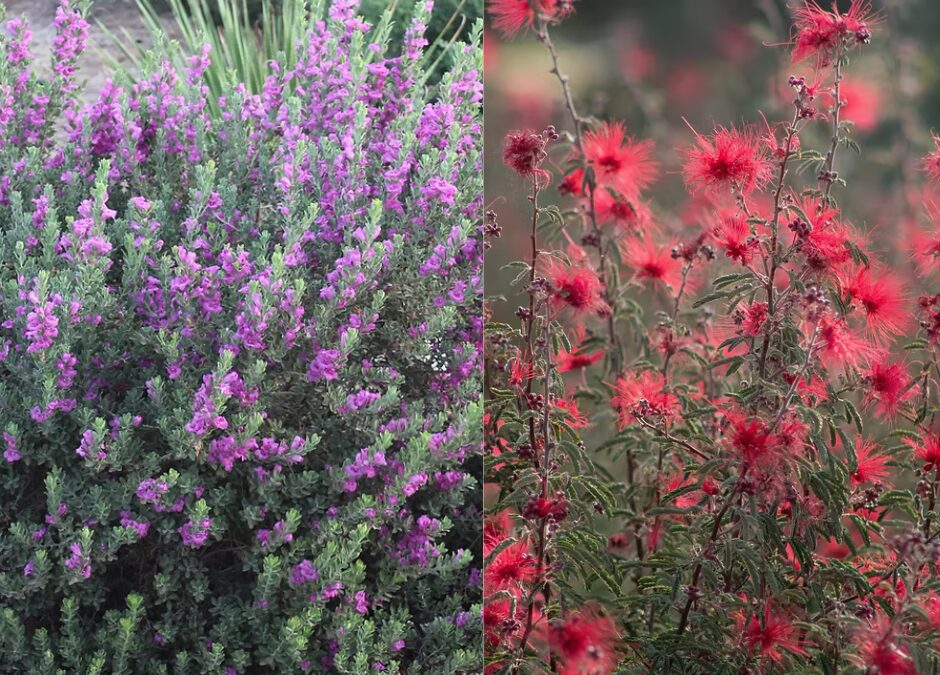
Here in San Antonio, we are always looking for plants that can muscle their way through the extreme temperatures of our blazing summers and still look great while doing it. We’ve been impressed with the performance of two newcomers to this game over the past couple of years: Baby Yoda Texas Sage, and Mexicali Rose Fairy Duster. These two Texas-tough options offer everything we want in landscape plantings. They put on a fabulous flower show with a long blooming period, support local pollinators, are evergreen, drought-tolerant, low-maintenance, and look beautiful throughout the year. Let’s take a look at why we are highlighting Baby Yoda Texas Sage and Mexicali Rose Fairy Duster for the second year in a row.
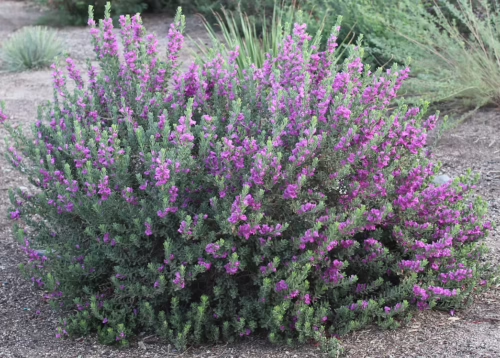
Baby Yoda Texas Sage: A Dwarf Variety of Our Beloved Texas Sage
If you’ve lived in San Antonio Texas for any length of time you have most likely seen the gorgeous magenta-rose blooms of Texas sage, or Cenizo, preceding or following rainfall. Texas sage is intuitive to changes in atmospheric pressure and it spurs on flowering. This phenomenon also applies to the newer variety, Baby Yoda Texas sage. Originating from the popular Green Cloud sage, Baby Yoda is a compact dwarf selection developed by Civano Growers here in Texas.
The average mature growth of 3 to 3.5 feet tall and wide. This means if you have loved the look of Texas sage, but haven’t had the room for its larger growth, you now have a new option! Baby Yoda Texas sage can fit into tighter planting areas and can be used as a smaller foundational hedge. It’s compact enough to situate under windowsills or for a smaller border accent.
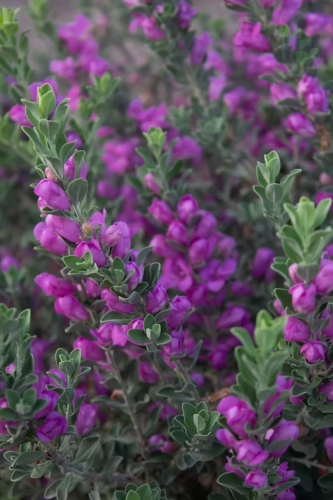
Baby Yoda Texas Sage: Pollinator Interest
The soft, bright green foliage of Baby Yoda Texas sage forms a dense, round-open shrub that looks great even when not in bloom. But when it blooms, ooh baby, it’s a stunner! Magenta-rose-purple blooms practically cover the entire shrub. When in bloom, the happy sound of buzzing will greet you as bees visit the multitude of nectar-rich flowers. Butterflies will seek the blooms out as well as hummingbirds. Texas sage is actually a host plant for the Theona Checkerspot butterfly. When you plant natives like Baby Yoda, you support or local wildlife which in turn, supports our local ecosystem.
Once established in the landscape, Baby Yoda often can rely on natural rainfall for irrigation, though an occasional deep watering during the most intense heat and drought periods may be warranted. Well-draining soil is a must for Texas sage as soggy soil will lead to root rot. Drainage and not overwatering this plant is most of the maintenance that you will need. The only pruning really needed is an occasional prune of a damaged branch or just to tidy up the shape if needed.
If you’ve got a smaller, full sun area (even reflected heat) that you’ve been looking for the perfect landscape plant to fill in, you might want to take a close look at Baby Yoda Texas sage.
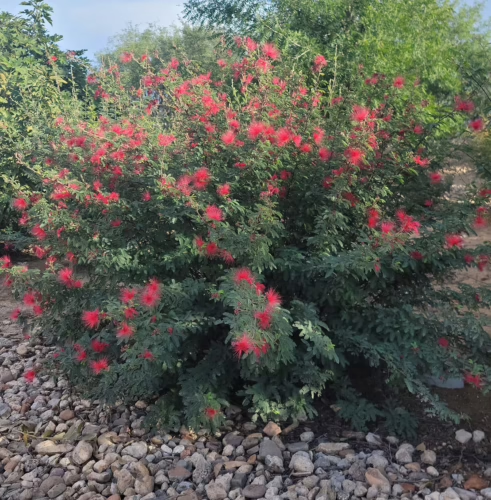
Mexicali Rose Fairy Duster: A Well-Adapted Landscape Option
Do you have a xeric type of landscape but are craving a more color to make it pop? If you haven’t heard of the Mexicali Rose Fairy Duster yet, you are in for a treat today. While it is not a native Texas plant, it sure acts like one! Heat and poor soils, which we often find in San Antonio, Texas, just don’t bother this shrub. And the flower power it possesses is a pollinator gardener’s dream.
The average mature growth of Mexicali Rose Fairy Duster is 4-6′ T x W. This makes it a great size for average landscapes. It is generally evergreen in our warmer climate here in San Antonio, and it is considered a very low maintenance type of shrub, generally keeping its round-open form with little to no pruning. As a matter of fact, too much pruning may end up sacrificing some of your blooms.
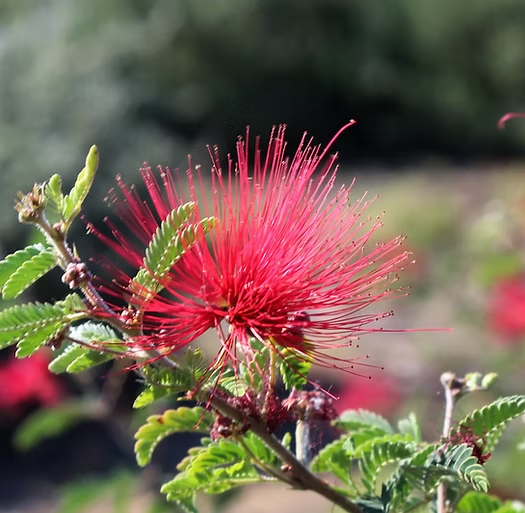
Mexicali Rose Fairy Duster: A Tough-Performing, Pollinator Magnet.
What Mexicali Rose Fairy Duster does need is well-draining soil and sunshine. These shrubs are native to the Sonoran Desert, so they are used to soils that hold little water. It’s very drought tolerant once established, requiring very little supplemental irrigation (a deep watering every 2-3 weeks in summer), which is a great thing to hear for our area. Avoid overwatering, especially during the wintertime.
But let’s go ahead and talk about the best part, the blooms! Red, powderpuff flowers cover the plant in spring and summer (especially after a rain) and provide a buffet of nectar to butterflies, bees, and hummingbirds. The summer flush of flowers is especially beneficial for local pollinators who find their nectar sources dwindling during summertime heat. And the extra color in summertime is sure beneficial to Texas gardeners too! The Mexicali Rose Fairy Duster just might be the right xeric option for your low water usage landscape.
But wait! I forgot to tell you that both of these plants work well together! They are like-minded plants, meaning they basically have the same growing requirements: full sun, good soil drainage, little to no pruning, and low water usage once established. That means you can plant both within the same vicinity and care for them the same way. Win-Win! Gardening and landscape planting can be challenging here in Texas, but Baby Yoda Texas sage and Mexicali Rose Fairy Duster can make it easier.
~The Happy Gardener, Lisa Mulroy


